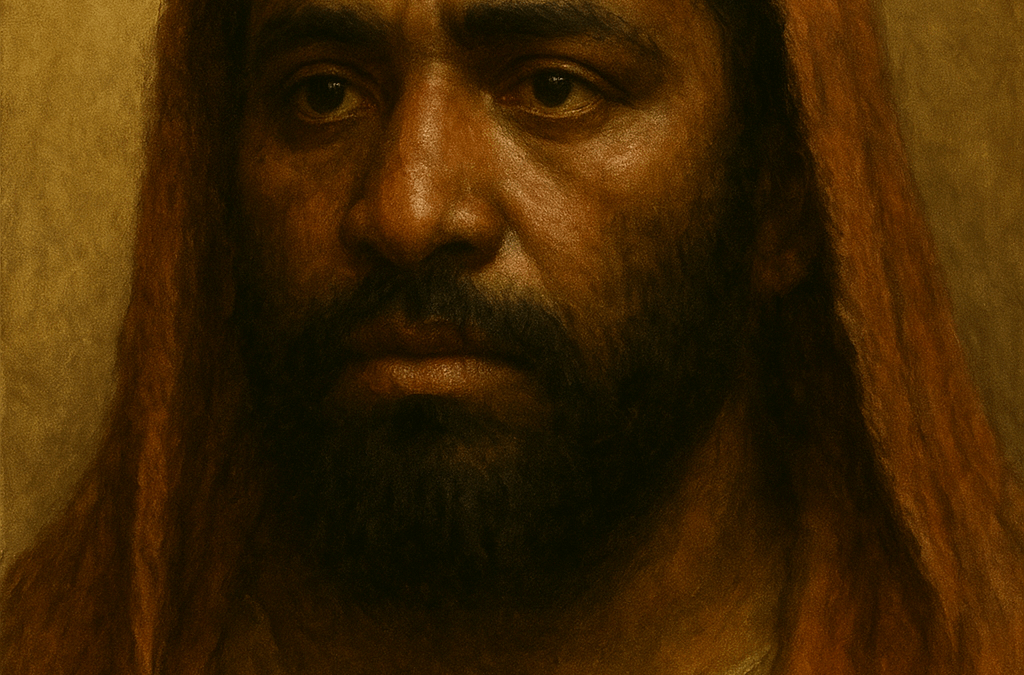
Was Jesus a Jew or a Christian? The Historical Answer — and Why It Matters

Was Jesus a Jew or a Christian? The Historical Answer — and Why It Matters

Jesus was Jewish.

He was born Jewish, lived as a Jewish rabbi, taught from the Hebrew Scriptures, and died as a Jew. His disciples were Jewish. His earliest followers were Jewish. Christianity began as a Jewish renewal movement within first-century Judaism.

Understanding this historical reality clarifies both the origins of Christianity and the ethical foundation of Christian leadership today.

When I ask leaders, “Was Jesus a Jew or a Christian?” responses are mixed. Many assume “both.” Some hesitate. But historically speaking, Jesus was Jewish. Christianity did not yet exist during his lifetime.

Why does this matter? Because forgetting Jesus’s Jewish identity distorts theology, weakens ethical leadership, and fuels harmful divisions.


Was Jesus Jewish? What the Historical Record Shows

Jesus practiced Judaism.

He:

  • Worshiped in synagogues
  • Observed Jewish festivals
  • Interpreted Torah as a first-century Jewish teacher
  • Engaged in rabbinic-style debate

After his death, his followers continued practicing Judaism for decades. The early Jesus movement was understood as a renewal movement within Judaism — not a separate religion.

Only gradually did Gentile inclusion reshape the movement into what became Christianity.

Christian faith did not replace Judaism. It emerged from it.


Was Jesus Opposed to the Pharisees?

A common misconception is that Jesus stood against “the Pharisees.”

Historically, the Pharisees were a lay renewal movement focused on ethical practice, holiness in daily life, and faithful interpretation of Torah. Their aim was to bring spiritual depth into ordinary living.

Jesus operated within this same renewal conversation.

The debates recorded in the Gospels reflect internal Jewish disagreements about interpretation — not a rejection of Judaism itself.

Seeing Jesus as anti-Jewish is historically inaccurate and theologically dangerous. He was participating in renewal, not launching a new religion.


Christianity Began as a Jewish Renewal Movement

The earliest followers of Jesus did not abandon their Jewish identity.

They:

  • Continued observing Jewish customs
  • Gathered for prayer and teaching
  • Interpreted Scripture through the lens of love of neighbor
  • Practiced radical generosity and ethical accountability

This is how renewal movements begin — by deepening commitment to core values, not discarding them.

Christianity’s roots are grounded in Jewish ethical teaching, including the command to love one’s neighbor and pursue justice.


Why It Matters Today

Forgetting that Jesus was Jewish has real consequences.

When Jesus is portrayed as standing against “the Jews,” it fuels anti-Semitism and reinforces divisive narratives.

More broadly, when reform movements position themselves as morally superior rather than rooted in shared ethical foundations, polarization deepens.

Jesus modeled renewal from within tradition — not destruction of it.

Leaders today face similar challenges: how to engage necessary reform without demonization, how to pursue justice without abandoning humility. In Creating a Culture of Renewal®, we help leaders move from fear-driven reaction to courageous, spiritually grounded action.

Renewal requires remembering our roots.


What Leaders Can Learn

If Jesus was a Jewish reformer participating in a renewal movement, faithful leadership today includes:

  • Engaging tradition thoughtfully rather than rejecting it reflexively
  • Practicing courageous ethical clarity
  • Avoiding tribalism and dehumanization
  • Anchoring reform in love of neighbor

The earliest Jesus movement expected transformed lives. It practiced spiritual formation through relationship, immersion, and shared accountability.

That model remains powerful.


The Bottom Line

Jesus was Jewish. Christianity began as a Jewish renewal movement. That historical truth strengthens theological clarity and ethical leadership.

When we remember our roots, we recover our responsibility — to justice, humility, and the repair of what is broken.

Renewal does not begin with separation.

It begins with returning to the heart of our faith.

If you want to explore how renewal takes shape in real communities, learn more about how Christian ministries are achieving success.


Adapted and excerpted from The Jew Named Jesus:Discover the Man and His Message, Rebekah Simon-Peter, 2013.

Copyright © 2026 rebekahsimonpeter.com.  All Rights Reserved.

Believe in a Miracle Mindset

Believe in a Miracle Mindset


We use the word “miracle” a lot. But what is a miracle, exactly? The dictionary defines it as a surprising and welcome event that can’t be explained by natural or scientific laws and, therefore, must be considered the work of divine agency.

Do you know who is pretty good at miracles? Jesus—and his apostles. That is their superpower. No, they don’t have a “Spidey” sense, superhuman strength, or the ability to leap tall buildings in a single bound. Rather, their superpower is a miracle mindset. They know that, given their divine partnership with God and the power of their prayers, they can operate in the realm of the miraculous, opening the way for the unexpected to happen. They believe—they know—they can co-create miracles with God.

And you can tap into that superpower, also. If you rise from having faith in Jesus to having the faith of Jesus, you, too, can co-create miracles with God.

Given the distress much of the world is experiencing today, there is no better time to take this step—to believe like Jesus, to develop the kind of faith Jesus had—so you can actively participate in creating the miracles the world so desperately need right now—at the personal, communal, and societal levels. And let’s not forget about the needs of the natural world, and all that impacts it.

To do so, you need to shift the way you see the world. Instead of seeing it as a fixed reality that is simply moving inexorably toward destruction—whether environmental crisis, the breakdown of democracy, the loss of morality, the disappearance of freedoms, the expanding chaos of rapid change, or the breakdown of all that is familiar—it’s time to see the world as one string of miracles away from redemption and salvation. This will require a new set of lenses and a literal change of heart. We live in a world that prioritizes head over the heart, the left brain over the right brain, and self-will over God’s will. But I say embrace your superpower, believe like Jesus, and welcome a miracle mindset into your life. That will empower you to act with creativity and courage, to not give up in quiet resignation. It will change everything.


Embrace the Belief: Use the Miracle Mindset to Activate Your Superpower

Jesus and his apostles aren’t the only ones to possess this superpower. God has also given it to you, as shown for example in the New Testament passages Romans 12:2 and 2 Timothy 1:7.

These passages confirm the importance of the right mindset—a miracle mindset built on unity and communication with God—in carrying out God’s will. God gives us this mindset as a gift of grace, but at the same time, we have to accept it so that we may “be transformed by the renewing of [our] mind.” God can give us the mindset to pursue miracles, but we must first believe we can and then go out and do it.

Like Jesus, you, too, have the capacity in every moment to choose your mindset so you can pursue miracles. Don’t get me wrong. You’ll probably not walk on water the first time out—or ever. But who knows what you can accomplish? After all, in John 14:12-14 Jesus said:

Very truly I tell you, whoever believes in me will do the works I have been doing, and they will do even greater things than these, because I am going to the Father. And I will do whatever you ask in my name, so that the Father may be glorified in the Son. You may ask me for anything in my name, and I will do it.

Cultivating the superpower of a miracle mindset requires a great deal of practice. The scriptures remind us that even Jesus himself has to grow into wisdom before he can set out into the world. Luke tells the story of Jesus leaving his parents at twelve to learn and teach in the temple. The people are amazed. But when Mary and Joseph frantically track him down, he agrees to go home with them; he isn’t ready yet. He still has to grow into his full power. Luke goes on to record the ending of the story: “Then he went down to Nazareth with them and was obedient to them. But his mother treasured all these things in her heart. And Jesus grew in wisdom and stature, and in favor with God and man” (Luke 2:51-52). This maturation process took another eighteen years. According to tradition, he didn’t even begin his public ministry until the age of thirty.

Though we call it “mindset,” transforming the way you look at the world begins as much in your heart and soul as it does in your mind. To take this step, begin to notice the pattern of your thoughts. Do you tend to paint yourself and the world in a negative or positive light? Ask yourself: Do my thoughts build my faith? Do they make me feel hopeful? Or do they tear me down, turn me toward hopelessness? Only thoughts that build the faith in your heart can lead you to embrace a miracle mindset.

Beliefs shape your thoughts; thoughts fuel your actions; actions demonstrate your faith, and your faith reinforces your beliefs. So, as you begin to believe like Jesus, you will find that you are now able to think new thoughts, take new actions, and develop new faith. Mountains and mulberry trees start to move. The people around you begin to respond in new ways. And the world becomes a brighter place.

Miracles—and a miracle mindset—are as much about perceiving in a different way as they are about some sort of conversion of physical properties. It’s about recognizing what’s already there in a new way. It’s about being “the eyes with which he [Christ] looks / Compassion on this world.” You may think God doesn’t really need you. That God is all-powerful without you. Not true. God does need you—your energy, your creativity, your willingness. God is waiting to co-create miracles with you.

Even now, you may think you don’t have superpowers. Or that something or someone is missing in your life before you can activate your superpowers. Again, not true. The soul within you is all the proof you need of your inner divinity. That soul, that inner divinity, makes possible everything you are called to do and be and believe. Cultivating an awareness of your inner divinity will actually open up the space for you to see the people God has brought into your life to co-create miracles with you and help you adopt the miracle mindset.


Next Steps

I encourage you to visit my new Online Store and purchase your copy of Believe Like Jesus. Or take advantage of our discount on multiple copies for your next Lenten book study. Further your expansion into the miracle mindset with my one-of-a-kind Miracle cards! These high-quality inspirational visual devotionals can be purchased only through Rebekah Simon-Peter Coaching and Consulting Inc, and create a truly unique experience as you co-create miracles with God.


Excerpted and adapted from Rebekah Simon-Peter’s latest book, Believe Like Jesus: Rising from Faith in Jesus to the Faith of Jesus, November 2024 & October 2025.

Copyright © 2025 rebekahsimonpeter.com.  All Rights Reserved.

5 Tips for Leading the Church into Autumn

5 Tips for Leading the Church into Autumn


The autumn season comes with its own unique challenges and opportunities for church leaders. As the leaves begin to change and the weather cools down, people look forward to enjoying seasonal festivities while cherishing the blessings of life.

I first published this article in 2023, and with a few updates, I think that these tips are needed even more today.


1) Embrace the Seasonal Theme

With the arrival of Autumn comes a vibrant tapestry of colors, enchanting scents, and joyous festivities. As a church leader, you can embrace this seasonal theme in many ways, from your sermons to your decorations and activities. Consider weaving themes of gratitude, giving thanks for what you have, and the renewal of life into your preaching. Organizing engaging activities like pumpkin carving, apple picking, or even heartwarming bonfires fosters community and strengthens fellowship during a season of transition.


2) Plan for Holidays and Events

Autumn is adorned with many holidays and festivities, including Halloween, Thanksgiving, Harvest Festival, and Autumn farmers markets. As a church leader, you can strategically align your sermons, outreach efforts, and activities with these occasions to forge deeper connections with your community. Orchestrate a delightful trunk or treat event to bless the children within your community. Host a heartwarming Thanksgiving potluck, or a captivating fall fair booth at a local event, all aimed at engaging people and sharing the love of Christ.


3) Focus on Discipleship and Spiritual Growth

The Autumn season presents a suitable time for revitalization and progress within your church community. You can harness this season’s potential to prioritize discipleship, spiritual growth, and personal development. Consider organizing small groups, hosting a Bible study with Believe Like Jesus or a Miracle Bundle, found in my new Online Store, arranging retreats, or creating affinity groupings. Providing resources such as devotionals, podcasts, or online courses can significantly enhance a spiritual community. As the seasons shift, people become more open to making transformative changes and embracing new possibilities. This creates an opportune moment for individuals to nurture their faith and experience personal growth.


4) Serve the Community

Autumn is an excellent opportunity to serve your community and make an impact. As a church leader, you can coordinate outreach events such as blood drives, clothing drives, food pantries, or community service projects to meet the needs of those around you.

We all know people in our communities that are struggling, even living in fear, during these trying times. Keep in mind that finding joy in Autumn may be difficult for them and make a special effort to include them in your outreach. You can channel your energy into impactful service projects that extend Christ’s love to those especially in need.

Partner with local organizations, other churches or houses of worship of other faiths, businesses, or schools to serve as a witness to the love you have for the community. This creates a positive image for the church and provides opportunities to form meaningful relationships.


5) Care for Your Leaders and Team

As a church leader, Autumn can be demanding and stressful. It is crucial to prioritize the well-being of your team during this period of change and transition. Implementing support systems like prayer groups, mentoring, coaching, or sabbath-taking can foster encouragement and growth among your team members. Practice self-care by incorporating rest, recreation, and reflection into your own daily routine. This will help you and your team to remain refreshed, energized, and focused on serving others.


As we transition from the vibrant tapestry of fall to the anticipation of Advent, let us not lose sight of the unique opportunities each season brings forth. Let us continue to seize these moments to serve, to flourish, and to cultivate a deeper sense of fellowship within our community. May we always remember that every season, every fleeting moment, is an opportunity to reflect the boundless love of Christ to those who surround us.

Autumn is the perfect time to take that extra step in strengthening and transforming your leadership. Registration for my powerful and award-winning clergy leadership program, Creating a Culture of Renewal®, ends September 8th. I’m leading a free introductory seminar on Friday, August 29th, “How Christian Ministries Achieve Success.” Registration is filling up fast, but there are still spaces available and I’d love to see you there.

Together, we’ll embark on a journey of spiritual growth, community engagement, and holistic rejuvenation.


Adapted and updated August 2025.

Copyright © 2023 rebekahsimonpeter.com.  All Rights Reserved.


Common Perils and Common Opportunities

Common Perils and Common Opportunities

Election Day 2024 has come and gone, the votes are in, and a new president-elect has been determined. No matter how you voted, our country will now face common perils and common opportunities. Your response as a faith-based leader to both the perils and the opportunities will set the stage for how your people respond as well.

In this blog I would like to name three perils and three opportunities with suggestions of how to respond. But first, I’d like to remind you of one important myth, and how you can avoid falling prey to it.


The Myth of Omnipotence

A great deal of weight has been placed on the presidential election. And rightly so. This is a crucial leadership position in our country, and there is much at stake. However, the president alone does not control the fate of the US, or the world, or especially you. Yes, the president does have a great deal of influence, however they are not omnipotent. Checks and balances exist between state and federal law, and ideally within the three branches of government. More than that, as faith leaders, we draw upon a Higher Power to guide and direct us. This Power has been known to burst through jail cells, confound rulers of the day, and transcend even the grave. Therefore I encourage you to exercise your faith, and remember Whose you are, even in uncertain times. Especially in uncertain times.


Three Common Perils

Peril #1: Adjust your morals. There will be constant, steady, and unrelenting pressure to adjust your morals. Outrageous behavior and unacceptable actions will again become normalized in the public eye. You may have to work very hard to keep your moral grounding. Norms that were once commonly accepted will begin to feel radical. Norms such as making space for people who are different than you, without having to demonize them or ostracize them. Or norms such as agreeing to disagree. 

Don’t give in to this pressure. Know what you stand for. Be clear on your values. Maintain your morals and ethics. At the same time, don’t demonize those who voted differently than you did. To do so would simply reinforce the polarization that got us here.


Peril #2 The Gospels will sound increasingly like politicized statements. Love your neighbor as yourself. Show hospitality toward strangers. Welcome the alien and immigrant. For Christian nationalists, “making disciples” may sound like a rallying cry to lead more followers to acceptance of authoritarianism. Or leading them to treating others with a cruelty that has no place in Christianity. Or any religion for that matter.

Preach the Gospel anyway. More than that, live the Gospel anyway. Be kind. Be hospitable. Be welcoming. Even more so, interrupt acts of unkindness. Speak up for those getting bullied. Correct hateful or derogatory language uttered in your presence. As St. Frances is quoted as saying: “Preach the Gospel at all times. When necessary, use words.”


Peril #3: You will be tempted to sensor your words or even downplay the Gospels so as not to upset others. You may even be tempted to ignore your baptismal vows. Peer pressure can be a fearsome thing.

Pause, get your internal bearings, then live true to your values. Frankly, the Gospels have always been countercultural. They have always made us uncomfortable. Even back in the day. Yet, a word of caution: don’t beat people up with the Bible. Or with your interpretation of things. That doesn’t help, either.   


Three Common Opportunities

Opportunity #1: Love others. The need for love, hospitality, and kindness toward strangers will only increase. More than ever, people in vulnerable populations will need hope and help.  Even the term “vulnerable populations” will expand. LGBTQ people, all people of color, as well as non-Christians such as Jews and Muslims, Sikhs, immigrants, women, the disabled, and the elderly may all be targets of hate.

Natural disasters and interpersonal violence will both create opportunities to extend the best qualities of the gospel toward others.


Opportunity #2: Dream of a better future. The time to create inspiring and inclusive visions of a better future for all is now. Dream big and extend your sights beyond the church to the community around you. Partner with agencies and groups who may share your vision. Tap into the wealth of resources around you.

While the numbers of vulnerable people may grow, so will the opportunities to be of service. As a leader, you can show others how to expand their vision beyond your church’s walls.


Opportunity #3: Deepen your spirituality. Spiritual growth and grounding will be essential. If you look to the circumstances around you for hope, or affirmation, you may find that wanting. To continue to be a light unto the nations, you will need to tap into your own inner divinity. Practice rising from faith in Jesus to the faith of Jesus.

If your congregation has a vision or a mission statement, let that be your guiding light. If there is a particular thing you are called to, do it, and do it well. If it is feeding the hungry, visiting the imprisoned, providing sanctuary for the immigrant – continue what you’re doing.

But keep an eye out for other opportunities to help.


Leaders, this is the time to not only believe in Jesus, but to believe like Jesus. Expand your capacity to be a light in the world and to be the change you wish to see.

Help bridge the gap between our common perils and our common opportunities by following me on Facebook and joining me for my 40 Day Spiritual Transformation Series, starting November 27. I also encourage you to join me this Thursday, November 14th, for my free seminar, “How Christian Ministries are Achieving Success.


Copyright © 2024 rebekahsimonpeter.com.  All Rights Reserved.

Believe in Your Purpose

Believe in Your Purpose

Jesus believes his divine partnership with God powers his prayers and allows him to lean into his superpower to co-create miracles with God. These transformative beliefs lead to an even greater belief: his life has unwavering purpose directed by God the Father. Jesus lives his life on purpose.

In fact, according to the Gospels, Jesus’ life purpose has at least three distinct aspects. The first aspect of Jesus’ purpose is that of Savior. Before Mary and Joseph marry, an angel of the Lord speaks to Joseph in a dream about the son Mary will have: “You are to give him the name Jesus, because he will save his people from their sins” (Matthew 1:21). Many Christians read this as a call to wholeness; other Christians believe that Jesus fulfilled the purpose of the Savior when he died on the cross and rose from the dead three days later.

The second aspect of Jesus’ purpose is making God’s presence widely known. Capernaum is the center of Jesus’ public ministry. He spends time there healing the sick, casting out demons, and preaching. Understandably, the good people of Capernaum want him to stick around and heal every last ill they have. But Jesus knows he can’t just stay where things are familiar. He has more work to do. Upon hearing their request, “Jesus replied, ‘Let us go somewhere else—to the nearby villages—so I can preach there also. That is why I have come.’ So he travels throughout Galilee, preaching in their synagogues and driving out demons” (Mark 1:38-39). The Gospel of Luke puts Jesus’ response to a similar situation this way: “But he said, ‘I must proclaim the good news of the kingdom of God to the other towns also, because that is why I was sent’” (Luke 4:43). Jesus clearly states this aspect of his purpose: “I must proclaim the good news of the kingdom of God”—and not simply to local folks but to everyone he can reach.

The third aspect of Jesus’ purpose is testifying to God’s truth. The Gospel of John mentions several times that Jesus embodies God’s truth: “The Word became flesh and made his dwelling among us. We have seen his glory, the glory of the One and Only who came from the Father, full of grace and truth” (John 1:14). Later Jesus speaks to Pilate in a similar vein: “You say that I am a king. In fact, the reason I was born and came into the world is to testify to the truth. Everyone on the side of truth listens to me” (John 18:37). The truth or Logos that Jesus represents is the essential nature of God the Father, and our unity with it.

As with Jesus, you may have different purposes for different communities or different times in your life. You may even mean something different to the various people in your life. For example, my dad (and my mom when she was alive) doesn’t need me to be a great church leader; he needs me to be a caring daughter. Our foster boys need me to feed them, play with them, and set healthy boundaries; in other words, to be a good mother. The church leaders I work with need me to inspire and challenge them to lead with new skills and courage. Same person, three different purposes.


Jesus Invites You to Live on Purpose

Jesus lived on purpose and called the Twelve to live the same way:

As you go, proclaim this message: “The kingdom of heaven has come near. Heal the sick, raise the dead, cleanse those who have leprosy, drive out demons. Freely you have received; freely give.” (Matthew 10:7-9)

The actions of the apostles tell us how they elevate themselves, how they rise from having faith in Jesus as witnesses and apprentices to having the faith of Jesus as agents and apostles.

Just as we all have different purposes at different times in our lives, so our lives will reflect different aspects of the Kingdom reality. Your purpose doesn’t have to be about ministry per se. In other words, you don’t have to be a missionary, a pastor, or an evangelist to live out your life’s purpose. Maybe your purpose is to be an entrepreneur, an artist, a bricklayer, a parent, or a preschool teacher. In living his purpose, Jesus shows us how to live our purpose. In experiencing that deep unity with God, using the gift of prayer, and cultivating the miracle mindset, you can live your larger purpose as Jesus did—whatever that purpose may be.

Throughout the New Testament, we see that many people from different walks of life love and emulate Jesus and learn from him. Some give up their old lives and literally trail after him from town to town. Others are sent back into their communities to live their lives in a new and more purposeful way after Jesus heals them. Jesus instructs still others to say nothing about their healing or about him. Regardless, we can imagine that, changed by the presence of Jesus, each person is living according to God’s distinct purpose for them.

It’s the same for us. While I was called to be a pastor, many of the people I have met along the way have been called to other equally wonderful purposes. They are teachers, golf pros, energy healers, attorneys, parents, athletes, inventors, salesclerks, trainers, oilfield workers, servers, managers, general contractors, law enforcement officers, public servants, and more. When it comes to living life on purpose, it’s more about how you live than your job description. This is the Kingdom of God on earth.

Of course, the opposite can be true as well. Anyone in any role can be inauthentic about their purpose, can be doing what they’re doing for all the wrong reasons, for reasons that aren’t aligned with Jesus’ purpose—out of fear, greed, lust, revenge, a hunger for fame, hubris, envy, and a host of other sins.

To avoid that path, discover what brings you alive and use it to contribute to the joy of Beloved Community. Living on purpose in this way gives you focus. Emboldens you. Protects you against fear. Guides your prayers.

What if you don’t know what brings you alive or don’t know what your purpose is? I have definitely felt that way. At those times I simply pray: “God, please help me live the deepest purposes of my life.” With this prayer, I don’t even have to know or decide what my purpose is! I simply follow God’s prompting every day, trusting that what comes my way is God’s guidance—letting me know my purpose, moment by moment, day by day. In this way, I can trust that I am living every day on purpose.


Excerpted and adapted from Rebekah Simon-Peter’s forthcoming book, Believe Like Jesus: Rising from Faith in Jesus to the Faith of Jesus, November 2024.

Copyright © 2024 rebekahsimonpeter.com.  All Rights Reserved.

Belief in Action

Belief in Action

As you know, these are challenging times. Times rife with hatred and violence, to both people and the planet. But during these challenging times, we who are moving from simply believing in to believing like Jesus can harness the courage and the power to make real, positive change. Change that makes a difference in the lives of the oppressed. In the fate of the planet. And in ourselves. Because without taking action to sustain and support ourselves, we can’t sustain and support others.

The transformation from believing in Jesus to also believing like him, can be the catalyst to responding to challenging times. Not just with passive prayer, but with action. Prayer, of course, is essential, but prayer motivated by belief can bring about amazing results.

Beliefs shape your thoughts; thoughts fuel your actions; actions demonstrate your faith, and your faith reinforces your beliefs. So, as you begin to believe like Jesus, you will find that you are now able to think new thoughts, take new actions, and develop new faith. Mountains and mulberry trees start to move. The people around you begin to respond in new ways. And the world becomes a brighter place.


Believe

Just as Jesus is in divine partnership with God, so are you. Jesus has faith that, at a deep level, there is no separation between him and God or between him and the Spirit. That they are divine collaborators. You, too, are invited into this unity, and are an expression of this oneness. Believe it. Embrace it. Don’t shy away from it. You are one with God.


Answer the Call

Jesus shows his partnership with God in his words and works. Use your creative, inborn capacity to create with words—to remind yourself of your unity with God. “I am one with God.” Saying the words names your belief and puts it out into the world. Contemplate your oneness with God to bring it to life. Express that divine partnership in what you do as well—in your good works. What becomes possible when you stretch and say “yes” to the needs around you? When you answer the call to help, your partnership with God will carry you.


Practice

Look for opportunities to partner with God. Nina Lesowitz and Mary Beth Sammons wrote a book about courage called What Would You Do if You Knew You Could Not Fail?: How to Transform Fear Into Courage. Let’s rephrase that and ask: What would you do if you knew God was your partner? Claim the courage to see the world through that lens. Put that partnership into practice with everything you do.


You and God can accomplish anything together, including miracles!

Including the miracle of transforming challenging times into loving, open, and peaceful ones.


Excerpted and adapted from Rebekah Simon-Peter’s forthcoming book, Believe Like Jesus: Rising from Faith in Jesus to the Faith of Jesus, November 2024.

Copyright © 2024 rebekahsimonpeter.com.  All Rights Reserved.