
by Rebekah Simon-Peter | Nov 15, 2019
When addressing Gender and Christianity, a particular example comes to mind. Specifically the role of women in church leadership. After telling wildly popular evangelical bible teacher Beth Moore to “go home,” influential fundamentalist preacher John MacArthur clarified his thoughts on women in church leadership. He warned that “empowering women makes weak men” and “weak men make everybody vulnerable to danger.”
Wait a second. Studies around the world show that empowering women is the key to developing economies, family well-being, better nutrition, and equal rights. So how could this move be anti-male, anti-social or anti-Christian?
When you take the long view of religious development, I believe MacArthur had it exactly backwards. Rather than derail Christianity, the full participation of women in all aspects of Creation is the fulfillment of the Christian impulse.
A look at Judaism reveals why.
Judaism is built on the power of distinctions. The creation stories exemplify the distinctions between the first six days and the other days of the week; between the sun, moon and stars; between plants and animals; and between humans and God. The evening prayer in Judaism plays on those themes by glorifying the distinctions between night and day, and between sleep and activity. Havdalah, the blessing that ends the Sabbath, lauds the differences between holy and secular, and between Sabbath and the rest of the days of the week. Ancient Jewish prayers even prompt men to pray with thanksgiving that they were not made a woman, a gentile or a slave. Distinctions matter in Judaism.
Christianity goes in a decidedly different direction.
Rather than playing on distinctions and dualities, Paul has a vision of integration. “There is no longer Jew or Greek, there is no longer slave or free, there is no longer male and female; for all of you are one in Christ Jesus.” (Galatians 3:28) Indeed, women play a major role in the Gospels.
This theme of unity and integration is further celebrated in the New Testament. Consider the story of Pentecost. When the Spirit comes, all hear a unifying message in their own language. This unity is celebrated as people share in a common life, a common purse, and a common purpose. Finally, we see in Revelation 7:9-10 that all tribes, peoples and languages have a common trajectory—unity within the oneness of God.
So what’s with the stink about gender distinctions? Truth be told, MacArthur isn’t the only one who forgets the integrative impulse in Christianity. Mainline Christian churches have their own version of his call for strong women leaders to “go home.” Women are called the “B word” and sent packing in more ways than one.
I wonder if the focus on gender isn’t indicative of deeper problems in the church. Like decline in worship, influence, and imagination. Todd Anderson, a District Superintendent in the West Ohio Conference, told me, “The church is only in decline where the status quo is enforced.” He should know. Every District Superintendent is painfully aware of how the status quo stifles new life. That’s why Todd is working across state lines, district lines, and conference lines to create new, experimental ministries. And they’re bearing fruit.
Decline is not a Christian value. The status quo is not a Christian value. Women preaching, turning things upside down, is. That’s what lets new life in.
Interestingly even Judaism itself has moved toward integration. While distinctions still matter, female clergy are beginning to be ordained in the orthodox world. Even transgender clergy are being welcomed.
Bottom line: if empowered women are threatening some men, perhaps those men need to deepen their own sense of self, rather than seek to bring women down a peg.
by Rebekah Simon-Peter | Apr 22, 2019
 Your congregation has up to six, maybe even seven, different generations in it. While the oldest generation is unlikely to still be attending worship, they are still part of your congregation. And the newest generation is on its way in. Each generation is influenced by different historical events, technology, and expectations.
It helps to know what’s in a name.*
GI Generation: Born from around 1900 through 1923, they came of age during the Great Depression. Also known as the Greatest Generation, this group includes the veterans who fought in World War II. Along with the Pioneers and Baby Boomers, nine out of ten GI’s describe the Bible as sacred. Duty and tradition are motivators for this generation.
Pioneer Generation: Born 1924 through 1944, this generation is generally recognized as the children of the Great Depression. It had a profound impact on their formative years. The American Dream was alive and well with many in this generation. With dedication and hard work, many found success in work and life. Feeling undervalued demotivates this generation; being part of an organization that does good motivates them.
Baby Boomer Generation: Born from approximately 1945 to 1963 following World War II, in a time that was marked by an increase in birth rates. In general, baby boomers are associated with a rejection or redefinition of traditional values. A relatively large number of young people became teenagers and young adults in the 1960s. They both fought in and demonstrated against the war in Vietnam. They gave rise to the Hippie movement and the Jesus People or Jesus Freaks movement, living in communes and advocating a return to simpler times. The genre “Christian music” grew out of this generation. They broke away from traditional church more so than any of their forebears. Respect and recognition for their efforts motivates this generation.
Gen X or Postmodern Generation: Born from approximately 1964-1980, they are shaped by the first Earth Day, the 1973 Oil Crisis, the end of the fall of the Berlin Wall, the end of the Cold War, the Challenger explosion and 9/11. Often the children of divorced parents, they are more open to religious, racial, ethnic, class, sexual orientation and gender identity diversity than any previous generation. Rather than challenge leaders, they tend to ignore them. They are educated, active, happy, balanced and family oriented. Not at all the “slacker” stereotype once attributed to this generation.
Many were babysat by the T.V., and as a result they rebelled against authority and tradition to a greater degree than had been previously seen. Since authority structures were not there for them as children, they question why they should play into this system now as adults. They prefer doing things their own way. While a significant number still participated in church activities, this generation increased the trend of falling away from religion.
Millennial Generation: Born somewhere from 1981-1999, they have been described as upbeat, team- playing, civic-minded, multi-tasking, and tech savvy. They are regularly in touch with their parents and many live at home due to high unemployment. Sometimes called the “Trophy Generation” or “Trophy Kids,” a term that reflects the trend in competitive sports, as well as many other aspects of life, where mere participation is frequently enough for a reward. They expect more from the workplace than generations before them: coaching, feedback, access to authority. This is good news for churches which thrive on making the above available.
In the US, the Millennials are more likely to be skeptical of religious institutions than their forebears, but still have a strong spiritual/religious sense. A recent poll by the Pew Research Center on religion and Millennials showed that 64% of Americans in this generation believe in God.
Digital Generation: Born around 2000. Also called the Internet Generation, they came into being at about the same time as the World Wide Web. Typically children of Postmoderns, they have but a faint recollection of 9/11. These world-aware children will be shaped by the Economic Crash of 2008, the 7 Billionth Baby, and drastically different weather patterns than previous generations.
- They embrace technology and value human connections.
- They are fluid in their ability to adapt to change. Even so they appreciate stability.
- They see the spiritual all around them. God moments are not limited to Sunday mornings or church buildings.
- They want to change the world. And often insist on social justice.
- They are not fighting over environmental stewardship, whether or not global warming is real, full acceptance of women, gays, lesbians, and transgender people in the church, or whether or not to have friends of different ethnicities and races. Generally, they accept these as given. Even so, they are susceptible to prejudice, racism, sexism, heterosexism, greed, and selfishness—just like the rest of us.
You may have noticed that the above information doesn’t necessarily fit your family, culture, or life experience. Or that of the families you serve. Even as generational experiences vary by country and culture, 1989 marks a milestone year. As the Berlin Wall came down, and a youth revolt took hold, more of the world looked to American culture for economic, cultural, and technological cues. In the generations before 1989, differences abounded in world cultures. Post-1989, however, a global shift occurred; and American culture became a strong focus. From 1989 onward, generational experiences may be more confluent with American experiences, regardless of culture.
If you are interested in learning more about how to lead a vibrant multi-generational congregation, Creating a Culture of Renewal is for you. Gain the emotional intelligence to interact with all kinds of people. Look deeply at the life of Jesus, his world-changing vision, and how he implemented it. You will learn a step by step process for crafting and implementing a Kingdom-oriented vision that expands assumptions about what is possible in your setting.
* Much of the generational research used in this article has been drawn from Wikipedia.
by Rebekah Simon-Peter | Feb 18, 2019

As General Conference meets to decide the future organization of the United Methodist Church, anxiety hangs in the air. Will delegates adopt the One Church Plan, the Connectional Conference Plan or the Traditionalist Plan? Or will they defer decision-making altogether, buried in an avalanche of possible amendments and alternate options? That’s a real possibility.
So what happens if nothing happens at General Conference?
Last week I wrote that no matter what holds together or what falls apart this General Conference, or any General Conference, life and ministry must go on. But there’s a caveat. Leaders cannot go on with ministry as usual. This is the time to up your game. Especially if nothing happens at General Conference. Survival mentality does not bear good fruit.
Here are the 7 leadership abilities that you will need to cultivate especially if nothing happens at General Conference.
Before I lay out the 7 abilities, let’s consider the meaning of the word able. Able, the source of the word ability, has two primary definitions. First is having the power, skill, means, or opportunity to do something. Second is to have considerable skill, proficiency, or intelligence. As online and face-to-face options proliferate for people to engage in spiritual community and meet like-minded souls, churches need to be able to operate in both senses of the word.
Leaders need to not only take the opportunity to engage in ministry, but to do it skillfully and with considerable emotional intelligence. Why?
Now on to the 7 leadership abilities you will need to cultivate if nothing happens at General Conference. I’ll lay them out here, and then revisit them in the coming weeks, giving you tips and tools for how to skillfully cultivate these abilities.
1. Your way forward. Even if nothing definitive happens at General Conference, you will need to cultivate the ability to envision an intentional future for your setting. Don’t hold your breath waiting to see what others do before you act. As a spiritual leader, it’s your job to sense the movement of the Spirit in your setting, and to proactively respond.
2. A purpose. Now is the time to cultivate the ability to articulate why your congregation matters. Don’t assume your people or your community knows. Instead of letting the national news narrate the story, step up and frame your congregation’s story. Locals will appreciate it.
3. Vibrant ministries. You will need to cultivate the ability to connect the Gospel and daily life. Being clear about the connection is what makes ministries vibrant, relevant, and relatable. It also generates buy-in.
4. Faith. Cultivate the ability to move forward with uncertainty. Predictability sometimes masquerades as faithfulness. But these days it’s all about living purposefully in the midst of unpredictability.
5. Vision. Congregations shrink when leadership is weak. Weak leadership puts comfort, safety and likeability above vision, mission and values. Cultivate the ability to lead from the latter, not the former.
6. Apostleship. Churches shrink when buy-in is limited. Cultivate the ability to empower others. Otherwise, all the work falls back on your shoulders, narrowing ministry to what fits on your to-do list.
7. Love and forgiveness. I was getting ready to get resentful if nothing definitive happens at General Conference. Then it occurred to me that resentment is a weaker power than forgiveness. Likewise, fear is a weaker power than love. You and I will need to cultivate the ability to release resentment and fear, and to move on. Define what you stand for, not what you stand against. Then carry on bravely.
Join us for a free online workshop on Friday March 1, 11am-Noon Mountain Time, called “Does Your Church Dream Like Jesus?” Discover if it’s time to cultivate a Jesus-like dream that allows you to do all of the above. Email me at re*****@***************er.com to register and reserve your spot.
In the meantime, stay tuned for the prompting of the Spirit, and the guidance you need to cultivate these 7 abilities. You’ll need them if nothing happens at General Conference. Truth be told, you’ll also need them no matter what happens at General Conference. God is with you. You were called to lead at such a time as this.
by Rebekah Simon-Peter | Dec 16, 2016
I’m not much for reality TV. But many a Monday night I can be found in front of the TV watching aspiring vocalists sing their way into the hearts of America. Yup, I am hooked on The Voice. The live finals were last week. Like millions of other Americans, I stayed up way too late waiting to see who won.
What I love most about the show are the blind auditions. At an early stage in the game, a dizzying array audition for a spot on a team where they’ll be coached by a pop culture superstar like Adam Levine, Miley Cyrus, Alicia Keyes or Blake Shelton. Unlike American Idol or America’s Got Talent, these coaches initially can’t see the singers. Their backs are turned to them as they audition. They don’t know the singer’s age, height, weight, attractiveness, fashion style, body shape, skin color, or story. They’re simply responding to the singer’s voice.
A lucky few dozen make the cut. Over the course of the season, they adopt fancy clothes and learn stage moves. But it’s always the unique quality of their voice that takes center stage.
There’s an important lesson here for the mainline Christian church. We have a unique and compelling voice. Now more than ever we must claim and develop it.
For too long others have used their voices to speak for all of Christianity. On the one side, we have people who preach fear and hate under the guise of love. And exclusion under the guise of faith. On the other side, we have those who preach abundance without accountability. And grace without growth.
We in the mainline church have been endowed with a unique voice. It’s time for us to sing our own song—loud and proud.
We know who we are. We are the church of the community. If your church is like most mainline Christian churches, you perform funerals no one else will touch. You offer love where others offer judgment. You dole out food and financial assistance and flood buckets like nobody’s business. You welcome in the weird, the worried and the waylaid. Everybody gets a hug.
That’s well and good. But are you using your full range? Are you hitting all the notes you can? Are you drawing upon all the color and depth available to you?
When we’re at our best, you can’t beat our preaching, music, Bible studies, outreach, justice-work and pastoral care. It’s informed by head and heart; personal piety and social justice; Gospel and world. At our best, we’re tops at critical thinking, nuanced theology, and the ability to offer more than stock answers. We even know how to change our minds! And our hearts.
We have a history of ultimately getting on the right side of social issues: from the treatment of debtors to addicts, and the poor to the mentally ill. From slavery to women’s right to vote. From the equal humanity of all ages and races to equal civil rights.
All of this contributes mightily to the richness of our voice. At our best, we’re not knee-jerk people.
This is more important than ever in a season highlighted by Trump. Knee-jerk reactions aren’t going to cut it. If the incoming President means to make good on campaign promises to deport millions, scapegoat immigrants, isolate Muslims, and a host of other indignities, then no voice is more important than ours.
This is our chance to really belt it out! To sing our rich and nuanced song. No more bowing out while others portend to showcase the faith on our behalf. This is our chance to strut our stuff: love and rational thought; mercy and prophesy. No need to lower our voices if ethnic profiling is proffered as good social policy. Or if the almighty dollar seems to trump the common good. Yes, there’s a downside to our primarily white, middle-class, well-educated constituency—at least in North America. We’re a bit stodgy. We’re not terribly diverse. We’re on the older side. We’re not all that hip. We disagree amongst ourselves on human sexuality, interpretation of the Bible and other areas. I take us to task on a lot of this in other posts.
But here’s the upside: We have privilege. We have power. We have connections. We can use all of that for the greater good. If we use our unique and compelling voice.
Mainline church, don’t be afraid to audition. Sing your song—loud and proud. If we give it our all, I’d say we have a really good chance of winning this season.
Not sure how to engage these conversations? Join me at Discipleship Ministries for a webinar on Why Churches Should Discuss Politics: How to Talk Politics in your Church Without Being Unchristian on January 23, 2pm Central Time. Information
by Rebekah Simon-Peter | Jul 5, 2016
I mourned when I heard that Elie Wiesel had died. I grew up with this Holocaust survivor and Nobel Laureate. 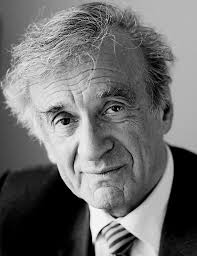 No, not in Auschwitz or Buchenwald, the concentration camps of his childhood experience, but in the darkened room of my 8th grade Jewish Sunday School class. There on Sunday mornings we watched films based on his classic books about the Holocaust. They were dreary, somber films. Even so, watching them made me a better Jew, and a better Christian.
Early on, from these films, I learned the value of wrestling with God, the post-Holocaust stance of much of world Jewry. I also learned the value of wrestling with my place in humanity. Some post-Holocaust Jews asked “How could God allow this?” I asked, “How could fellow humans turn and look the other away?”
Rather than turn me off from God or religion, these movies instilled in me a deep sense of right and wrong, and the need to watch out for each other. From the conversations that followed the movies, I learned the mantra of my parents’ and grandparents’ generations: “Never again.” Never again to genocide, repression, racism. Never again to silence in the face of injustice.
I’m grateful to Elie Wiesel. His work raised important questions, not just for my 8th grade self, but for the world. He stood for worldwide human rights—for Jews in Israel, the Soviet Union and Ethiopia; for the anti-Apartheid movement in South Africa, the Desaparecidos of Argentina, Bosnian victims of genocide in Yugoslavia, the Miskito Indians in Nicaragua and the Kurds.
All of this made me a better Jew because he taught me the value of knowing one’s history. Later, it also made me a better Christian because I understood the danger of the church’s silence in the face of evil.
These days the church is often loathe to venture into “politics,” preferring to be a neutral, conflict-free oasis of spirituality. But when are politics and spirituality ever really separated? Certainly not in Jesus’ day. Nor in our own. Spirituality—especially the spirituality of love—must be lived out in the real world to have real power. Especially in the face of fear, bigotry, and scapegoating.
We live in an age when the words “Never again” seem to have been forgotten. Refugees are once again turned away at crucial borders. Immigrants are eyed with suspicion. The “other” is scapegoated. Violence and power go hand in hand.
What are you teaching in your Sunday School rooms? It can’t be all Veggie Tales, fun and games. There needs to be some substance–where our faith interacts with the injustices of the world. Let’s not be afraid to tell our kids the way it really is. Chances are they already know. And if they don’t, maybe they need to.
by Rebekah Simon-Peter | May 9, 2016
General Conference is a quadrennial gathering of the global United Methodist Church. But by definition, this global gathering is intensely local. Local dialects, languages, costumes, greetings, and worship practices take center  stage. This convocation begs the question: What, if anything, does a global UMC mean for a local congregation? I posed that question to a handful of young United Methodist clergy with whom I recently met.
“I bring in different worship styles from other countries to our local church,” Sara Rettig, a pastor from Appalachia serving in the Rocky Mountain conference explained. “I make sure they are incorporated in my congregation. We talk about how our way of worshipping isn’t the only way.”
Other young clergy shook their heads. “A lot of time we don’t think of ourselves as a global church. We’re just busy trying to make things happen in our own setting. How can we focus on bringing in more global aspects to our local church instead of just catering to our own needs?”
Many churches find a way to highlight the global church on World Communion Sunday. Greetings and prayers drawn from other languages are a good way to highlight our unity in diversity. But is a once a year shift in perspective enough to create a true sense of community?
Other churches engage in annual or bi-annual mission trips to connect with sister churches across international borders. Always enlightening and uplifting, these opportunities, however, can reinforce a sense of “us” and “them.” We have the resources; they have the needs. We have the answers; they have the deficits. Is that what we envisioned when we set out to create a global denomination?
Sara’s next thought pressed the group: “What does it mean to have different theologies, and be an open church where all of us can be who we are and still be part of a connection?”
Good question. It made me wonder if that’s even allowed in the UMC. We have it, of course, but do we actually acknowledge it or welcome it?
As one young clergy leader pointed out, “The UMC tends to prize uniformity over unity.” That would seem to undermine Sara’s point of inherent diversity in a global church. But maybe the pressure for uniformity boils down to just a few select issues.
“We have one Book of Discipline that assumes we all look at issues in the same way,” said Sara’s husband, Major, also serving in the Rocky Mountain Conference. “For instance, take human sexuality. In some parts of Africa, the primary concern is over polygamy. In the US and Europe, we’re up in arms over homosexuality. If we’re really a global church, how come our Book of Discipline doesn’t reflect that?”
“True,” noted Dustin Burrow, serving in the New Mexico Annual Conference. “How can one Book of Discipline even cover places as disparate as Eastern Europe, the American Southwest, and the African continent?”
The dance between unity and uniformity, the global and the local isn’t new for Peoples of the Book. Think of it: we have four different gospels that give four fairly different accounts of the life of Jesus. Two of them don’t even recount a birth story. The two that do supply radically different details. That same pattern continues all the way through the life, death, resurrection, and ascension of Jesus. Not to mention the Hebrew Bible or Old Testament. It contains two different creation stories, two exoduses from Egypt and a plethora of names of God. Even so, throughout the testaments, you can still detect unifying themes of creation, covenant, sin, forgiveness, and redemption. Then there’s the matter of the Trinity itself—God in three persons.
If the Bible itself conveys unity without requiring uniformity, maybe there’s hope for us!
Especially if we were to take a page from Jesus and his tribe. Judaism, from ancient to modern-day times, intentionally cultivates a diversity of voices and viewpoints by which to understand God and God’s will. Books like the Mishnah and Talmud even record these voices in conversation and are studied to this day.
My point is that enforced uniformity across a global denomination like the UMC is actually a disservice. It erases the very things we can learn from each other—the varying ways we read scripture, do mission, understand the world and even our own selves.
Unity in the midst of diversity is not only Biblical, it’s Wesleyan. John Wesley famously wrote, “If your heart is as my heart, if you love God and all mankind, I ask no more; give me your hand.”
Our unity as a global denomination can become a source of inspiration, curiosity, and growth. Not a condemnation of differences. Or a striving to be exactly the same. But rather an expression of God’s own unity in diversity. Let’s see what that would mean for local churches scattered across the globe!
Thanks to Ministry Matters where you can see this and other blogs by Rebekah Simon-Peter.

