
Apostles of a New Future: Leading the Church with Courage

Apostles of a New Future: Leading the Church with Courage

We are living through a time of extraordinary unraveling—politically, culturally, and even spiritually. Life-long values and democratic institutions are being challenged, dismantled and deconstructed. Hope is in short supply. The Church is not immune. As expectations change, congregations are unsure of their place in a shifting world.

But what if decline and confusion are not the end—but the beginning of renewal? What if this is your invitation to become an Apostle of a New Future?

This is the final blog in a three-part series based on my keynote, Re-Thinking Renewal in Perilous Times. In the first blog, we explored how to lead with hope even when the world is falling apart. In the second, we wrestled with rediscovering the heart of ministry in a culture of fear.

Now, I am inviting you to turn toward the future. What kind of leader will you be in this pivotal moment for the Church? And how can you lead the church with courage in this time of profound change?


The Myth That Playing It Safe Will Save the Church

Before we address how you can lead, let’s confront a damaging myth: That if you can just avoid rocking the boat—stay moderate, stay neutral, stay inoffensive—you can preserve what little remains. Many institutions—media, legal, higher education, retail stores—have already adjusted their values to align with the current administration. They have tossed DEI initiatives, negotiated settlements to avoid lawsuits, and adjusted their public values to comply with the changing landscape. But the Church was never meant to play it safe.

The truth is, playing it safe has never saved anyone. Not a person. Not a people. And certainly not Jesus or the Church. The early Christians were audacious. They faced empire with songs, injustice with solidarity, and persecution with unshakable joy. They weren’t afraid to carry bold messages—radical love, sharing of resources, inclusive community, and resurrection power. Why would you settle for anything less today?


Beethoven’s Audacity

During my keynote at the Closing Retreats for Creating a Culture of Renewal® cohorts, I shared the story of Ludwig van Beethoven. It wasn’t for the sake of classical trivia—it was for the sake of your spiritual courage.

Beethoven composed his most powerful, history-defining music, the 9th Symphony, from which comes Ode to Joy found in many hymnals, when he was profoundly deaf. Can you imagine that?

When he could no longer hear the music with his ears, he heard it in his soul. He wrote from within. From memory, yes—but also from vision. From deep resonance. From a place beyond circumstance. That’s what Christian leadership looks like for you right now.
You may no longer hear the music of cultural relevance, institutional power, or packed pews the way you once did.

But if you listen, you still hear the music of the Spirit. You can write the next movement of God’s work in the world from within. Not by replicating the past, but by composing a bold, new symphony of renewal.

Like Beethoven, you must create from a place deeper than the inputs from around you. A place of divine resonance, Spirit-led imagination, and apostolic courage.


Apostles of a New Future: The Courage to Choose

Let me be clear that this is a pivotal moment for the Church. It is a time for us to stand for Gospel values of inclusion, hospitality, love of God, love of neighbor, love of stranger. The question is: is it a pivotal moment for you—as a leader of the Church?

Will you serve empire? Or will you continue to midwife and serve the kingdom?
Will you baptize authoritarianism in the name of stability?
Or will you align with apostles of justice who risk for the sake of love?

These are not theoretical questions. They are spiritual decisions that shape everything. Your preaching. Your presence. Your prayers. Your willingness to follow Jesus wherever he leads—even into the heart of conflict, compassion, and costly grace. This is no time for neutrality.

As an apostle—a messenger of Jesus—your message matters. Every apostle needs a message. So let me ask you. What is your message?

  • Maybe it’s this: Love God. Love neighbor. No exceptions.
  • Or this: Empathy is resistance.
  • Or my personal favorite: There is no us vs. them. We live in a we-world.

Whatever your message is, be clear. And carry it. Preach it. Post it. Live it.

Let your people see it in your leadership, your vision, your pastoral care, your justice work. Because you are not only a disciple. You are an apostle. An apostle of love. An apostle of justice. An apostle of renewal. And the world needs that now more than ever.


The Five A’s of Apostleship

To live into this apostolic moment, it’s time for you to embody what I describe in my book Believe Like Jesus: Rising from Discipleship to Apostleship as the Five A’s of Apostleship.

  1. Authorized – You are commissioned by Christ. Not just to maintain a building or perform rituals, but to lead renewal.
  2. Anointed – You are spiritually gifted. Your calling is not generic—it is Spirit-empowered.
  3. Appointed – You were born for this moment. Your leadership is not an accident.
  4. Accountable – You don’t do this alone. You’re part of the Body. You’re answerable to a higher calling and a community.
  5. Ambassador – You represent a kingdom that cannot be shaken. And you carry its values into a world desperate for them.

That’s your job description. That’s your identity. That’s your calling.


Dos and Don’ts of Courageous Leadership

Do:

  • Do speak your message with boldness.
  • Do trust the deeper music of the Spirit within you.
  • Do evolve your methods to serve your mission.
  • Do anchor yourself in daily spiritual practice and fierce love.
  • Do form communities of renewal that support, challenge, and commission you.


Don’t:

  • Don’t settle for playing it safe.
  • Don’t spiritualize silence in the face of injustice.
  • Don’t ignore your own soul in the name of service.
  • Don’t postpone courage for another time. That time is now.


Next Steps / Takeaways

This is your call to lead courageously. The world doesn’t need more church leaders protecting tradition for tradition’s sake. The world needs you—a bold apostle who carries a message of love, justice, and Spirit-led renewal, no matter the cost. And you don’t have to do this alone.

Join me this July for RISE Into Spiritual Transformation, a six-week interactive experience for leaders like you who are ready to:

  • Rediscover your bold, Spirit-born message.
  • Reconnect with your call and claim your apostleship.
  • Lead with clarity, courage, and the power of the Five A’s.

This isn’t just another class. It’s a launching pad. A spiritual ignition point. A new composition written in the key of hope. RISE is where your next chapter begins.

Let this message of hope rise in you—and through you.


Copyright © 2025 rebekahsimonpeter.com.  All Rights Reserved.
Rediscovering the Heart of Ministry in a Culture of Fear

Rediscovering the Heart of Ministry in a Culture of Fear

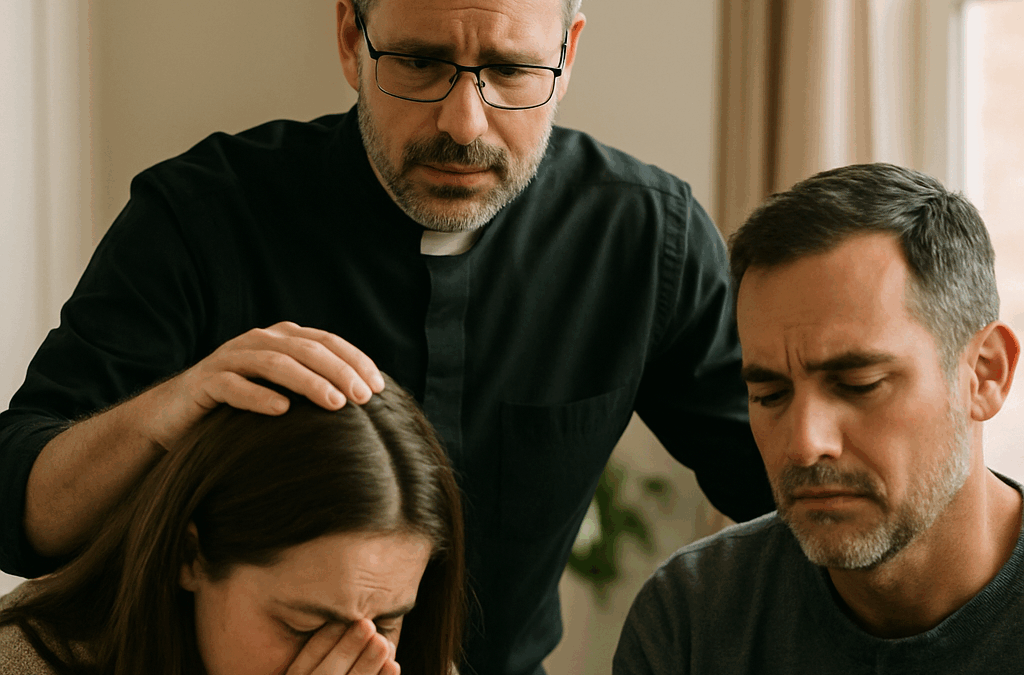
In a time when fear and uncertainty dominate the headlines—and often our congregational conversations—it’s easy to lose sight of why we said yes to ministry in the first place. But what if these perilous times could become fertile ground for deep spiritual transformation? What if fear wasn’t the end of the story, but the beginning of a more faithful, courageous one?

This blog is the second in a three-part series drawn from my keynote, Re-Thinking Renewal in Perilous Times. In the first blog, we explored “How to Lead with Hope When the World is Falling Apart.” In this post, we’ll dig into how to reclaim the heart of ministry when fear clouds the way. You’ll walk away with a renewed sense of calling, concrete guidance on what it means to lead from the heart, and tools to cultivate resilience in your congregation. Even in a culture of fear.


Fear Has Displaced Faith

Let’s name what’s real. Many churches today are shrinking, budgets are tightening, and denominational rifts are deepening. Add to that the personal toll ministry takes—overwork, burnout, and loneliness—and it’s no wonder that even the most faithful leaders question whether they can keep going.

In these conditions, fear often takes over. Fear of failure. Fear of irrelevance. Fear of saying the wrong thing. Fear of not doing enough. As fear grows, faith seems to shrink. The heart of ministry—serving God’s people with passion, purpose, and clarity—can begin to feel like a distant memory. But it doesn’t have to be that way.

There is a way to reconnect with your first love: the call of God on your life. But before we get there, we need to dispel a common myth. That is the myth that if you just work harder that things will get better.


The Myth That If You Just Work Harder, Things Will Get Better

There’s a persistent myth in ministry that says, “If I just work harder, pray more, serve longer, things will get better.” But the truth is, burnout doesn’t yield fruit. Over functioning doesn’t renew your spirit. And more effort without alignment to your true calling only leads to more exhaustion.

The real breakthrough comes not from pushing harder, but from pausing long enough to rediscover the heart of why you do what you do.


My Wake-Up Call in Ministry

Years ago, I hit my own wall in ministry. I was pastoring a church that had all the typical signs of decline: dwindling attendance, worn-out leaders, and a community that seemed more interested in the past than the future. I was trying to do everything myself—preach, teach, visit, organize, educate—and I thought if I just tried harder, it would all come together.

But instead, I started to lose my sense of joy. I felt lonely and persecuted. My prayers went unanswered. My energy waned.

It wasn’t until I took a step back and asked a deeper question—“What is the heart of my calling?”—that things began to change. I realized that ministry isn’t about keeping up appearances or managing decline. It’s about empowering people to steward Jesus’ big dream. It’s about embodying hope in the face of fear. It’s about spiritual transformation.

This insight became the seed of what is now Creating a Culture of Renewal®. And it still drives my work today.


How to Reconnect with the Heart of Ministry

Here’s what I’ve learned—both through personal experience and coaching hundreds of church leaders from around the country—about reclaiming your heart for ministry in a culture of fear:

  1. Acknowledge the Fear—Don’t Ignore It
    Fear thrives in the shadows. When we name it, we disarm it. Begin your leadership conversations with honesty about the fears people are carrying—about the church, their lives, or the world. You’ll build trust by being real.


  1. Reconnect with Your Why
    Remember the moment you first felt God’s call. What moved you? What broke your heart? What inspired you to lead? Go back to that. Journal about it. Preach about it. Let that original call renew your vision.


  1. Shift from Maintenance to Mission
    Churches stuck in maintenance mode quickly fall into despair. But churches centered on mission—even small, local, humble missions—find purpose again. Ask your people: What is God calling us to do right now, in this place, with what we have?


  1. Practice Resilient Spiritual Leadership
    Spiritual transformation begins with you. Carve out time for prayer, breathing, rest, and play. When your soul is nourished, your leadership flows from a deeper place. When you lead from that space, people notice.


  1. Cultivate Courageous Conversations
    Fear shuts down dialogue. But hope opens it up. Lead your congregation through intentional conversations about the future—not to preserve the past, but to co-create what’s next. Listen deeply. Speak boldly. Lead with love.


Dos and Don’ts

Do:

  • Do revisit your original call often.
  • Do share stories of faith overcoming fear.
  • Do involve others in discerning your church’s next faithful step.


Don’t:

  • Don’t pretend everything’s fine when it’s not.
  • Don’t isolate yourself—community is essential for resilience.
  • Don’t wait for “someday” to lead with heart. That time is now.


Next Steps/Takeaways

Are you ready to rediscover the heart of ministry—and lead from a place of spiritual power rather than fear?

Join me for RISE Into Spiritual Transformation, a dynamic online experience launching this July. In RISE, you’ll explore the essential inner work of apostolic leadership, learn how to align with your God-given call, and connect with a community of faithful change-makers just like you. All in six weeks.

This isn’t just another class or online course—it’s a spiritual awakening for church leaders ready to transform themselves and their ministries.

Let’s move beyond survival. Let’s lead with hope, courage, and clarity.

Let’s rediscover the heart of ministry in a culture of fear.


Copyright © 2025 rebekahsimonpeter.com.  All Rights Reserved.

How to Lead with Hope When the World Is Falling Apart

How to Lead with Hope When the World Is Falling Apart

We are living in a time when crises seem to pile on daily—wars rage, democracy is dismantled, institutions we once trusted are unraveling, and polarization is tearing communities and congregations apart. The Church is not exempt. Many leaders are burned out, congregations are shrinking, and hope can feel in short supply. And yet, this is precisely when the light of Christ is most needed. Your leadership matters more now than ever—not just for the survival of your church, but for the transformation of the world. That’s why it’s so important to learn how to lead with hope when the world is falling apart.

This blog kicks off a three-part series inspired by my recent keynote, Re-Thinking Renewal in Perilous Times. Over the next few weeks, we’ll explore what it means to embody a renewed kind of leadership that isn’t overwhelmed by the chaos of the world but is energized by the Spirit to transform it. Each blog will address a core challenge facing Christian leaders today and offer concrete steps toward spiritual vitality, missional clarity, and lasting impact. Whether you’re clergy or laity, this series will equip you to face perilous times with power, love, and a sound mind.


What’s Weighing Church Leaders Down

We are living in perilous times. Church leaders face the triple threat of congregational fatigue, cultural division, and spiritual apathy. Add in climate anxiety, global unrest, and political upheaval, and it’s no wonder even the most faithful are quietly asking, “Where is God in all this?”

It’s tempting to respond with more programming, more preaching, or more performance. But none of those can address the deep soul weariness that plagues our people. Or ourselves.

If you’re a leader who is trying to inspire renewal while battling your own burnout, you need more than good intentions. You need a new paradigm. That’s where re-thinking renewal comes in.


The Myth of More

One of the most pervasive myths in church leadership today is that renewal comes from working harder and doing more. The truth? Real renewal comes from doing differently. It’s not about more output, it’s about more alignment with God’s power, presence, and purpose.


My Journey to Rethinking Renewal

When I first entered ministry, I believed that if I worked hard enough, prayed deeply enough, and served long enough, I’d see transformation. And I did. Sometimes. But far too often, I encountered systems stuck in scarcity, people afraid of change, and leaders who looked successful on the outside but were falling apart on the inside.

Over time, I discovered that renewal isn’t something we manufacture; it’s something we make space for. As I began to rethink how I showed up as a leader, from striving to surrender and moving from control to collaboration, things started to shift.

In Creating a Culture of Renewal®, I now teach church leaders how to partner with God to co-create a new future. And it begins with re-thinking what renewal even is.


What Renewal Really Looks Like

So what is real renewal?

  • Renewal is not a return to the past. It’s not about recreating the “glory days” of full pews or booming Sunday Schools. That nostalgia can keep us stuck. Renewal is about moving forward in faith, not backward in fear.
  • Renewal is not a one-time event. It’s a way of being. It’s a posture of curiosity, courage, and co-creation with the Spirit. It’s how we live and lead in a world where old systems are breaking down.
  • Renewal starts with us. Before your church can be renewed, you must be renewed. That means paying attention to your soul. Listening to your body. Attuning to the Spirit. And trusting that God is still at work—even when it looks like the whole system is crumbling.


How to Lead with Hope When the World Is Falling Apart

Leading with hope doesn’t mean denying reality. It means being deeply rooted in God’s presence so you can offer something different than fear or despair. Here are three paradigm shifts that make hope possible, even now:


  1. From Panic to Presence
    Perilous times activate our survival instincts. But leading from panic only spreads more fear. Renewal begins when we learn to lead from presence—not performance. That means slowing down, listening deeply, and making space for God to speak. It’s countercultural, but it’s powerful.
  2. From Scarcity to Spirit
    Churches often operate from a scarcity mindset: “We don’t have enough people, money, or energy.” But the Spirit doesn’t work on spreadsheets. The early church didn’t grow because they had abundance—they grew because they believed in God’s abundance. Start asking: “Where is the Spirit already at work?” and join in.
  3. From Control to Co-Creation
    As leaders, we like to have plans. Control feels safe. But the renewal God is birthing won’t be micromanaged. It’s messy, unpredictable, and Spirit-led. When we shift from controlling outcomes to co-creating with God and our people, we allow something truly new to emerge.

These shifts breathe new life into tired systems. But they start with your own willingness to lead differently. The good news? You don’t have to do it alone.


Simple Wisdom for the Journey

Do

  • Take time for personal spiritual renewal before you lead others.
  • Cultivate silence and solitude as spiritual practices.
  • Invite your congregation into honest conversations about where they see God at work.
  • Look for small signs of life—and celebrate them.


Don’t

  • Rush into the next program or initiative just to feel productive.
  • Avoid hard truths. Denial is the enemy of renewal.
  • Try to do it all yourself. Collaboration is key.
  • Discount the power of the Spirit moving in unconventional ways.


Next Steps and Takeaways

If you’re ready to lead with hope when the world is falling apart, join me for a 90-minute interactive seminar: How Christian Ministries are Achieving Success: An Introduction to Creating a Culture of Renewal®.”

In this online session, you’ll:

  • Discover why many churches are struggling—and how to turn things around.
  • Explore three barriers to renewal and the breakthroughs that overcome them.
  • Envision a Spirit-led path to transformation for your ministry.

This seminar is your next step toward real, lasting impact.

Register now and start creating the kind of change your church—and your soul—has been longing for.


Copyright © 2025 rebekahsimonpeter.com.  All Rights Reserved.

Belief in Action

Belief in Action

As you know, these are challenging times. Times rife with hatred and violence, to both people and the planet. But during these challenging times, we who are moving from simply believing in to believing like Jesus can harness the courage and the power to make real, positive change. Change that makes a difference in the lives of the oppressed. In the fate of the planet. And in ourselves. Because without taking action to sustain and support ourselves, we can’t sustain and support others.

The transformation from believing in Jesus to also believing like him, can be the catalyst to responding to challenging times. Not just with passive prayer, but with action. Prayer, of course, is essential, but prayer motivated by belief can bring about amazing results.

Beliefs shape your thoughts; thoughts fuel your actions; actions demonstrate your faith, and your faith reinforces your beliefs. So, as you begin to believe like Jesus, you will find that you are now able to think new thoughts, take new actions, and develop new faith. Mountains and mulberry trees start to move. The people around you begin to respond in new ways. And the world becomes a brighter place.


Believe

Just as Jesus is in divine partnership with God, so are you. Jesus has faith that, at a deep level, there is no separation between him and God or between him and the Spirit. That they are divine collaborators. You, too, are invited into this unity, and are an expression of this oneness. Believe it. Embrace it. Don’t shy away from it. You are one with God.


Answer the Call

Jesus shows his partnership with God in his words and works. Use your creative, inborn capacity to create with words—to remind yourself of your unity with God. “I am one with God.” Saying the words names your belief and puts it out into the world. Contemplate your oneness with God to bring it to life. Express that divine partnership in what you do as well—in your good works. What becomes possible when you stretch and say “yes” to the needs around you? When you answer the call to help, your partnership with God will carry you.


Practice

Look for opportunities to partner with God. Nina Lesowitz and Mary Beth Sammons wrote a book about courage called What Would You Do if You Knew You Could Not Fail?: How to Transform Fear Into Courage. Let’s rephrase that and ask: What would you do if you knew God was your partner? Claim the courage to see the world through that lens. Put that partnership into practice with everything you do.


You and God can accomplish anything together, including miracles!

Including the miracle of transforming challenging times into loving, open, and peaceful ones.


Excerpted and adapted from Rebekah Simon-Peter’s forthcoming book, Believe Like Jesus: Rising from Faith in Jesus to the Faith of Jesus, November 2024.

Copyright © 2024 rebekahsimonpeter.com.  All Rights Reserved.

Transformation to the Faith OF Jesus

Transformation to the Faith OF Jesus

The world is in quite a state. Wars. Climate change. Regressive social policies. Gun violence.  A creeping sense of hopelessness.

It’s tempting in these perilous times to give in to doubt, fear, and despair, even for Christians. To isolate, rather than to connect. To hide, rather than to shine. To shrink in our faith, rather than expand.

But we can’t do that. That’s not who we are. That’s not what Jesus wants for us, and it’s certainly not how he lived in his time on earth. Though we look to the Kingdom of Heaven for our eternal reward, we can’t forget our call to create the Kingdom of Heaven on earth.


Faith IS Action

There’s a saying often attributed to Mahatma Gandhi: “Be the change you wish to see in the world.” This advice carries particular weight for Christians. The world can use some of that change—a lot of that change—right about now. As Christians, we’ve always been asked to live our faith out loud. While we may feel silenced by the sheer number of challenges we face, the present times demand that we dig deep into our spiritual lives so we can be bold voices for love, for a shared purpose, and for a common vision. By living our faith in Jesus, we can transform the world and manifest the Kingdom of God here on earth.

I’ve prayed about this often and deeply. What does this actually mean? How can we use our faith in Jesus to transform the world?

The more I’ve thought about it—the more I’ve prayed about it—the more I’ve come to realize that faith in Jesus may only be a first step. When we have faith in Jesus, aren’t we putting the load on him? Asking him to be responsible for fixing things? This kind of faith is passive. How is that being the change we wish to see in the world?

To rise to the challenge of our times, we must draw on a more active faith. We must transform our faith so that it has a greater impact. What if we rise from having faith in Jesus to having the faith of Jesus?


The Transformation of Belief

Faith in Jesus gives us someone to follow. That’s not a bad thing. We all need someone to inspire the good in us—“the better angels of our nature,” as Abraham Lincoln put it in his First Inaugural Address. Who better than Jesus? But faith in Jesus puts the locus of agency outside ourselves. Like there’s nothing we ourselves can do.

When we take on the faith of Jesus, however, we become the locus of agency. Instead of just believing in Jesus, we begin to believe like Jesus. We activate the faith we have. As our souls are infused with Jesus’ kind of faith, we become ever more Christ-like. Not only do we tap into Jesus’ divinity, but we also tap into our inner divinity. And we become miracle-makers alongside Jesus.

Lest this sound heretical, let me assure you that rising from faith in Jesus to the faith of Jesus is a very biblical concept. It’s the difference between being a disciple and an apostle. Think of a disciple as a follower, a student, an apprentice, and think of an apostle as an ambassador, a messenger, a journeyman or -woman empowered to act on their own on behalf of the one who sent them. The goal of embracing the faith of Jesus is to advance from being a disciple to being an apostle. In fact, that’s always been the purpose of following Jesus: to be sent by him out into the world.


Just as a tree puts down deep roots to grow tall, we take a deep inward journey of spiritual transformation to rise into human beings who live our faith more courageously, more miraculously.


Excerpted and adapted from the Introduction to Rebekah Simon-Peter’s forthcoming book, Believe Like Jesus: Rising from Faith in Jesus to the Faith of Jesus, November 2024.

Copyright © 2024 rebekahsimonpeter.com.  All Rights Reserved.

3 Tips to Becoming an Environmental Steward

3 Tips to Becoming an Environmental Steward

Is your church an Environmental Steward?  “Of course”, you say, “we recycle!” You’ve changed the paper plates, napkins, Styrofoam coffee cups, and plastic cutlery to reusable ones.  Your bulbs are LED and you have bike racks to encourage riding to church instead of driving for those able.

But it’s time to move into our communities and for churches to lead the way in change. In this week’s blog, I offer 3 tips on how to do just that with the added benefit of creating closer connections with your community.

But first, let me dispel a common myth. The myth that your community isn’t ready, or open, to environmental stewardship.


Myth: Your Church Isn’t Ready for Environmental Stewardship

Who doesn’t want to live in a cleaner, healthier environment? Everyone, right? From the folks worried about their kids playing in a toxic playground to the grandmas concerned about clean air, we all have a stake in this.

You might be thinking. “But what about those people who don’t care?” Here’s the thing: most people do care. They might not be shouting it from the rooftops, but deep down, they want a better world for themselves and future generations.

And guess what? Churches are in a perfect position to tap into this desire. You’re already a cornerstone of the community, a place where people come together to share values and support each other. So why not expand that to include caring for our planet?


Environmental Stewardship and the Christian

Is being earth-friendly just a secular movement or a political agenda, or does environmental stewardship have a place in our life with God?

As it turns out, paying attention to the health of the planet is deeply grounded in the Bible. You could say it is a core biblical value. While the Bible has some 490 references about heaven and 530 about love, it contains over 1,000 references to the earth.

When I published “Green Church” in 2010, I couldn’t have imagined the level that the effects of climate change would have fourteen years later. I recently read about how emergency personnel in Phoenix have been working to keep the death count down from the heat; all ambulances and fire trucks there now being stocked with ice-filled body bags.  Of course, everything mentioned in “Green Church” is more essential now than ever.


Environmental Stewardship and the Community Connection

1) Sustainable Solutions – Start with a Community Garden if you’ve got the room for it. Encourage your community to help plant the garden, then to pick the fresh produce.

Use native plants in your landscaping to reduce the need for water and pesticides.

Install rain barrels to collect rainwater for irrigation.

And make the entire area an educational experience with signs about the garden, healthy eating, native vegetation, and the dangers of pesticides. The signs can be color-coded for multiple grade levels for children.

You can even add signs in Braille and raised the garden beds so those in wheelchairs can also plant and pick.

2) Invite the Community IN –Form a Green Team or committee of volunteers within the church to plan environmental initiatives and ensure ongoing attention to sustainability. Your Green Team can be in charge of welcoming the community to join you for workshops and events, film screenings, and guest speakers focused on environmental and sustainability practices.

As I wrote about in a recent blog, your church is the perfect place to help the community during heat waves. It can also be a welcoming place during extreme weather events like tornados, hurricanes, and wildfires. Connecting with the community on issues that affect all of us can help build strong and lasting relationships.

And don’t forget the children!  Have childcare, if possible, and environmentally focused projects for older kids.


3) Go OUT into the Community – To become a part of the community, don’t just invite them to come to you! Acknowledge what your community is already doing in the areas of environmental stewardship and sustainability.

As a clergy leader, encourage your congregation to join you in helping with already-established local clean-up projects. Take part in climate action events. Become visibly active in interfaith environmental coalitions.


When it comes to environmental stewardship, it takes each and every one of us to protect the planet with which we’ve been blessed. As Environmental Leaders who are also church leaders in our communities, we have a responsibility to lead by example.

Church leadership extends into all areas of life and living. I hope you’ll join me in my free seminar, “How Christian Ministries are Achieving Success” which delves into the many aspects of clergy leadership and the renewal that leadership can generate. Register today as my August sessions are filling up fast.


Copyright © 2024 rebekahsimonpeter.com.  All Rights Reserved.