Two Popes, Three Opinions

Two Popes, Three Opinions

There’s a classic Jewish aphorism: “two Jews, three opinions.”  It sounds like the punch line to a joke, but it’s merely an observation about Jewish willingness to see all sides of an argument and to debate them with aplomb. Rabbi Wolpe references Yeats: “Out of the quarrel with others we make rhetoric; out of the quarrel with ourselves we make poetry” as he lovingly notes the Jewish penchant for argument as holy discernment.

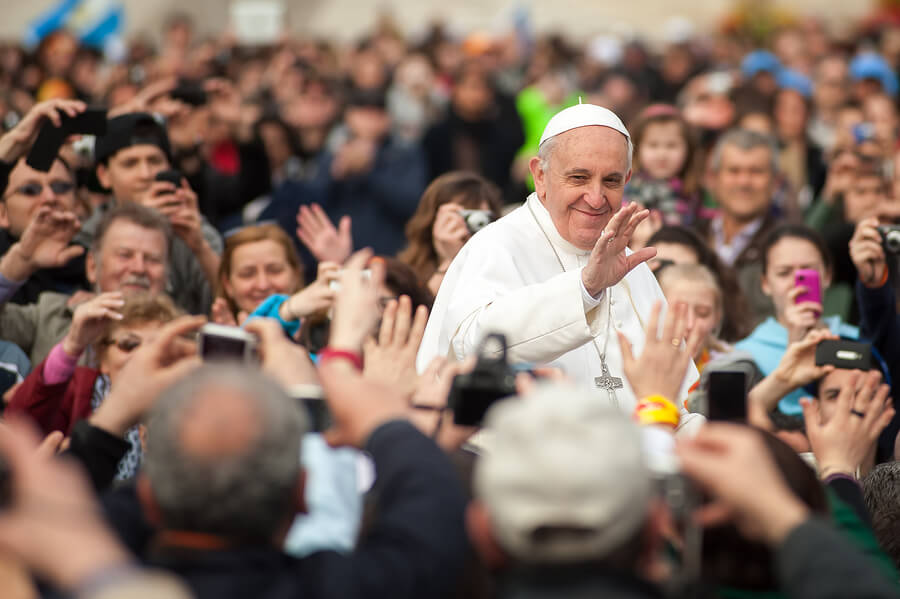
One wonders with the two Popes—the active Pope Francis and the retired Pope Benedict—if  what is being produced in their quarrel is rhetoric or poetry.

While both Popes are, of course, Catholic, they come from very different streams of Catholicism.  That difference was made clear in the recent Netflix movie The Two Popes. The flick followed the unusual transition of power between the conservative Benedict and the liberal Francis.  It juxtaposed the European cardinal—a man of the Vatican’s inner court, and the South American Jesuit—a man of the people. Along the way it showed the two popes coming to terms with each other’s worldviews through mutual confession and bearing of one another’s burdens.

I have been hungry for models of leadership which transcend dismissive politics (I define dismissive politics as anything that labels the opposite point of view with words such as “hoax,” “witch hunt” or “fake”). This movie satisfied my hunger.

I found The Two Popes to be particularly appealing because it zeroes in on the story of an unlikely leadership transition between two very different personalities.  In 2005 Pope Benedict had campaigned for and welcomed the papacy, while Cardinal Bergoglio had shied away from it.  Benedict was elected but eight years in, he has burned out under the pressures, including the burgeoning crisis of priestly pedophilia.  He is ready to leave.  At the same time, Bergoglio is ready to retire. In order to have his retirement received, though, he must travel to Rome to meet with Benedict.

Yet Benedict holds him off, parries with him for days, and refuses to accept his retirement.  As the two men become increasingly transparent one another, first tentatively, then unequivocally, ­­­­­something unlikely happens.  The two men come to trust one another, to understand one another.  Maybe even befriend one another. When Bergoglio is elected pope, the other beams.  “I must back away.  Your time has come.”

Sources report that this type of interaction may not in fact have occurred.  Yet it speaks to the kind of leadership that many of us long for—transparent, transformative, responsive to the needs of the people, and responsive to the soul within.

At the same time as this movie has come out, a verifiable interaction between the two popes has occurred.  While Pope Francis is exploring ordaining married men in remote areas of the Amazon, a new book lauding celibacy for priests bears Pope Benedict’s name as co-author. At first glance, this seems to be in direct contrast with the unexpected quality of leadership Benedict demonstrates in the movie. In the movie he promises not to undermine Francis.  In real life, through this book, he seems to be.  But a closer look at the facts reveals something else.  Since the book’s release, Benedict has protested that he did not authorize his name to be used as a co-author.  He has ordered his name be taken off it.

In the meantime, the rest of the world has glimpsed the kind of debate that allows for new opinions and new vistas to arise. While Catholics wonder if two popes and at least two opinions are good for the unity of the church, there may be an upside. A diversity of opinions may actually get people talking, exchanging perspectives, and searching for deeper truths.  As United Methodists, who have been confronted with either/or schism know, that kind of exploration has to be good for the church.

If you would like to learn how to embody a new model of leadership for your church, please contact us or visit www.cultureofrenewal.com to learn how to dream and lead like Jesus.

Living Epiphany

Living Epiphany

The Season of Epiphany is framed by two key events in the life of Christ:  his baptism and his transfiguration.  In between these two major experiences, this liturgical season covers Jesus’ entire life and ministry.  It’s a season of deepening in spiritual growth.

There’s an interesting element, though, in the Season of Epiphany.  A hidden message contained in these passages.  One that will likely surprise you.

Just as the Season of Epiphany explores and celebrates how God incarnates in the life and ministry of Jesus, so it invites you to explore and celebrate the presence of God within your own life and ministry.   What do I mean by that?  Just this: if you have a body, then you have a soul.  If you have a soul, then you have a slice of the living Divine presence within you.  As a follower of Jesus, you are called to be Christ-like in every way.  That means you also harbor twin natures or impulses—both human and divine.  To walk in the footsteps of Jesus is to cultivate the full expression of both your humanity and your divinity.

This Epiphany, do listen to the promptings of the Spirit within you.  With Jesus as your Guide, ask:

  • What is God eager to express through me?
  • How is God fulfilling divine longings through my life and ministry?
  • How is God working through me to contribute to the Kingdom?

There are needs all around you:  in your family, in the congregation, in the community, in the denomination, in the country, and in the world.  Enough that it just might feel overwhelming.  Consider this:  overwhelm is the sensation that comes when you try to control outcomes, or resist the movement of the Spirit.  Yet, you are divinely designed to be a co-creator with God. May you live into this epiphany, this revelation.  And may this Season of Epiphany be a time of surprising, divinely guided growth for you.

Not sure how to live into the fullness of these promptings?  Join us for the DARE to Dream Like Jesus online workshop, beginning January 14, 2020.

Is Your Advent Prayer Missing the Point?

Is Your Advent Prayer Missing the Point?

The Advent the liturgy instructs us to pray—solemnly, hopefully, deeply—is “Come, Lord Jesus, come.”  This hopeful prayer set against the backdrop of darkening days—both seasonally and politically —implies waiting with expectation.  Yet I can’t help but wonder if this prayer misses the point.

What are we waiting for?  We all know Jesus has already come.  While he was here, incarnate on earth, he already showed people how to do what he did. How to bring health to illness. How to bring light into darkness.  How to bring truth to an empire of crushing power.

Instead of waiting on Jesus to work through some heavenly redemption, perhaps Jesus is waiting on us to work some earthly miracles.

During Jesus’ life, he was very clear about sharing his power with his disciples and apostles.  He wanted them to be able to do the very things he did.  To heal the sick.  To cast out demons.  To feed the hungry.  To proclaim the Kingdom.  To expand the ranks with new apostles of peace.

If you are praying for Jesus to do something he has already taught you how to do, then maybe it’s time to take up some new prayers.

I’d like to suggest the following three prayers this Advent:

Pray the Apostle’s Prayer. “Lord, increase our faith.” (Luke 17:5) When the apostles prayed this, they weren’t asking to have more faith in Jesus, but to have more of the faith of Having that sort of faith is what it takes to do the things he did.  And to go beyond it.

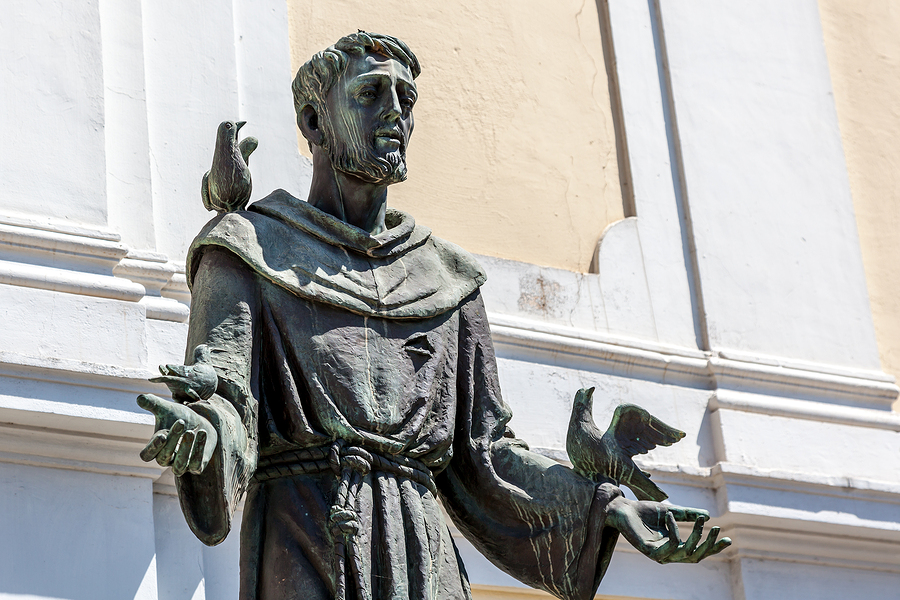
Pray the Prayer of St. Francis. I love this prayer because it instructs me in exactly how to   be an apostle of peace, a force for good in the world.

Lord, make me an instrument of your peace
Where there is hatred, let me sow love
Where there is injury, pardon
Where there is doubt, faith
Where there is despair, hope
Where there is darkness, light
And where there is sadness, joy
O Divine Master, grant that I may
Not so much seek to be consoled as to console
To be understood, as to understand
To be loved, as to love
For it is in giving that we receive
And it’s in pardoning that we are pardoned
And it’s in dying that we are born to Eternal Life
Amen

Pray “I believe; help thou my unbelief.” (Mark 9:24) I pray this prayer when I find myself wavering in my ability to be courageous in the face of evil, or hopeful in the face of darkness.

Praying these prayers will align your life, thoughts, actions and soul with Jesus’ call to us:  to be apostles of peace, healing, comfort, and Kingdom.

There’s one more thing I invite you to do this Advent.  Register for the DARE to Dream Like Jesus course.   You will learn about Jesus’ big dream for the world, the DARE model of dreaming, and how to grow in the faith of Jesus to make a true difference.

Pray “I believe; help thou my unbelief.” (Mark 9:24) Share on X

Should Gender Matter in Christianity?

Should Gender Matter in Christianity?

When addressing Gender and Christianity, a particular example comes to mind.  Specifically the role of women in church leadership.  After telling wildly popular evangelical bible teacher Beth Moore to “go home,” influential fundamentalist preacher John MacArthur clarified his thoughts on women in church leadership. He warned that “empowering women makes weak men” and “weak men make everybody vulnerable to danger.”

Wait a second.  Studies around the world show that empowering women is the key to developing economies, family well-being, better nutrition, and equal rights.  So how could this move be anti-male, anti-social or anti-Christian?

When you take the long view of religious development, I believe MacArthur had it exactly backwards.  Rather than derail Christianity, the full participation of women in all aspects of Creation is the fulfillment of the Christian impulse. 

A look at Judaism reveals why.

Judaism is built on the power of distinctions.  The creation stories exemplify the distinctions between the first six days and the other days of the week; between the sun, moon and stars; between plants and animals; and between humans and God.  The evening prayer in Judaism plays on those themes by glorifying the distinctions between night and day, and between sleep and activity. Havdalah, the blessing that ends the Sabbath, lauds the differences between holy and secular, and between Sabbath and the rest of the days of the week.  Ancient Jewish prayers even prompt men to pray with thanksgiving that they were not made a woman, a gentile or a slave.  Distinctions matter in Judaism.

Christianity goes in a decidedly different direction. 

Rather than playing on distinctions and dualities, Paul has a vision of integration. “There is no longer Jew or Greek, there is no longer slave or free, there is no longer male and female; for all of you are one in Christ Jesus.” (Galatians 3:28) Indeed, women play a major role in the Gospels.

This theme of unity and integration is further celebrated in the New Testament. Consider the story of Pentecost.  When the Spirit comes, all hear a unifying message in their own language. This unity is celebrated as people share in a common life, a common purse, and a common purpose.  Finally, we see in Revelation 7:9-10 that all tribes, peoples and languages have a common trajectory—unity within the oneness of God.

So what’s with the stink about gender distinctions?  Truth be told, MacArthur isn’t the only one who forgets the integrative impulse in Christianity.  Mainline Christian churches have their own version of his call for strong women leaders to “go home.”  Women are called the “B word” and sent packing in more ways than one.

I wonder if the focus on gender isn’t indicative of deeper problems in the church. Like decline in worship, influence, and imagination.  Todd Anderson, a District Superintendent in the West Ohio Conference, told me, “The church is only in decline where the status quo is enforced.”  He should know.  Every District Superintendent is painfully aware of how the status quo stifles new life.  That’s why Todd is working across state lines, district lines, and conference lines to create new, experimental ministries. And they’re bearing fruit.

Decline is not a Christian value. The status quo is not a Christian value.  Women preaching, turning things upside down, is. That’s what lets new life in.

Interestingly even Judaism itself has moved toward integration.  While distinctions still matter, female clergy are beginning to be ordained in the orthodox world.  Even transgender clergy are being welcomed.

Bottom line:  if empowered women are threatening some men, perhaps those men need to deepen their own sense of self, rather than seek to bring women down a peg.

How to Create a Culture Shift

How to Create a Culture Shift

At Shepherd of the Hills Church, it’s been a long time since the cries of children interrupted worship. That’s okay with this aging congregation. Although they miss younger people, they appreciate less commotion. If only they could get some responsible families, they’re sure things would look up. They want the pastor to recruit them. But he’s gotten busy lately, bogged down in church meetings that seem to go nowhere. This congregation has tried to start a “Bring a Friend to Worship” Sunday. But newcomers get scared off by the appeals to give, and the red ink in the bulletin. Meanwhile the pews thin out, and a steady stream of funerals keep the pastor hopping. Worship used to include several unknown faces. Not anymore, but at least now everyone knows each other. Lots of time to pray for each other, and to keep the love flowing.

On the surface, this church sounds pretty normal. But dig down a bit and you’ll find a church with no dream other than to survive. How does a church like this create a shift in its culture?

First, let’s take a look at what happens in churches like this.  They develop a bevy of problems like the following eight:

  • shrinking numbers
  • problem people
  • stagnant giving
  • listless worship
  • gutless prayer
  • bait and switch evangelism
  • insulated focus
  • dead-end decision-making

In my work with congregations through Creating a Culture of Renewal, I have noticed that these eight distinct problems are reliable indicators of a church operating without a vision. I believe there is a strong connection between the two.

Vision is key to creating a shift in the culture.  The vision has to be bigger than a church improvement plan, though.  Otherwise, you are back to square one.  You’ll be managing decline rather than creating a sustainable shift in culture.  That requires the courage to Dream like Jesus®.

Here are the four steps a congregation must DARE to undertake:

  1. Dare to have a God-sized DREAM. Jesus dreamed that earth would be a reflection of heaven.
  2. Dare to ALIGN others to the dream. Start with the people around you.  Jesus did. The fishermen, tax collectors, and other people he got on board didn’t have special credentials.  They did however, believe in his big dream.
  3. Dare to REALIZE the dream. Bringing the dream to fruition takes courage. You’ll encounter some road blocks and obstacles, yes.  And, you’ll also encounter people ready to get on board with an energizing dream that makes a true difference.  Jesus and his friends made a huge impact through their healings, feedings, proclamations, and conversations.
  4. Dare to EXPAND out into your community. Your community is eager for you to engage them with love, courage, and creativity.  They long for the Kingdom, even if they don’t put that in words.

The time to dream like Jesus is now.  In my experience, the longer you wait to address the eight dynamics of decline, the more embedded they’ll become and the harder they’ll be to dislodge. Culture shift will be almost impossible.  On the other hand, the sooner you engage a God-size dream, the more hope there is for you and your community! Ready to learn how? Register for the online workshop DARE to Dream Like Jesus® now.

The above blog is excerpted and adapted from Dream Like Jesus:  Deepen Your Faith and Bring the Impossible to Life, © 2019, Rebekah Simon-Peter.