by Rebekah Simon-Peter | Apr 19, 2017
I attended two Passover Seders last week. One I led for a large group of New Mexican church-going Christians. The other was in the home of my Jewish kid brother and our religiously, ethnically diverse gathering of family and friends. The first one was designed to highlight the Jewishness of Jesus. The second one was designed to raise issues of societal injustice. Both relevant emphases for a Seder.
Even with their different focus and attendees, I was reminded of the meta message of a Seder. Any religion worth its salt must re-invent itself from time to time.
The Passover Seder as we know it now didn’t exist in Jesus’ day. Jewish as he was, he wouldn’t have eaten charoses mixed with horseradish sandwiched between 2 pieces of matzah. He wouldn’t have invited the youngest disciple to chant 4 questions. He definitely wouldn’t have hidden an afikomen.
Here’s what he would have done: recited blessings over a paschal lamb. Blessed matzah and wine. Sung hymns. Most of which is noted in the various accounts of the Last Supper or Seder.
Why the difference? When Jesus was alive, the Temple still stood. That meant that the Jewish form of worship was sacrifice-centric. Leviticus 23 gives ancient instructions on how to observe these holy days.
Less than 40 years later after Jesus died and was resurrected, that whole system of sacrifices was gone, destroyed along with the Temple. Judaism had to reinvent itself—in a hurry. And it was the Pharisees to whom that task fell.
Of the 4 parties that existed at Jesus’ time—Pharisees, Sadducees, Zealots and Essenes—only the Pharisees survived much beyond the fall of Jerusalem. Sadducees, whose members were tasked with Temple duties, disappeared—their services no longer needed. Zealots, with their penchant for stirring up trouble, are credited by historians for hastening the destruction of the holy city. Their remains were scattered among the charred rubble of Jerusalem. Essenes, who didn’t believe much in reproduction, simply died out. That left the Pharisees. It was their creative intellectual, theological and ethical genius from which Rabbinic Judaism sprang. Rabbinic Judaism provided the template from which today’s many Judaisms have flowered.
The Pharisaical emphasis on right action rather than right belief, and their ability to thrive under oppressive circumstances served them well on many accounts. Especially when it came to their biggest project yet–reinventing Judaism in the face of a world that no longer existed, and a religious system that could no longer function. Once the sacrificial system was gone, they figured out how Judaism might live on. They reinvented religion—while holding the core of it in place—one God, and a people dedicated to the service of that God.
Judaism is famous for reinventing itself over the millennia. But they are not the only ones.
At many critical junctures, Christianity has had to do the same. When Jesus didn’t return right away—Christianity had to take a new path without a living leader. When Constantine converted to Christianity and it became the dominant religion of the Empire–it again reinvented itself. And once again at the behest of Martin Luther’s demand for transparency and accountability. Each church split has signaled a kind of reinvention.
We’re not done reinventing ourselves, either. Twisted experiences from the Crusades and frontier America have caused most churches to drop coercive evangelism. We have re-invented the way we read scripture. Most Protestant denominations now welcome divorced people, female leadership and women clergy. We haven’t worried about wearing mixed fibers for a long time.
Even as our structures and hermeneutics have changed, so have our ecclesiologies. We have already begun moving away from a clergy- and cathedral-centric expression of faith. Trained laity, house churches, experimental missional and other “weird” faith communities are taking root.
While our central tenets remain the same—and people of good faith will disagree about which tenets belong in this list, but here’s mine—God is love; Jesus Christ is God incarnate; The Kingdom of Heaven is at hand; We are Kingdom people—the way we live those out has changed radically. Rather than see these changes as a weakening of the faith or unholy compromises with culture, perhaps its time to see them as part of the natural evolution of a religion that has staying power.
After all, reinventing religion is the very process by which Christianity arose. As I demonstrate in The Jew Named Jesus, Jesus was a Jew through and through. That means the religion of Jesus was Judaism. The religion about Jesus, however, is Christianity. It will be interesting to see how this process of reinvention continues to evolve as we meet the realities of a changing world, expanded knowledge, and unfolding opportunities.
by Rebekah Simon-Peter | Jul 5, 2016
I mourned when I heard that Elie Wiesel had died. I grew up with this Holocaust survivor and Nobel Laureate. 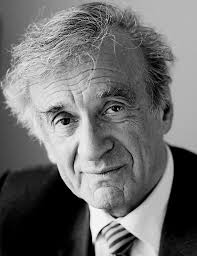 No, not in Auschwitz or Buchenwald, the concentration camps of his childhood experience, but in the darkened room of my 8th grade Jewish Sunday School class. There on Sunday mornings we watched films based on his classic books about the Holocaust. They were dreary, somber films. Even so, watching them made me a better Jew, and a better Christian.
Early on, from these films, I learned the value of wrestling with God, the post-Holocaust stance of much of world Jewry. I also learned the value of wrestling with my place in humanity. Some post-Holocaust Jews asked “How could God allow this?” I asked, “How could fellow humans turn and look the other away?”
Rather than turn me off from God or religion, these movies instilled in me a deep sense of right and wrong, and the need to watch out for each other. From the conversations that followed the movies, I learned the mantra of my parents’ and grandparents’ generations: “Never again.” Never again to genocide, repression, racism. Never again to silence in the face of injustice.
I’m grateful to Elie Wiesel. His work raised important questions, not just for my 8th grade self, but for the world. He stood for worldwide human rights—for Jews in Israel, the Soviet Union and Ethiopia; for the anti-Apartheid movement in South Africa, the Desaparecidos of Argentina, Bosnian victims of genocide in Yugoslavia, the Miskito Indians in Nicaragua and the Kurds.
All of this made me a better Jew because he taught me the value of knowing one’s history. Later, it also made me a better Christian because I understood the danger of the church’s silence in the face of evil.
These days the church is often loathe to venture into “politics,” preferring to be a neutral, conflict-free oasis of spirituality. But when are politics and spirituality ever really separated? Certainly not in Jesus’ day. Nor in our own. Spirituality—especially the spirituality of love—must be lived out in the real world to have real power. Especially in the face of fear, bigotry, and scapegoating.
We live in an age when the words “Never again” seem to have been forgotten. Refugees are once again turned away at crucial borders. Immigrants are eyed with suspicion. The “other” is scapegoated. Violence and power go hand in hand.
What are you teaching in your Sunday School rooms? It can’t be all Veggie Tales, fun and games. There needs to be some substance–where our faith interacts with the injustices of the world. Let’s not be afraid to tell our kids the way it really is. Chances are they already know. And if they don’t, maybe they need to.
by Rebekah Simon-Peter | Jan 18, 2014
This week, I’m continuing to share tips for people of faith who are resolved to evolve in 2014. Tip #1 was
Get Authentic.
Tip #2 is Get to know Jesus, again.
When Jesus first came to me in a vision, over 20 years ago, it was a shock. Not only that he was in the business of appearing to Jews like me, but that he didn’t look anything like the pictures I had ever seen of him! He wasn’t blond haired and blue-eyed. He wasn’t white. He didn’t have straight hair. He wasn’t tall. He wasn’t somber. He was curly-haired, olive-skinned, short and handsome! And most definitely Jewish. Just like a close reading of the New Testament would later reveal to me.
What’s your picture or image of Jesus? Maybe it’s time to be open to a change!
A recent Christian Century article, Jewish and Pacifist, made the case that “The separation of Jesus from his Jewishness is what led to the accommodation and eventual support of racism by traditional theology.” Not to mention centuries of church sponsored anti-Semitism!
It led to a “generic” or universalist Jesus that turned out to be white, European, and Christian!
Having a new experience of Jesus can refresh your faith. And shake the cobwebs out of your assumptions. It sure did mine.
I like the idea that getting the particulars of Jesus right–ethnicity, culture, religion–actually combats racism and anti-Semitism. Maybe all the isms!
This year, as you resolve to evolve, resolve to get to know Jesus, again. To help you…
- Read and discus The Jew Named Jesus. Pub theology groups, Bible studies, book clubs, others are reading and discussing this in a variety of settings.
- Host a wonderful Passover Seder, replete with Matzah, Hebrew blessings, and the cup of Elijah.
- Dig into whether the day of Jesus’ death was a Good Friday or Bad Friday.
To help you get into Jesus’ world, I’ve got another quiz for you with 3 questions:
What is the name of the calendar the year 2014 is based on? What calendar did Jesus follow? What is one of the main differences between the two calendars? The first one to answer all 3 questions correctly gets a free autographed copy of “The Jew Named Jesus.” Send us your answer, along with your name and address to claim your prize.
by Rebekah Simon-Peter | Aug 21, 2013
Just as Christians celebrate Easter and Christmas every year, so Jesus and his family—along with their relatives and friends—celebrated Passover every year.
It was a big to-do.
Each spring in the Hebrew month of Nisan they trekked from their home in Nazareth up to Jerusalem for the seven-day festival of Passover.
One year, as Jesus was approaching manhood by traditional Jewish calculation, “when he was twelve years old, they went up as usual for the festival.” They may have gone up as usual but they didn’t come back as usual. The rest of the family headed home but unbeknownst to them Jesus stayed behind in Jerusalem, without even a word.
What Mary and Joseph would’ve given for a cell phone and a text message!
Without any digital advantage however, his parents were worried sick. They turned around mid-journey and finally located Jesus in the Temple. They weren’t that happy about it either. Mary scolds Jesus who was “sitting among the teachers, listening to them and asking them questions.” Apparently, they were also asking Jesus questions because the teachers “were amazed at his understanding and answers.” Jesus, unfazed, wonders why his parents were searching for him. “Did you not know that I must be in my Father’s house?” His parents were as baffled by his actions and his response as Jesus was by their anxiety.
If this story is any indication, Mary and Joseph definitely trained up their child in the way he should go. He loved God, loved Torah, and loved learning—all pluses in the Jewish world view. As the years went by, “Jesus increased in wisdom and in years, and in divine and human favor.” Mary and Joseph did a good job raising Jesus as a faithful Jew. But as parents know all too well, not every kid keeps the faith. What about Jesus? Did he take it on as his own as he grew up? Or did he leave it behind and become a Christian?
(Excerpt from The Jew Named Jesus, p 27-28, Rebekah Simon-Peter, Abingdon Press, 2013)
by Rebekah Simon-Peter | Dec 1, 2012
Do you remember what happened on the 8th day of Christmas?
The 8th day of Christmas, you ask? You mean, eight maids a milking?
Nope!
On the eighth day of Christmas–after Jesus is born in a humble feeding trough, after the angels sing “Glory to God in the highest” and announce good news of great joy to all the people, after the shepherds, amazed, run to Bethlehem, but before the Magi come bearing gifts–Jesus is formally welcomed into the Jewish people.
The eighth day of Christmas, as it were, is when Jesus is circumcised and named. The ancient rite of circumcision, first practiced by Abraham as a sign of the covenant with God, is routinely performed in hospitals now. But not then.
And then as now, circumcision is the first and most basic mitzvah (commandment or law) to be fulfilled for a Jewish baby boy.
“This is my covenant which you shall keep, between me and you and your offspring after you: Every male among you shall be circumcised. You shall circumcise the flesh of your foreskins and it shall be a sign of the covenant between me and you. Throughout your generations every male among you shall be circumcised when he is 8 days old…” Genesis 17:10-12a
Jesus isn’t the first Jewish boy whose circumcision is noted in the New Testament. Don’t forget cousin John’s, also on the eighth day. His naming and miraculous birth is mentioned as well.
“Now the time came for Elizabeth to give birth, and she bore a son. Her neighbors and relatives heard that the Lord had shown his great mercy to her, and they rejoiced with her. On the eighth day they came to circumcise the child, and they were going to name him Zechariah after his father. But his mother said ‘No, he is to be called John.’”
Luke 1: 57-60
Circumcision is a permanent sign, etched in the flesh, of partnership with God. Even more than lineage and ancestry, circumcision anchors these boys, and their families, firmly in the Jewish community.
At his circumcision Jesus is also named with “the name given by the angel before he was conceived in the womb.” (Luke 2:21) By the way, it should be noted that girls are named too, but not circumcised.
About a month after Jesus’ circumcision, Joseph and Mary come to Jerusalem. There they present Jesus to the LORD in the ancient practice of redemption of the firstborn son (pidyon ha ben). Since Jesus is Mary’s firstborn, and as the author of Colossians later asserts, “the firstborn of all creation” (1:15), he is presented then bought back or redeemed after he reaches 31 days old.
Joseph and Mary would have paid a small sum (five silver shekels in biblical times; today, usually five silver dollars) and performed a brief ritual in the Temple to fulfill the mitzvah. (Numbers 18:15-16)
While the family is at the Temple for the redemption ceremony, two righteous and devout Jews, Simeon and the prophetess Anna, recognize Jesus as a sign of God’s salvation and praise God, for this “light for revelation to the Gentiles and for glory to your people Israel” who would himself redeem Jerusalem. (Luke 2:32, 2:38)
From his earliest days, Jesus is raised in a strong and beautiful Jewish home. From circumcision to naming to redemption to offering sacrifices, Mary and Joseph do “everything required by the law of the Lord.”
Not from a sense of empty duty or obligation, I suspect, but a profound connection to God and Torah and love of their child, Jesus.
After these mitzvot (plural of mitzvah) are fulfilled, Jesus and his parents “returned to Galilee, to their own town of Nazareth.” At home in Nazareth the mitzvot, blessings, prophesies and praises take root: “the child grew and became strong, filled with wisdom; and the favor of God was upon him.” (Luke 2:39-40)
___
Excerpted from the forthcoming book, “The Jew Named Jesus” (Abingdon Press, 2013) by Rebekah Simon-Peter.

