
Welcoming the Stranger

Welcoming the Stranger

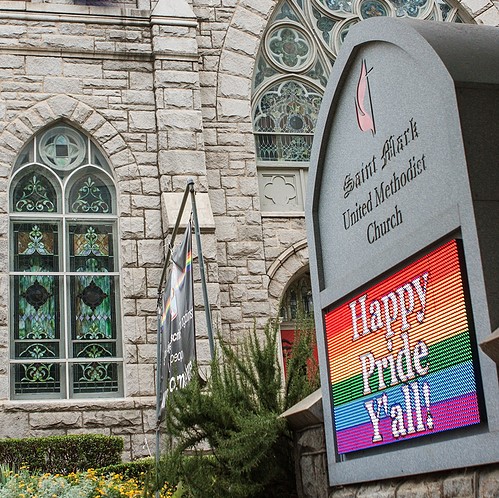
We’ve witnessed a vast array of immigration policies, and differing opinions on those policies, for years. Both here in the US and in other countries around the world, those seeking safety, protection, and a place to work and live with their families are often turned away, imprisoned, and treated as less than human.

But, by and large, Christian denominations have taken a Christ-like, welcoming, compassionate view of immigrants and their suffering. Welcoming the stranger was, after all, a part of Jesus’ big dream.

The United Methodist Church’s revised Social Principles, adopted at this year’s General Conference, included the affirmation of the dignity of migrants and opposition to laws and policies that punish the displaced. The US Council of Catholic Bishops has updated policies that incorporate the need to welcome the refugee at US borders with Jesus-led compassion. And the United Church of Christ offers a guide to becoming an immigrant-welcoming church.

These are just a few examples of major Christian denominations that confirm that, as followers of Christ, we are guided to treat the suffering with compassion and respect.  Other non-Christian religions, and humanitarian organizations, have similar policies of hospitality toward the stranger.

That being said, we know that immigration can be a hot-button topic. Conversations, including those around the dinner table, can become heated. Sometimes relationships are permanently ruptured. We’ve seen vast differences in how people think of immigrants – their images of displaced people and families often formed by outside sources, media, or politics. Of course, all countries need immigration policies.

So, how do we truly welcome the stranger?


Open Hearts, Open Minds, Open Doors

I attend the United Church of Christ but I love these words, familiar to Methodists – “Open Hearts, Open Minds, and Open Doors”.

How do we show that our doors, hearts and minds are really and truly open to all?


Open Hearts We’ve all heard of the busloads of people being driven from border states, promised work and housing, and then simply dumped in cities and towns across the US, parents hopeless, children hurt and confused.

But churches and individual people in states across the country have welcomed them.  They’ve taken them into their homes, fed them, given the families shelter, and found the parents’ jobs. When immigrants were left near their home outside of Chicago, my cousin and her family did just that. In opening their hearts to people who’d been mistreated, even those that didn’t speak their language, they grew to know and love them.


Open Minds We’re aware of the fearmongering about immigrants committing crimes and stealing jobs. But the reality is that US born citizens commit crimes at a much higher rate than immigrants. The jobs that immigrants are granted are usually those that most of us aren’t willing to do. Immigrants also face poverty and struggles that we as natural born citizens of the United States will never know. Yet the vast majority are simply looking for better lives for their families and loved ones.

We all share a responsibility to honestly teach those who fear others about those who are feared.  Growing up, my mother always reminded me to see Christ in everyone, especially the poor, the displaced, and the suffering. I believe this is an essential component to “dreaming like Jesus.”

We may not be able to change minds, but we can surely work to open them.


Open Doors Through my husband’s non-profit, he’s visited immigrant shelters in Tijuana. One of those shelters houses LGBTQ young people who’ve traveled from as far away as Russia, hoping to be granted asylum in the United States. Since part of our local church’s mission is to be carbon-friendly, we don’t have our own building. But we’ve been able to figuratively “open our doors” to this shelter by providing them periodically with much-needed supplies.

Churches can also connect to the newly arrived by hosting ESL classes, offering fee community meals, or providing resources for job training.

Remember that many of those from other countries were active in their original churches. They may be looking for a new church home where they’ll feel welcome and needed.


Who Reaps the Benefits?

It’s not just the stranger who reaps the benefits of Christian hospitality. When we truly “dream like Jesus” our churches can grow, become more vibrant, experience different cultures, and gain loving, active members.

Welcoming the stranger is an integral component of a successful Christian ministry.  To learn more, please join Rebekah for an empowering free seminar, “How Christian Ministries are Achieving Success: An Introduction to Creating a Culture of Renewal®.


This blog represents a guest post and was written by Staff Member, Ann Miller.


Copyright © 2024 rebekahsimonpeter.com.  All Rights Reserved.

7 Tips for Keeping Cool in Hot Times

7 Tips for Keeping Cool in Hot Times

I first published a version of this blog in July of 2016 during the campaigns of Donald Trump and Hillary Clinton. Once again, we’re looking at either President Trump or our very first “Madame President” and what could be a contentious campaign season with polarizing politics, fastidious fact-checking, and flaring tempers. On a pastoral level, we’ve seen thousands of churches disaffiliate from the UMC since the 2019 special session decision. Throw in an unprecedented heatwave or two and we’re really experiencing some hot times!

That being said, I thought this was the perfect time to revive these 7 tips, with some revisions. I think they’re just as pertinent today as they were in 2016.

How do we stay cool in hot times? How do we keep the lines of communication open when we honestly disagree with each other?


Keeping Cool

My 7 tips for Keeping Cool in Hot Times are derived from my work with emotional intelligence.


1) Assume the best about others; not the worst. In 2016 when this blog was first published, I’d also written one about the election of Karen Oliveto to the episcopacy after which I received quite a bit of push-back.

Both then and now, I assumed that the colleagues whose opinions differed from my own cared every bit as much as I did about what is right and holy and good. We’ve had some good, heart to heart conversations about our assumptions.  If you catch yourself thinking that yours is the only right way—this tip will be hard.


2) Ask how questions, not why questions. Why questions put people on the defensive. How questions encourage people to think creatively.

Ask “How did you arrive at this position?” instead of “Why do you think this way?” to get a better understanding of the other person’s reasons and story. Then, feel free to share how you came to your position on the issue.


3) Open your ears, not your mouth.  When you’re talking to those who you don’t always agree with, listen to their answers. Really listen. Don’t just wait for them to pause so you can slip in your rebuttals. As you listen, you might just discover more similarities between the two of you than differences.

Identifying your shared humanity is an important part of staying cool in hot times.


4) Practice disagreeing without cutting others off. When it comes to hot topics, the usual response is to avoid, or to push away from another, and be done with them. Kick the dust off your heels and move on.  Sometimes love actually requires us to stay connected in spite of disagreement. This is hard to do, but necessary.

In the groups I lead, we encourage a wide variety of theologies and perspectives, and work at staying at the table together.


5) Fact check, fact check, fact check. Just because someone repeats a talking point, or says it louder than others, doesn’t mean it’s necessarily true. Dig deep. Get the facts. They’re likely more complex than you first understood. This goes for everything from presidential politics to church politics to international politics.


6) Pray for each other. Ask God what you can do to forward the Kin(g)dom in the midst of change and upset. And how you can be kind toward those who misunderstand you and do good to those whom you fear may hate you.  Ask to see things from another’s perspective.


7) Resist being hijacked. Fear activates the reptilian part of our brain that’s wired for fight or flight. It can also activate the limbic part of our brain that’s wired for emotion. So intense can the emotion be, that it literally hijacks our thinking and our responses—leading us to say things we might not otherwise say or do things we might later regret. The neocortex part of our brain is activated by higher-order thought processes like logic.

So, avoid gossip, reputation-bashing, and either-or thinking. While it feels powerful in the moment, it intensifies polarization. It’s hard to take words back once they’ve been spoken. Instead – pause, breathe, pray, and see what sort of logical or creative responses you can generate.


Yes, we are again in hot times, but by practicing these 7 tips, we can learn to keep our cool while, possibly, finding common ground with those around us.

Want to discover more about how to navigate intense situations with a cool head? Check out my upcoming free online seminar, How Christian Ministries are Achieving Success: An Intro to Creating a Culture of Renewal.


Updated and revised from original publication, July 2016.

Copyright © 2024 rebekahsimonpeter.com.  All Rights Reserved.

[/et_pb_column]

Does Your Church Have Laryngitis?

Does Your Church Have Laryngitis?

Does your church have laryngitis? You’ll know by how you answer this question: What is your church speaking up about? Or, What is your church known for? If you answered: We are known for being friendly or we welcome anyone, then chances are what you’re really saying is “not much.” In that case, your church may have lost its voice. It may have laryngitis.

As people committed to the Kingdom of God, the Beloved Community, we are also called to make ethical decisions about right and wrong: what you will stand for, and what you won’t.

While laryngitis is mostly benign in humans, it’s usually indicative of a systemic problem in churches. I want to share with you what that problem is, three fears that drive the problem, and three ways to transform the fear so that we can speak with a clear, strong voice.


Losing Our Native Tongue 

The problem I see is that churches confuse ethics with politics. If it’s being discussed on the news or in Congress, then it must be politics. For many churches, that means the topic of conversation is now off-limits. But that kind of self-censure limits our ability to speak our native tongue: the language of ethics. Ethics encompasses values, principles, ideals, right and wrong, virtue and sin. Meanwhile, we have left ethics to the politicians. While we claim laryngitis.

I’m not saying that re-claiming our voice is easy. It’s not. Whether we’re talking about chronic poverty, immigration, human trafficking, gay and transgender people, economic injustice, gun violence, or human impacts on the precious planet we call home the ethical issues before us are tough, tough, tough.

Reclaiming its voice is the hardest thing a church will do. But it is also the most freeing.  Because it causes us to truly depend on the grace of God, to walk in the footsteps of the great Hebrew Prophets, and to emulate Jesus himself.


Fears

While Adam Hamilton has done an excellent job of “Confronting the Controversies,” I’d like to address 3 fears that often get in the way of churches dealing with ethical issues:

  1. The fear of alienating people through controversy, or causing division, which in turn could mean losing financial givers.
  2. The fear of delving into politics, especially if it puts us on the wrong side of where our people are, either red or blue.
  3. The fear of losing a focus on the love of Christ, or straying too far from the spiritual.


Fear of Alienating People through Controversy: Though the church needs money and tithes to operate, being clear on issues of ethics, is of extreme importance. As a church leader, our congregations listen to, and often, respect us and our views.  If we don’t possess the courage to name as sin the assaults on transgender and people of color, or the abuse of immigrants, mass shootings. Or if we are not able to stand up against laws that favor corporations at the detriment of the poor, then are we being true to Christ’s teachings? Are we being true to ourselves and our vocations? We can’t be ambiguous on issues that affect our fellow travelers on this planet, or the planet itself.  We must have the courage to risk speaking up.

Speaking Tip #1: It’s not easy to speak truth to power. And sometimes it’s not easy to speak truth to those we know and love, to our faithful congregations. But overcoming the fear of controversy is essential to creating a planet on which we can all live in peace. You may lose people. But you may end up gaining more than you lose. Either way, you’ve done what Jesus would do.


Fear of Politics:  I understand the fear of delving into politics. That’s shaky ground and sure to turn off some people. The trouble is, the public arena is where ethical issues are often debated and outcomes determined. I suggest bypassing political parties and personalities while exploring the underlying ethical issues being debated. When we deal with hot issues from an ethical or biblical standpoint, we put things on more neutral ground.

Speaking Tip #2: Dealing with ethics does not mean telling people how to vote or think. It does mean helping people explore the sources that can inform our thinking, especially scripture, experience, tradition, and reason.


Fear of Straying from Christ:  People want and need to be grounded in the love of Christ. Dealing with ethical issues actually aids this. I think of ethics as the love of neighbor in action. Why would we leave that to career politicians?

Speaking Tip #3: Frame ethical matters in terms of love. This brings issues back into our territory and allows us to speak with authority and confidence.


The Power of Speech

While Martin Luther King Jr’s example has guided several generations of dreamers, a new incarnation has taken center stage recently, Pope Francis. In his brief tenure, he has managed to speak up on key issues facing the world from re-establishing good relations with Cuba, to living wages, to climate change, to the humanity of the LGBTQ community. Is he dealing with the political? Or the ethical? I’d say its love of neighbor on a grand stage.

Speaking Tip #4: Not sure how to begin speaking up? In the style of the prophets, we can use our voices to ask: Who is hungry? Who is thirsty? Who is rich? Who is poor? Who is included? Who is excluded? Once those dynamics are identified, we can approach it from the perspective of Jesus and his ministry. WWJD?


Finally, be sure to immerse yourself in prayer and study. Let the still, small voice guide you in reclaiming your own voice from the malaise of laryngitis. Who knows…it just might change the world.

If you are having trouble as a Christian leader reclaiming your voice, I would love to help. I have coached many leaders, successfully reclaimed their voice and found new strength in speaking up to injustice in the world. Reach out if you need coaching or just to share your thoughts!


Adapted, updated and reprinted from original posted February 2015.

Copyright © 2023 rebekahsimonpeter.com.  All Rights Reserved.
The Speed of Change

The Speed of Change

As we know, change is inevitable. Technological change, while giving us access to an abundance of information and tools that a decade ago we wouldn’t have thought possible, is happening faster than ever. While this rapid rate of change can be exciting, in our churches and congregational settings it can feel overwhelming to navigate a constantly shifting landscape.

The younger members of our congregations have embraced technology since early childhood.  They grew up with iPads and phones. They read books on Kindles. They use laptops at school. They’re accustomed to navigating more change in a few months than many of us have encountered in our lifetimes! Is it any wonder that they can’t understand how we, as the church, are still debating whether it’s ok to sing songs out of “new” hymnals or to give gay and transgender people positions of leadership?

Quantum physics has shown us that observing changes the things being observed. Yet, we say that Jesus is the same yesterday, today, and forevermore. We tend to interpret this verse as something about the objective, unchanging nature of Jesus and, by extension, the church and morality. But our views of Jesus, the church, and morality will vary greatly depending on our circumstances, and our acceptance of change.

While that would seem to drive us farther apart, quantum physics is where science and spirituality converge. It has affirmed what we have known spiritually: Not only are all particles in the universe interconnected, but so are all humans—indeed, all of creation. More than that, since consciousness is the stuff of the universe, we are all deeply linked to the Source of All Life, our Creator, and the whole creation. And technology can facilitate and increase that spiritual connectedness!

Here’s the trouble. Church culture still functions as if we are living in Newtonian, maybe even biblical times. “If the King James Bible was good enough for Jesus, then it’s good enough for me!” But the world has moved on. Most young people consider themselves to be “spiritual.” But they have little to no experience with “organized religion” nor, often, do they want that experience.

The speed of change has taken on new relevance since the COVID-19 global pandemic. Suddenly, if churches were to continue to serve people, they found they had to quickly move online, including worship, giving, Bible study, pastoral care, and fellowship. With this quick shift, more people could participate in the church’s life. Even as social distancing kept people physically apart, the rapid spread of the virus and the intimacy of connecting almost anywhere online through video have emphasized our interrelatedness. I write about how to build on the changes the pandemic wrought in Forging a New Path: Moving the Church Forward in a Post-Pandemic World.

Back to in person worship means it’s even more important for the church to wake up, smell the coffee, and embrace change! As we look forward with hope and courage into the future, let us remember that we have a unique opportunity to create an even better world than what has come before. We can do this by acknowledging our interconnectedness with one another and with God, by learning to trust the wisdom of our young people, and by creating spiritual communities that are open to change.

Even if that change sometimes moves us outside of the constraints of “organized religion.” Especially when working within our communities.

All of this requires a willingness to let go. We must be willing to let go of our need for control and certainty and, instead, explore the unknown. We must open ourselves to the transformative power of love and grace.

It is time for us to step boldly into the future, trusting that God will be with us – especially if we are willing to embrace a new paradigm of the interconnectedness of all things and let go and adapt to the new normal. This is how we will create a new Christianity that is alive, vibrant, inspiring, and relevant for all ages.

If you want to learn more, check out my latest book Forging a New Path:Moving the Church Forward in a Post-Pandemic World. In it, you will learn practical steps to move the church forward into a new era of unity, understanding, and love.


Copyright © 2023 rebekahsimonpeter.com.  All Rights Reserved.

Black History in the Bible

Black History in the Bible

These days Black history is in the news. People studying it, teaching it – even attempts to ban it. But Black history can’t be banned. It’s a history to remember.

Bible characters are usually portrayed as white and European, all except one of the wise men. But the spiritual history of Africa is imprinted in every book and chapter of the Bible beginning with Genesis. When God creates Adam out of the dust of the ground it contains the soil of Mesopotamia and the sun-warmed earth of Africa.

But it isn’t just earth and soil that indicates African presence in the Bible. It is the people themselves.

The lands of the Bible span the continents of Africa and Asia—both home to peoples of color.

People of African descent, Asian descent, and of mixed descent–Afro-Asiatics—all lived in ancient Israel. In general, the people of Ancient Israel were probably more African than Asian and they looked it.

Consider the story of Joseph. Sold into slavery and taken down to Egypt he rises in the ranks of Pharaoh’s government. While his brothers intend it for evil, God intends it for good; Joseph is able to bring his father and 11 brothers down to Egypt to escape a devastating famine.

This means all 12 tribes of Israel and their descendants live in Africa for over 200 years until Moses leads them to freedom. They go down as 70 souls and they come back one and a half million strong. Through intermarriage, African blood flows freely through their veins.

Even so, the people are called Hebrews, not Egyptians. Why? Not because of race or racism; that construct doesn’t come into existence until the 1600s. It is because of tribe. Tribal affiliation is what matters in the ancient world. Nevertheless:  In the Bible, Hebrews and Africans are one and the same people. The first Hebrews are African and many Africans are Hebrews.

Long before slave ships bring Africans to American shores, many enslaved Africans already worship the God of the Bible. In fact, I went to seminary with a student from Kenya who told me that the African tribal practices of his people were straight out of the Old Testament. They’re living now like the Jews did millennia ago.

The African presence in the Bible can be traced even deeper in the Bible. Moses, “The Prince of Egypt,” is born of Hebrew slaves, but is raised by Egyptians.   Remember how Moses’ mother and sister put him in a basket in the Nile so that Pharaoh won’t find him and kill him?  But Pharaoh’s daughter finds him, keeps him, and raises him in the royal palace right under Pharaoh’s nose.  Now if Pharaoh’s daughter and Moses look all that different, it stands to reason that Pharaoh would take the baby and kill him.   But he doesn’t.  Why?  Probably because Moses fits right in:  an Egyptian among Egyptians.

Moses isn’t the only one who fit right in. Here’s where it gets really interesting. Remember how Mary and Joseph take Jesus and flee when King Herod wants to kill him?  Where do they go to hide out? Where do they go to find sanctuary? Where do they go to blend in? Egypt.

Now if Joseph, Mary and Jesus look all that different from the native Egyptians, they would never pass. But they do. They too had African blood flowing through their veins. Even Jesus. Especially Jesus.

As Dr. King so famously said, “…all life is interrelated. We are all caught in an inescapable network of mutuality, tied to a single garment of destiny. Whatever affects one directly, affects all indirectly.”

Black history is biblical history.  Black history is all our history.


Originally published February 2019.

Copyright © 2023 rebekahsimonpeter.com.  All Rights Reserved.

6 Ways to Work with People You Don’t Like (To Work With)

6 Ways to Work with People You Don’t Like (To Work With)

We all have to work with people that we don’t necessarily like. Maybe they are always negative, or perhaps unceasingly positive. No matter the reason, there are people who rub us the wrong way, or simply, can be tough to get along with. However, to be successful in your ministry, you must find a way to work with all kinds of people. Even those you don’t like. The Platinum Rule is an excellent tool for doing just that. In this blog post, I will share with you 6 ways to work with people you don’t like (to work with).

First, I’ll name different kinds of people. Then I’ll give you specific ways to apply the Platinum Rule to work with these people you don’t necessarily like.

Before we get started, let me offer a word of caution. As you scan the list, you may think, “I don’t need to read about that kind person. I get along great with them.” But don’t skip over the descriptions of people you’re already comfortable working with. Instead, I encourage you to read all six examples. Not only will you feel affirmed, but I believe you will find new Platinum Rule strategies to upgrade your relationship with each kind of person.

Now, on to the six kinds of people and ways to work with them even if you don’t like to.


6 Kinds of People You Don’t Like to Work With, and How to Do it Anyway


  1. Fast-Paced People

When working with people who like to go much faster than you, don’t get thrown by their pace. Chances are, you are more moderate-paced and cautious or conscientious. You may like to take a slower pace to make sure you’ve thought of all contingencies and taken care of all concerns. There’s a benefit, however, to working with fast-paced people. They often bring new ideas, or fresh courage that will benefit both you and the congregation. So, don’t skip working with these people. Instead, listen for the results they are after, and the ideas they are proposing. Often, fast-paced people want to get things done so they can move on to the next project that will also be beneficial. So, instead of trying to slow them down, contribute details and suggest systems that will aid in the process of getting to the result. Knowing that you are making a contribution to a desired result, while not putting on the brakes, may help you feel more comfortable with their pace.


  1. Fact-Finders

People who insist on gathering far too many facts before acting while you’re chomping at the bit can be an exercise in patience. Fact-finding may feel like it’s slowing the process to the point where it hinders you from taking necessary action. It may even feel like the window of opportunity is closing. So what I’m about to say will seem counter intuitive. Ask yourself: Is the fact-finder being thorough in order to ensure that you have all the particulars necessary for you to succeed? Rather than working against you, is this person actually on your side? Chances are, they want you to succeed. If so, you’ll notice that the fact-finder’s intention to make informed decisions will help you in the long run.


  1. Intuitives

What do you do when the person you have to work with doesn’t make logical sense? When you can’t follow what they’re saying? It’s like doing math and not showing the work. It can be infuriating! It’s important to understand that some people trust their intuition, or their gut, more than others. There’s a good reason for this. Intuitives find that their gut is one of their best resources in decision-making. If you are working with an intuitive, ask questions rooted in curiosity, not judgment. Curiosity will allow them to expand on their intuition and explain how it connects with the work and decisions at hand. If your logic and their intuition are at an impasse, try to provide the other person with evidence or facts to help them understand your position.


  1. Interior-Processors

Some people like to get it all worked out in their heads before they even say a word out loud.  This can make it hard to work together. Especially if you are a verbal processor. Their lack of engagement may make you feel judged or ignored. However, it’s important to understand that interior processors need extra time to gather and evaluate their thoughts. Verbal processors, however, can think and talk at the same time. When the interior processor is ready to share ideas, listen carefully, and try to see things from a different point of view. Often when working with people who like to think a bit before speaking, it is helpful if you can have a transparent process or structure for the project. This will help them feel more comfortable sharing their ideas. Sometimes creating a safe space for people to share ideas without the fear of criticism is all people need to move from working in silos to working well with others.


  1. Adaptives

Adaptives believe they have a limited amount of influence in any given situation, because “that’s just the way things are.” So they adapt themselves to the current reality, rather than try to change it. This can be frustrating if you can see potential in almost every situation. While it can be good to be optimistic, it is more important to understand where the other person is coming from. An adaptive person likely has seen things go wrong in the past. Their caution or realism may stem from not wanting to get their hopes up just to have things fall apart. When working with an adaptive, focusing on incremental positive change rather than wholesale transformation. Look close to home for places to invest your energy and resources, rather than to grander visions that can be harder to monitor or influence. Invite adaptives to name successes in your work together. Honor their focus and celebrate the wins that come.


  1. Possibility People

While adaptives opt for do-able wins and local impact, possibility people see options for greatness around every corner. This worldview can drive you nuts when you haven’t seen evidence that would support that level of hopefulness. Possibility people may not understand your concerns, and worse yet, ignore your input. They may minimize your measured approach by calling it negative. However, it is essential to know that possibility people can effectively challenge the status quo, making way for new ministries to be revealed. When working with possibility people, try to see things from their perspective. Allow yourself the space to test previously held assumptions about what can be accomplished. You may find at times that because of their views, your accomplishments together are more significant than you could have imagined.


The Platinum Rule Revealed

The above scenarios reveal an important aspect of the Platinum Rule: “Treat others how they want to be treated.” That means respecting the pace, processes, approaches, mindsets, and values that come naturally to them, even if they are a stretch for you. Practicing the Platinum Rule is a great way to ensure that you demonstrate respect for others.  Getting caught up in your way of doing things is easy, but it is essential to remember that not everyone is the same. If you want to be successful in working with people you don’t like (to work with) you’ve got to be willing to adapt to the preferences of others from time to time. This is empathy in action. It says: “I am willing to work together to find a solution.”

I hope you have found these 6 ways to work with people you don’t like (to work with) helpful. Even so, it can take practice to integrate these principles into your relationships. That’s why I’ve created the Platinum Rule Leadership for Changing Times workshop. It will give you the tools and skills necessary to create better relationships with all the people around you. Even the people you don’t like (to work with). Learn more and register here.


Copyright © 2022 rebekahsimonpeter.com. All Rights Reserved.