
New Year’s Resolutions – 2025

New Year’s Resolutions – 2025

As we begin the new year, I have mixed feelings of excitement for a new year and trepidation for what this year could bring to our communities, nation, and world.

Will we, as a nation and as individuals, show solidarity with one another this year, especially with the oppressed?  Will we start treating one another more as a beloved community? Will we rise in support of those who, under possible new governmental policies may be literally put in danger, or at the very least, made uncomfortable?

When I originally wrote this blog, it was December of 2021 and we’d been through the pandemic and, despite the tragedies implicit in a global virus, the new year looked promising.  At that time, focusing on the positive, I sat down to write my New Year’s Resolutions.  I think, with some updates, those resolutions that served me well in 2022 can also expand and enhance my life’s ministry in 2025.  I want to share them with you.


RESOLUTIONS

Be it resolved that in the service of church leaders everywhere, in partnership with God, I will be creative, daring myself to think outside the box, and take on things that scare me. Both within my religion and faith community, and in the broader community that encompasses other religions and spiritualities.

Be it resolved that I will deepen my commitment to authentic Christian community by empowering my ministry team to lead powerfully.

Be it resolved that I will envision and give voice to new futures and not let the fear of failure or rejection hold me back. Like other leaders, I worry about what others think of me. To hell with that.

Be it resolved that with the current divisions in churches, in denominations, in religions, and in the nation, this year, I will move forward more courageously, helping to bridge the divides that keep us apart.

Be it resolved that I will rise from faith in Jesus to the faith of Jesus, allowing myself to take new actions and see both myself and others in new ways.  This will also shift my consciousness to help me become the change I wish to see in the world.


Will I fulfill all of my New Year’s resolutions for 2025? Will I hit every goal? If last year and the year before are any indication, probably not. But that’s ok. Life will present unexpected opportunities and new goals will take the place of old ones.

This year will be a challenge, but it will also be an opportunity to let go and trust God, partner in faith, and set out on vigorous courses of action.  With the guidance of the Holy Spirit, all things are possible. Even the Beloved Community in a nation rife with unrest.


Do you want support in envisioning and enacting new goals to bring peace and renewal to your church and community? Join me for the seminar “How Christian Ministries are Achieving Success”, my free introduction to Creating a Culture of Renewal®. I’ve got several dates available for this 90 minute online opportunity and I look forward to seeing you there.

Interested in shifting YOUR consciousness and embracing real spiritual transformation in 2025? My latest book, Believe Like Jesus: Rising from Faith in Jesus to the Faith of Jesus is now available online.


Adapted and reprinted copyright © 2024 rebekahsimonpeter.com. All Rights Reserved.
No Christmas is Perfect and That’s Okay

No Christmas is Perfect and That’s Okay

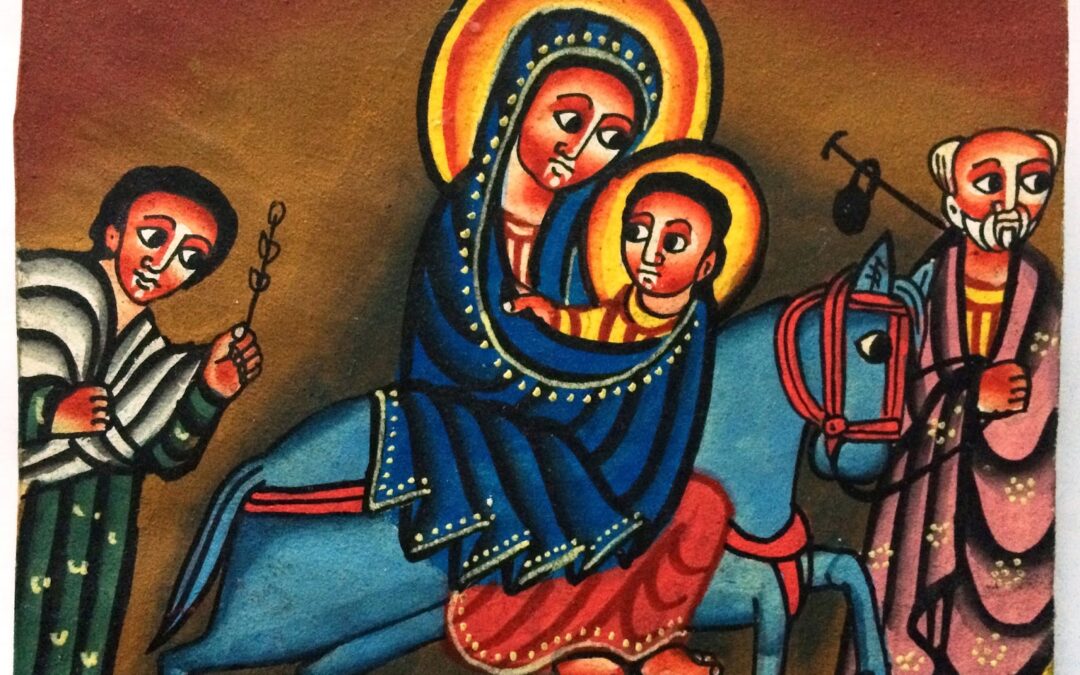
It’s easy to view the Christmas story through rose-colored glasses: Joseph and Mary and Jesus, all cozy in the manger, surrounded by an adoring crowd. Wise men and shepherds, angels and a star.

It’s the stuff of Hollywood!

These picturesque scenes are emblazoned on Christmas cards the world over.

But the truth is no Christmas is perfect. Not even the original one.

And that’s okay.

The real Christmas story is filled with stress, anxiety, and uncertainty.

Mary was a young teenage girl expecting a child.

Joseph, her intended, wasn’t the biological father.

He had to decide whether or not to turn Mary and her baby away, or to accept the mother as his wife, and the child as his own.

All of this is the backdrop of Jesus’ birth into the world.

That’s enough to put anyone in therapy!

Yet, despite all the obstacles they faced—from Mary’s labor beginning while in Bethlehem to finding no room at even the most humble inn—Mary and Joseph’s story demonstrates that imperfection is part of life.

In fact, it’s the imperfections that make things so memorable.

If Mary and Joseph had found the light on at a Motel Six, staffed by a smiling innkeeper who offered them warm cookies and bottled water, we might not love or remember the story as much.

Today I want to share four steps to embracing imperfection during the holidays.

These four steps can reduce stress,  bring you closer to God, and make your Christmas celebrations even more meaningful.


Step 1: Embrace the Imperfection

The first step to embracing imperfection is recognizing that no Christmas is perfect.

Not the first Christmas.

And not the Christmas at your church, in your community, or even in your home, this year. Some of us may even have stressful conversations around the dinner table this year.

Yes, it’s tempting to aim for a “perfect” Christmas experience for your church members, your community, and your family.

But remember that perfection will generally be out of reach.

Instead, let your church focus on embracing imperfection by celebrating what makes each of your people unique.

This means accepting messiness and chaos.

Strangely enough, the more you accept the imperfect, the more you’ll be able to experience joy and peace as well.

I am not saying go out of your way to create mess or chaos.

Just don’t resist it if it comes.

Instead, watch for the good that can come from it.

God can do more with us when we’re willing to see disruptions as blessings rather than as burdens.


Step 2: Stay Adaptable

The more adaptable and fluid you are, the more God can work through your church and community.

Consider Mary and Joseph’s story.

Can you imagine being pregnant on the road and trying to find someplace that has room, let alone someplace that can facilitate the birth of a child?

Yet, despite having very few resources, these two were able to find a safe place for Mary to give birth.

Now think about the great things that have happened in your church in the last 10 years. Or even the last 2 years.

Most of these things were birthed by staying adaptable so you could realize your mission.

Think about how churches went from no online presence to full-on TV production in a matter of weeks.

Adaptability is God’s wheelhouse!

Jesus entering the world did not require massive funding, special line items in the budget, stage and light equipment, or a strategically placed physical campus.

If that’s the case for the Savior of the world, imagine what God can create when you stay adaptable…even on a shoestring budget.


Step 3: Surrender and Trust

The story of Mary and Joseph is also a reminder to surrender ourselves to God.

Even when it made no sense to either of them, both Mary and Joseph operated with surrender and trust.

Mary said yes to the angel’s message that announced Jesus’ conception.

Joseph said yes to Mary and her baby.

Both of them said yes to the trip to Bethlehem, and yes to the manger.

Even when times were uncertain, they trusted God’s leading.

The payoff is that this journey of trusting yesses led them to witness some of the most miraculous events in history.

In the same way, surrendering your expectations and plans in order to say yes to God can bring about miracles.

Even if surrender doesn’t make sense to you initially.

In fact, this idea of surrender has always been at the core of my ministry and work.

I have longed for people to really and truly believe like Jesus.

And through believing like him, not just in him, we can co-create miracles that bring meaning and joy to our lives and to the lives of the suffering.

This Christmas season, let us remember the excellent example set by Mary and Joseph—and embrace imperfection as part of life.


Step 4: Remember God’s Grace and Mercy

Finally, remember that God’s grace and mercy is what strengthens us to endure difficult times.

Christmas is a reminder of this—that no matter the obstacles we face, God is always with us, and God will guide us through.

Rather than becoming overwhelmed by the expectations of perfection this holiday season, remember that imperfection does not mean giving up—it means surrendering and trusting God.

Invite God into your holiday celebration and allow love to fill your heart with peace and joy.

By doing so, your church can foster an environment where differences are celebrated, imperfection brings blessing, adaptability is faster, and surrender makes way for miracles.

You are creating a welcoming place for once-a-year guests as well as year-round worshipers to find peace in a hectic world.

May your Christmas be filled with the peace of imperfection.

To discover more about how to co-create miracles with God, join the many leaders who are Creating a Culture of Renewal®. We have free introductory seminars available now. I hope you’ll take a moment to sign up; I’d love to see you there!


Adapted and reprinted copyright © 2024 rebekahsimonpeter.com. All Rights Reserved.

Belief in Action

Belief in Action

As you know, these are challenging times. Times rife with hatred and violence, to both people and the planet. But during these challenging times, we who are moving from simply believing in to believing like Jesus can harness the courage and the power to make real, positive change. Change that makes a difference in the lives of the oppressed. In the fate of the planet. And in ourselves. Because without taking action to sustain and support ourselves, we can’t sustain and support others.

The transformation from believing in Jesus to also believing like him, can be the catalyst to responding to challenging times. Not just with passive prayer, but with action. Prayer, of course, is essential, but prayer motivated by belief can bring about amazing results.

Beliefs shape your thoughts; thoughts fuel your actions; actions demonstrate your faith, and your faith reinforces your beliefs. So, as you begin to believe like Jesus, you will find that you are now able to think new thoughts, take new actions, and develop new faith. Mountains and mulberry trees start to move. The people around you begin to respond in new ways. And the world becomes a brighter place.


Believe

Just as Jesus is in divine partnership with God, so are you. Jesus has faith that, at a deep level, there is no separation between him and God or between him and the Spirit. That they are divine collaborators. You, too, are invited into this unity, and are an expression of this oneness. Believe it. Embrace it. Don’t shy away from it. You are one with God.


Answer the Call

Jesus shows his partnership with God in his words and works. Use your creative, inborn capacity to create with words—to remind yourself of your unity with God. “I am one with God.” Saying the words names your belief and puts it out into the world. Contemplate your oneness with God to bring it to life. Express that divine partnership in what you do as well—in your good works. What becomes possible when you stretch and say “yes” to the needs around you? When you answer the call to help, your partnership with God will carry you.


Practice

Look for opportunities to partner with God. Nina Lesowitz and Mary Beth Sammons wrote a book about courage called What Would You Do if You Knew You Could Not Fail?: How to Transform Fear Into Courage. Let’s rephrase that and ask: What would you do if you knew God was your partner? Claim the courage to see the world through that lens. Put that partnership into practice with everything you do.


You and God can accomplish anything together, including miracles!

Including the miracle of transforming challenging times into loving, open, and peaceful ones.


Excerpted and adapted from Rebekah Simon-Peter’s forthcoming book, Believe Like Jesus: Rising from Faith in Jesus to the Faith of Jesus, November 2024.

Copyright © 2024 rebekahsimonpeter.com.  All Rights Reserved.

Transformation to the Faith OF Jesus

Transformation to the Faith OF Jesus

The world is in quite a state. Wars. Climate change. Regressive social policies. Gun violence.  A creeping sense of hopelessness.

It’s tempting in these perilous times to give in to doubt, fear, and despair, even for Christians. To isolate, rather than to connect. To hide, rather than to shine. To shrink in our faith, rather than expand.

But we can’t do that. That’s not who we are. That’s not what Jesus wants for us, and it’s certainly not how he lived in his time on earth. Though we look to the Kingdom of Heaven for our eternal reward, we can’t forget our call to create the Kingdom of Heaven on earth.


Faith IS Action

There’s a saying often attributed to Mahatma Gandhi: “Be the change you wish to see in the world.” This advice carries particular weight for Christians. The world can use some of that change—a lot of that change—right about now. As Christians, we’ve always been asked to live our faith out loud. While we may feel silenced by the sheer number of challenges we face, the present times demand that we dig deep into our spiritual lives so we can be bold voices for love, for a shared purpose, and for a common vision. By living our faith in Jesus, we can transform the world and manifest the Kingdom of God here on earth.

I’ve prayed about this often and deeply. What does this actually mean? How can we use our faith in Jesus to transform the world?

The more I’ve thought about it—the more I’ve prayed about it—the more I’ve come to realize that faith in Jesus may only be a first step. When we have faith in Jesus, aren’t we putting the load on him? Asking him to be responsible for fixing things? This kind of faith is passive. How is that being the change we wish to see in the world?

To rise to the challenge of our times, we must draw on a more active faith. We must transform our faith so that it has a greater impact. What if we rise from having faith in Jesus to having the faith of Jesus?


The Transformation of Belief

Faith in Jesus gives us someone to follow. That’s not a bad thing. We all need someone to inspire the good in us—“the better angels of our nature,” as Abraham Lincoln put it in his First Inaugural Address. Who better than Jesus? But faith in Jesus puts the locus of agency outside ourselves. Like there’s nothing we ourselves can do.

When we take on the faith of Jesus, however, we become the locus of agency. Instead of just believing in Jesus, we begin to believe like Jesus. We activate the faith we have. As our souls are infused with Jesus’ kind of faith, we become ever more Christ-like. Not only do we tap into Jesus’ divinity, but we also tap into our inner divinity. And we become miracle-makers alongside Jesus.

Lest this sound heretical, let me assure you that rising from faith in Jesus to the faith of Jesus is a very biblical concept. It’s the difference between being a disciple and an apostle. Think of a disciple as a follower, a student, an apprentice, and think of an apostle as an ambassador, a messenger, a journeyman or -woman empowered to act on their own on behalf of the one who sent them. The goal of embracing the faith of Jesus is to advance from being a disciple to being an apostle. In fact, that’s always been the purpose of following Jesus: to be sent by him out into the world.


Just as a tree puts down deep roots to grow tall, we take a deep inward journey of spiritual transformation to rise into human beings who live our faith more courageously, more miraculously.


Excerpted and adapted from the Introduction to Rebekah Simon-Peter’s forthcoming book, Believe Like Jesus: Rising from Faith in Jesus to the Faith of Jesus, November 2024.

Copyright © 2024 rebekahsimonpeter.com.  All Rights Reserved.

When The Holidays Bring Out the Worst in You

When The Holidays Bring Out the Worst in You

The holidays are supposed to be a time of joy, peace, and family.

But what about when the holidays bring out the worst in you?

When you get frustrated, stressed, anxious? Even angry.

Then what?

It’s important to find new ways to manage your emotions more effectively.

And to help your people do the same.

In this blog, I’ll explore why the holidays can be so stressful and give you tips for managing the stress, all so that you can reclaim the spirit of the season.


Stress, Trauma & The Season

We all have experiences of the past that impact our lives in the present.

Loss, unresolved grief, broken relationships, financial strain, and loneliness can bring on overwhelm.

These feelings are heightened during the holiday season.

The thought of buying gifts when the budget is tight or loved ones are missing from the dinner table can create extra stress.

Being a church leader adds a whole new dimension to the equation.

There are two seasons of exceptional busyness for church leaders: Easter and Christmas /Advent.

In my conversation with pastors, it seems that the Christmas season is more conflictual in the local church.

Why?

Expectations go up dramatically starting at Thanksgiving and continue all the way through New Year’s.

Several special services, holiday get-togethers, family traditions, and more get added to the calendar in just a few short weeks.

Not only that, but the holidays can bring out unresolved issues from past relationships with family members.

Even if a relationship is generally healthy and robust, the holiday season can bring to light existing tensions and memories of past conflicts.

These familial traumas may be challenging to recognize, as they are often deeply woven throughout family history.

Here’s the point. Whatever the source of your stress, it is essential to be gentle with yourself.


Identify Your Triggers 

The first step in managing holiday stress is to identify your triggers. Notice what situations cause you to become overwhelmed or anxious.

Once you have identified your triggers, you can develop strategies for dealing with them effectively. For example, if large gatherings stress you out, find a smaller group to chat with.

You can also try scheduling smaller events, such as one-on-one conversations or group activities that involve fewer people.

If too much shopping brings out the worst in you, make a list, create a budget and stick to it.

Knowing what sets off your stress can help you anticipate potential issues and develop coping mechanisms before they arise.


Make Time for Self-Care 

It’s easy to get caught up in the hustle and bustle of the holidays without leaving any time for yourself.

Taking care of yourself is essential to managing holiday stress.

Carve out some “me” time each day, whether it’s enjoying a relaxing bath, reading a book before bedtime, or taking a long walk with the dog.

Self-care is different for each of us, but one thing is true for all of us – if you are not making time for yourself during the season, you won’t be able to create space for others.

Nor will you experience the joy of the season.


Reach Out When You Need Help 

Don’t be afraid to reach out when you need help dealing with holiday stress.

Talking about your feelings openly can be difficult and provide a sense of relief and insight into potential solutions.

If this isn’t an option right now, consider writing down how you feel. Expressing yourself in writing can be just as therapeutic as talking one-on-one with another person.


Practical Wisdom

It is easy to get caught up in the high-tension moments.

Don’t say things that you won’t be able to take back after the holidays.

If you find yourself in conflict, objectively assess the situation by asking yourself what is at stake here. Try to diffuse the tension with understanding and grace.

It may help to remember the adage from Alcoholics Anonymous, “Think. Think. Think.” Before you act. Or even this one: “A spoonful of sugar helps the medicine go down.”

It is possible to mend the most broken of relationships during the holiday season, but it is also possible to break them in ways that will take years to heal. ​


Reclaim The Heart of The Holiday

Remember that the holidays are about spending quality time with family and friends, celebrating cherished traditions, giving back to those in need, and celebrating the idea that God became one of us.

Don’t forget to make time for the things that bring you joy and peace.

Go to worship, get lost in God’s love, and spread love and happiness to others.

Make time for gratitude, even in the hardest of moments. Celebrate what makes you and your family unique and special.

Holiday stress is unavoidable, but it doesn’t have to be overwhelming.

By recognizing your triggers, making time for self-care, and reaching out when you need help, you can manage your stress levels and enjoy the holidays.

As long as you remain mindful of the practical wisdom available during this particular season, you will make the most of the holidays and usher in a new year with a peaceful heart.

To learn more about navigating conflictual situations during the holidays, check out my upcoming workshop, 3 Steps to Engage Conflict Productively. It will be a great way to start the new year.

Happy Holidays!


Copyright © 2022 rebekahsimonpeter.com. All Rights Reserved.

The Secret Connection between Hanukkah, Advent, and Christmas

The Secret Connection between Hanukkah, Advent, and Christmas

Everywhere you turn, lights shine in the darkness, proclaiming that God’s eternal presence is with us. Homes, trees, and buildings are draped with colorful Christmas lights. Pink and purple advent candles beautify Christian sanctuaries. And for eight nights during this season, Jewish homes and spaces are also adorned with Hanukkah menorahs. (Toward the end of the month, persons of African descent will honor the principles of Kwanzaa with seven candles, too.)

While Hanukkah is a distinctly Jewish holiday, and Christmas is a distinctly Christian holiday, the two are actually more connected than you might think. In fact, in some ways, Hanukkah is actually the original Advent.

Let me explain.


The History of Hanukkah

Hanukkah, also known as the Feast of Dedication, commemorates the re-dedication of the Temple in Jerusalem after its utter desecration at the brutal hands of a tyrant named Antiochus Epiphanes. All this took place about 165 years before the birth of Christ. Although Hanukkah only gets a line or two in the New Testament, it plays a massive role in the birth of Jesus.

To explain that, we have to go back in history over three hundred years before the birth of Christ to Alexander the Great.  At that time, he ruled the ancient world around the Eastern Mediterranean.  After conquering the Persian Empire, Greek Culture or Hellenism spread like wildfire.  The Jews living in Israel quickly found themselves surrounded and almost swallowed up by it.

Hellenism was to the ancient world what Western culture is to the modern world.  Just as you can find a McDonald’s in just about every corner of the world, not to mention American pop music, blue jeans, TV re-runs, Western-style Christianity, and the English language, so in that day, you could find Greek culture, religion, and language permeating every other culture of the world.  It wasn’t all good.  Especially for those in the minority, like the Jews, it put their unique way of life at risk.

After Alexander died, his empire eventually fell into the hands of one Antiochus IV Epiphanes.  While Epiphanes means “face of God,” the Jews called him “Epimanes,” which means “crazy man.”  That’s precisely what he was.  Gregory Rommon calls him “the Adolf Hitler of the inter-testament period.” Like Hitler, he was obsessed with wiping out the Jewish people.  He began with the slaughter of Jerusalem’s inhabitants and the Temple’s desecration.

Alfred Edersheim explains what happened in his book, “The Life and Times of Jesus the Messiah:”  “All sacrifices, the service of the Temple, and the observance of the Sabbath and feast days were prohibited; the Temple at Jerusalem was dedicated to Jupiter Olympus (a Greek god); the Torah was searched for and destroyed; the Jews forced to take part in heathen rites; in short, every insult was heaped on the religion of the Jews, and it’s every trace to be swept away.”  Antiochus was bent on genocide.

The final straw was the slaughter of a pig on the sacrificial altar in the Temple.  Definitely not kosher.  This occurred on the 25th of Kislev, the month that generally corresponds to December.

Well, this atrocity cut the Jewish people to the core.  The Temple was the center of Jewish life.  It was the icon of all that was holy and meaningful.  It was the place where God dwelled!  The Jewish people weren’t going to take this lying down.

And so a deliverer rose up whose name was Mattathias.  Outnumbered and overpowered, under his leadership, the Jewish people began a campaign of guerilla warfare against Antiochus and his Syrian armies to reclaim the Temple.

Mattathias died fighting, but his five sons carried on, one of whose name you might know:  Judah Maccabee (which means hammer).  He led the fighting till the Temple could finally be purified and its services restored.  Exactly three years after its desecration, the Temple was rededicated with the lighting of the Ner Tamid, the eternal light that burned to signify the presence of God.  It was on the 25th of  Kislev, about 165 years before the birth of Christ.


Hanukkah is an Advent Story

While Hanukkah has its own meaning, in some ways, it is actually an Advent story.  Without Hanukkah, there would be no Christmas.  If Antiochus had carried out his plan, there would have been no Mary, Joseph, or Jesus.  There would have been no Messiah of Israel, no Savior of the World.  And you and I would not be Christians today.

Jesus owed his life to Hanukkah.  In a sense, Christians owe their faith to it.  As the rhyme goes, “Roses are reddish; Violets are bluish; if it weren’t for Christmas, we’d all be Jewish!” But if it weren’t for Hanukkah, there’d be no Jews or Christians!

And so, amid this Advent Season, let us remember the minor Jewish holiday that makes the major Christian one possible.  Even though Hanukkah is mentioned once in the New Testament, it’s an important backdrop to one of his most profound statements.  It was on the Feast of Dedication that Jesus said:  “The Father and I are one.”  That statement of unity changed the world.


Unity for Today

Today, we’re still seeking to create a world of unity.  In the chaos and division that we see all around us, God calls us to stand up for one another in love and grace so that the light of Christ might be seen.  A love that binds together what is divided; a hope that can move mountains of despair, a faith that can overcome any obstacle.  This is the miracle of Hanukkah and the promise of Christmas.

In a time when anti-Semitism and many other -isms are on the rise, Hanukkah reminds us that we must stand together against all forms of injustice, violence, and hate. It tells us that no matter what, we must allow others the freedom and dignity to worship God in their own way, too.

And so this Advent, as Christmas approaches and Hanukkah comes, may we remember the message of unity it brings us. May we take every opportunity to honor one another’s differences and celebrate our common humanity. And may God grant us the ability to be light in a world of darkness.

Differences aren’t bad or evil. And they needn’t lead to chaos or division. Instead, differences can bring joy and strength. Join me for 3 Steps to Engage Conflict Productively to learn how you can be part of the solution.


Copyright © 2022 rebekahsimonpeter.com. All Rights Reserved.