Preparing for Lent

Preparing for Lent

Let me guess.  You read the title of this week’s blog post and thought to yourself, “Preparing for Lent?! I have almost 2 months of worship to prepare for before I even think about Lent.” While that is true, the Lenten season will be here before we know it. And I believe that, considering the past two years, we have a lot of work to do to truly be ready to rise at Easter.

So much has changed.  We’ve missed celebrating birthday parties, graduations, wedding anniversaries, even weddings themselves.  We’ve watched as people have turned on one another and experience heartache as friendships are lost, damaged, even destroyed.  Fighting across the aisle has been turned up to a level that borders on uncivilized.  What happens in our world tends to make its way into the church, as they watch their numbers dwindle, some as a result of relocation or a specific political view, others who have moved from this life into the next. The whole matter of loved ones dying and family and friends not being able to grieve in the usual ways, mourn communally, or mark their passing has slowed down people’s ability to rebound.

Not being able to grieve the losses of the pandemic has left us stuck, feeling incomplete and even isolated. Many people have died alone, without family or friends to visit, without pastoral calls or prayer. This has weighed heavy on churches and their leaders. Grief in and of itself is hard to bear. Weighed down by unprocessed grief, it’s hard for churches to move forward. Indeed, it’s hard for the world to move forward, as we are all grieving something or someone. When mourners are unable to share stories and be comforted by one another or have a place to go long afterwards, it creates a deep sense of displacement.

A May 2020 study on grief published in Psychiatry stated, “Funeral and burial rituals are important for the affective adjustment of people grieving the loss of a loved one and mourners who drew comfort from planning and participating in the funeral were shown to achieve better outcomes in later grief. From this perspective, being prevented from holding a proper funeral for their loved ones might prevent COVID-19 mourners from gaining awareness of the reality of the death and from understanding and framing their loss, besides eliminating a significant important occasion of social support.”
Preparing for Lent

How does the church move on from this experience? The time between now and Lent is our opportunity to do so. Below are five ways that you can help your congregation move forward.

1. We would do well to look at the Jewish traditions for grieving. In traditional Judaism, funerals happen as soon as possible after a death occurs and the following week is spent solely at home with family and members of the Jewish community. Customary prayers are recited daily to honor the dead. This week is intended to focus on accepting loss and to encourage healing. A longer, formal mourning process lasts 30 days, where mourners slowly reintegrate themselves into the world. Prayers continue to be recited daily. If a parent is lost, this formal mourning lasts eleven months. In the eleventh month, an unveiling ceremony takes place, wherein the gravestone is revealed. In the years that follow on the anniversary of death, a candle that burns for 24 hours is lit in memory of the deceased. Setting precedence for a longer mourning process will help those that are grieving create expectations and know that they are not leaving their loved ones behind.

2. Draw comfort from your faith, focus on your wellbeing, and set boundaries. Being church leaders, we’re sometimes expected to have all the answers. I’m sure you’ve had members of your congregations and communities ask how they are supposed to navigate these times. You may be lost, feeling like you’re trying to figure that out right now too. Not having all the answers can make you feel inadequate, or like you aren’t doing “enough.” This isn’t true. Trying to do everything only leads to burn-out and emotional fatigue.

3. Acknowledge that we are living in a different time. Be resourceful with how you can bring people together. Now, more than ever, it is so important that we make social connections a priority. Zoom, Microsoft Teams, Facetime, and other video conferencing platforms are great for bringing people together, while still maintaining social distance.

4. Create emotionally safe spaces for people to share their hurt without feeling judged. Do your best to listen to those that feel comfortable enough to share these deeply personal feelings with you. Oftentimes, listening and truly being present is more consoling than offering advice or explanation.

5. Encourage those that you support to create their own rituals. Journaling, doing activities that remind them of their loved ones, or planting a tree in their memory are all healthy and effective ways for others to express their feelings and continue in the healing process.

It goes without saying that we aren’t going to be able to change everything, but we do have the power to change certain things. These changes will make a difference in how those in our congregations and communities experience and grapple with grief. Addressing these now will allow us to truly be prepared for Lent and to rise for the resurrection.

Excerpted and adapted from Rebekah Simon-Peter’s upcoming book, Growing the Post-Pandemic Church (Market Square Publishers, 2022)

Copyright © 2021 rebekahsimonpeter.com, All Rights Reserved.
Weakened Democracy Makes for Weakened Churches

Weakened Democracy Makes for Weakened Churches

We are one year out from the insurrection at the US Capitol building in which riotous crowds did great damage to the building, threatened US Congresspeople—both Democratic and Republican—beat Capitol police, and tried to stop the counting of electoral votes. Moderates are retiring, leaving more extreme voices at the forefront of leadership. This trend results in weakened democracy.

A recent piece in the Wall Street Journal, a conservative, no-nonsense newspaper, notes that in the year past, the unthinkable has happened. Instead of former president Trump’s influence waning through this obvious attack on the institutions of democracy, as of late 2021, 81% of Republicans have a favorable impression of Trump while 57% continue to believe the false story of stolen elections. His standing among many Republicans is stronger than ever as he continues to trumpet the falsehoods of a stolen election. Meanwhile a sustained investigation by the Associated Press has shown that less than 475 votes of the millions cast during the 2020 presidential election might be potentially fraudulent.

When truth is attacked, questioned, battered, and simply negated through the repetition of falsehood, and the false is lifted as true, democracy suffers.


How Weakened Democracy Weakens Churches

Meanwhile, this degradation of democracy has not stopped at the doors of the church. Rather, skewed narratives of true and false have infiltrated, fractured, and polarized congregations. This divisiveness shows up in the partisan-inspired debates over COVID-19, masks, vaccines, and safety. Managing this internal opposition has stretched pastors to the limit as they add this to the long list of dramatic changes to manage.

In the polarized environment in which we live, weak democracy makes for weak churches. Of course, it’s not just weak democracy that weakens churches. As I note elsewhere, congregations have been in decline due to other internal factors.

Even so, government has not always had such an outsize influence on churches. For example, during the early days of the church, under repressive Roman rule, the church flourished and thrived. At that time, Jesus was not equated with political processes. Rather, he stood in opposition to the powers that be. His rule was a countercultural one of love, inclusion, hospitality, miracles, and the Kingdom of God.


When Jesus is Equated with Political Identities

That’s not always the case now. When Jesus is equated with political identities the church suffers because the followers of Jesus are now asked to serve a lesser power. Instead of the ultimate command to love God, neighbor and self, they are subject to the whims and manipulations of partisan politics. The common good is pushed aside for monied interests, power grabs, self-serving falsehoods, and even coup attempts. Jesus’ followers, blessings, and Kingdom are easily manipulated by leaders who are not necessarily aligned with the Gospel message.


What Can the Church Do?

As we approach the Day of Epiphany—the day in which Jesus is recognized as the incarnation of God, we also approach the anniversary of the Capitol insurrection and a failed coup attempt of the US government.  On the Day of Epiphany and beyond we are faced with two opposing images of power: one that manifests the love of God in humble human life, and one that selfishly attacks civic institutions that safeguard democracy.

Which image of power will the church choose to recognize? To follow? To emulate?

Even more important are these questions: How will we separate fact from fiction?  How will we tease apart lies from truth?

The church would do well to teach people how to hear each other, to respect each other, and to discern the truth. For the bottom line is that, in these polarized times—when democracy is weakened—the church is weakened too. This dual weakness does not serve our communities, our message, or the Kingdom of God.


Putting Jesus First

When the church puts Jesus—not politics—first, true strength can grow. This strength is borne of love, forgiveness and humility. This kind of strength is good for everyone. It’s the soil in which the Kingdom of God, the Beloved Community, can take root. That is good for the church, for society, and for democracy.

We must seek to strengthen the church and the communities we serve through love of God, neighbor and self to navigate polarizing times.

May God be with us as we seek anew to follow Jesus.


Copyright © 2021 rebekahsimonpeter.com, All Rights Reserved.

Looking Back in Order to Move Forward

Looking Back in Order to Move Forward

It’s that time of year again.  It’s time to look back and reflect on the year past in order to move forward into the new  year. In these last few days of the year, I want to encourage you to finish strong. I recommend that you hit the pause button to reflect on your growth as an apostle of Jesus over the past 12 months. A new year brings new opportunities for spiritual growth, but first, it’s important to reflect on what you have accomplished in the last year. Offer yourself the gift of looking back as the year draws to a close.

Why bother? Reflecting on and completing the year past clears an open space from which to freely jump into the next year. Avoiding or refusing to pause and reflect won’t allow you to truly recognize how far you’ve come, or to note prayers that God answered.

In doing my own year-end reflections, I like to use the “5 Quantum Leaps of Faith” to see where I grew. These leaps are grounded in the Bible and exemplified by Jesus Himself. Best of all, each leap moves you from discipleship to apostleship.

As you read through the following five leaps, score yourself, on a scale of one to five, so that you can quantitatively see what you can celebrate and where you can stretch. Give yourself 1 point if you can answer “yes” to a question, 3 points if you can say “yes” for multiple instances, and 5 points if you feel that you consciously made a point to do each on a continual basis. Then we’ll tally up the results at the end.

This is a great model to use to engage your leadership team or church committee.  Remember to include and acknowledge the leaps your people have made as well.  Like a long-jumper, measure even the smallest advances and remember that gradual growth leads to exponential gains.

Finally, I recommend that you document your growth. Creating a visible record of your progress solidifies the gains you made and clarifies gaps you can close in the coming year. Get creative and have fun celebrating how far you have come.

leap of faith

Now, let’s take a look at the 5 Leaps of Faith I’m talking about.


Leap #1: Be fruitful and multiply like Jesus

There’s more to following Jesus than emulating the spiritual principles He taught. You are also called to emulate Him by multiplying yourself. This comes by passing on your Kin(g)dom vision and values to the people you lead.

  1. Did you delegate to involve people in new ways?
  2. Did you contribute to the growth of the kin(g)dom by sharing power and authority with those who wished to grow?
  3. Did you freely share a vision and employ those around you to help move it forward?


Leap #2: Be empowered like Jesus

One of the most Jesus-like practices that a Christian leader can embrace is to be empowered and empower others. Lord knows we all need it. Jesus shared His authority freely and authorized His followers again and again to do the very things He did.

  1. Did you feel empowered to act?
  2. Did you say yes to Jesus and accept the freedom and authority He gives?
  3. Did you follow the promptings of the Spirit?


Leap #3: Be accountable like Jesus

Jesus was accountable to the one He called Father for fulfilling His call and He was rewarded mightily. When we become accountable for our own giftedness and potential, we can begin to live fully into the gifts we’ve received.

  1. Did you recognize and use what you’ve been taught?
  2. Did you employ your spiritual gifts?
  3. Did you maximize the gift of time by saying yes and no to the right things?


Leap #4: Believe like Jesus

Jesus makes it clear that He wants us to have the same kind of faith He Himself has.

He teaches His followers to not only have faith in Him, but to have the faith like Him. Every time we participate in miracle-making, just as the apostles did, we are demonstrating Christ-like faith.

  1. Did you act on the belief that your life has purpose?
  2. Did you live in partnership with God?
  3. Did you contribute to any miracle making?


Leap #5: Love like Jesus

Jesus practiced the holy trinity of love: love of God, love of neighbor and love of self. Love is an action and a commitment, based on being Christ-like. When we practice self-hate, self-neglect, self-abasement, or self-denigration, we harm and damage ourselves.  When we practice self-love, we increase our ability to love others.

  1. Did you grow in self-love this year?
  2. Did you offer love and grace to others, even when you didn’t want to?
  3. Did you surrender negativity to God?

Now that you have inventoried your growth, let’s add up your points to see where you stand.

  • 60 – 75 points: Rock on! You’re in the zone.
  • 40 – 59 points: You’re on the right track, keep going!
  • 20 – 39 points: You’re getting there; look for places you can stretch in the coming year.
  • 0 – 19 points: Are you giving yourself enough credit? If there’s room for improvement, what better time to start than today?

No matter what your score is, this is the time to celebrate and to stretch. A great way to stretch in the new year is to grow in self-awareness. Expand your emotional intelligence by joining me for the timely Platinum Rule Leadership for Changing Times workshop, where you’ll do just that. The first session begins on January 6.

Happy New Year! Here’s to a year of quantum leaps of faith for us all.


Copyright © 2021 rebekahsimonpeter.com, All Rights Reserved.

Christian Traditions and a Young Jewish Boy

Christian Traditions and a Young Jewish Boy

As our awareness of different cultures and traditions grows, it’s good to remember that woven right within our Christian traditions are older, more diverse practices. Jesus, for example, is Jewish. Some of the traditions and practices that Jesus experienced as a Jewish boy and man were adopted by Christians so long ago that we often don’t see their origins as anything but Christian.

I write about this in my book, The Jew Named Jesus. One such instance took place on the eighth day of Christmas.

You mean, eight maids a-milking?
Nope!

On the eighth day of Christmas – after Jesus is born in a humble feeding trough, after the angels sing “Glory to God in the Highest” and announce news of great joy to all the people, after the shepherds, amazed, run to Bethlehem, but before the Magi come bearing gifts – Jesus is formally welcomed into the Jewish people.

The eighth day of Christmas, as it were, is when Jesus is circumcised and named. The ancient rite of circumcision, first practiced by Abraham as a sign of the covenant with God, is routinely performed in hospitals now. But not then.

And then as now, circumcision is the first and most basic mitzvah (commandment or law) to be fulfilled by a Jewish baby boy.

“This is my covenant which you shall keep, between me and you and your offspring after you: Every male among you shall be circumcised. You shall circumcise the flesh of your foreskins and it shall be a sign of the covenant between me and you. Throughout your generations every male among you shall be circumcised when he is 8 days old…” Genesis 17:10-12a

Jesus isn’t the first Jewish boy whose circumcision is noted in the New Testament. Don’t forget cousin John’s, also on the eighth day. His naming and miraculous birth is mentioned as well.

“Now the time came for Elizabeth to give birth, and she bore a son. Her neighbors and relatives heard that the Lord had shown his great mercy to her, and they rejoiced with her. On the eighth day they came to circumcise the child, and they were going to name him Zechariah after his father. But his mother said, “No, he is to be called John.’” Luke 1: 57-60

Circumcision is a permanent sign, etched in the flesh, of partnership with God. Even more than lineage and ancestry, circumcision anchors these boys, and their families, firmly in the Jewish community.

At his circumcision Jesus is also named with “the name given by the angel before he was conceived in the womb.” (Luke 2:21) By the way, it should be noted that girls are named too, but not circumcised.

shekels, traditions

About a month after Jesus’ circumcision, Joseph and Mary come to Jerusalem. There they present Jesus to the Lord in the ancient practice of redemption of the firstborn son (pidyon ha ben). Since Jesus is Mary’s firstborn, and, as the author of Colossians later asserts, “the firstborn of all creation” (1:15), he is presented then bought back or redeemed after he reaches 31 days old. This is another ancient Torah practice.

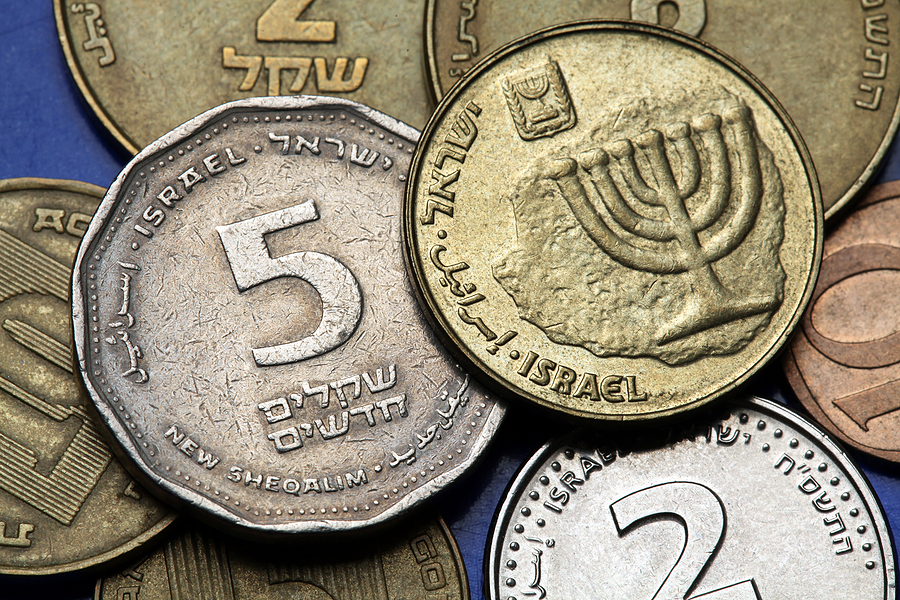
Joseph and Mary would have paid a small sum (five silver shekels in biblical times; today, usually five silver dollars) and performed a brief ritual in the Temple to fulfill the mitzvah. (Numbers 18:15-16)

While the family is at the Temple for the redemption ceremony, two righteous and devout Jews, Simeon, and the prophetess, Anna, recognize Jesus as a sign of God’s salvation. They praised God, for this “light for revelation to the Gentiles and for glory to your people Israel” who would himself redeem Jerusalem. (Luke 2:32, 2:38)

From his earliest days, Jesus is raised in a strong and beautiful Jewish home by devout parents. From circumcision to naming to redemption to offering sacrifices, Mary and Joseph do “everything required by the law of the Lord.”

Not from a sense of empty duty or obligation, I suspect, but a profound connection to God, the Torah, and the love of their child, Jesus.After these mitzvot (plural of mitzvah) are fulfilled, Jesus and his parents “returned to Galilee, to their own town of Nazareth.” At home in Nazareth the mitzvot, blessings, prophesies, and praises take root: “The child grew and became strong, filled with wisdom; and the favor of God was upon him.” (Luke 2:39-40).

That little Jewish child became the leader we follow and emulate. Join me for the Platinum Rule Leadership for Changing Times and learn how, like Jesus, you too can lead with self-awareness, forgiveness, compassion, and understanding.

Copyright © 2021 rebekahsimonpeter.com, All Rights Reserved.
My New Year’s Resolutions 2022

My New Year’s Resolutions 2022

As I look toward 2022, I have mixed feelings of excitement and trepidation. Will the pandemic finally be over, life returning to a semblance of normal? Will we, as a nation and as individuals, take on the big issues of gun violence, homophobia, and racism, and start treating one another more as a beloved community? Will the United Methodist church split? What will my own ministry look like?  Uncertainty aside and focusing on the positive, I sat down to write my New Year’s Resolutions for 2022.

I’ve been in ministry for 27 years. The first 12 years as a pastor, then 15 years as support for pastors and other church leaders. My ministry has been about empowering church leaders to create shifts in their congregations and move towards greater health and vitality, personally and corporately. It’s deeply satisfying work and my life’s passion.

When the pandemic hit, I was busy traveling around the country, leading retreats and workshops, delivering keynote addresses. Much as I loved my work, the pace of travel was hard to keep up.

When the coronavirus slowed travel to a halt, my commute shrunk to the one mile between my home and office. I was relieved. My ministry moved online, though I realized there were others whose lives and work couldn’t simply adapt. Those who worked with and fed the homeless, the immigrants who worked in our fields, the healthcare workers struggling to save lives with little sleep and full hospitals, police, firefighters, nursing home caregivers. So many people risking their lives to help others live.

My team and I stayed active in our various ways, practicing reconciliation by listening to people with views other than our own, donning masks and distancing for Black Lives Matter marches, walking in solidarity with our LGBT brothers and sisters, donating gift cards and clothing, sending funds where we thought they’d be put to the best use. Helping others, outside of my ministry, took more creativity, but we stayed as “active” as possible within our communities.

Through my ministry, we helped lead the wave of adaptation by hosting innovative online retreats, webinars, and classes. We added free workshop options to make the ministry accessible to others, isolated in their homes as we were. And our Creating a Culture of Renewal® participants told us that they fared far better than their colleagues who didn’t have the level of support that our groups offer.

happy people together

All that notwithstanding, I really missed BEING with people. There’s no substitute for the immediacy and energy that happens in a live setting. That kind of energy fuels my creativity and my spirit.

So this year, while recognizing the suffering and lives lost, I also want to embrace all the good that the pandemic has brought our way and the options it’s given me to reach out in faith to an even wider audience. Thus, I share my New Year’s resolutions for my life’s ministry.

Be it resolved that in the service of church leaders everywhere in 2022, in partnership with God I will be creative, daring myself to think outside the box, and taking on things that scare me.

Be it resolved that I will deepen my commitment to authentic Christian community by empowering my ministry team to lead powerfully.

Be it resolved that I will envision and give voice to new futures and not let the fear of failure or rejection hold me back. Like other leaders, I worry about what others think of me. To hell with that. With a high percentage of Protestant senior pastors getting burned out and , this work is more important than ever.

Out of these New Year’s resolutions, my ministry goals include hosting a live event: A Celebration of Renewal; publishing a book: Growing the Post-Pandemic Church (Market Square 2022); doubling the number of visions that come to life through Creating a Culture of Renewal®; laying the foundation for the Creating a Culture of Renewal® Fellowship for Clergy of Color; and creating new offerings.

In a previous blog, How My Faith Has Changed, I reported on a recent risky conversation with my bishop. Rather than being dismissive or uninterested in how my beliefs had changed, she leaned in. She wanted to hear more. I told her that I believe discipleship is the first step in the Christian journey, not the destination. That Jesus calls us to step into the faith and practices of apostleship. That apostleship requires a higher consciousness and a deeper faith. That we need apostleship pathway systems to follow up on discipleship pathway systems. She asked me if I had that sort of system mapped out yet. I told her no. “Let me know when you do,” she said. That is my dream project for 2022.

Will I fulfill all my New Year’s resolutions? Will I hit every goal? If last year and the year before are any indication, probably not. However, life will present unexpected opportunities and new goals will take the place of old ones. This coming year is a fresh opportunity to trust God, partner in faith, and set out on a vigorous course of action. With the guidance of the Holy Spirit, all things are possible. Even the Beloved Community in a nation rife with unrest.

Do you want support to set new resolutions and to envision new goals? To partner in faith with God in an unknown future? Then I invite you to join me in the new year to explore Platinum Rule Leadership for Changing Times.


Copyright © 2021 rebekahsimonpeter.com, All Rights Reserved.
Renew Your Advent Through Time-Honored Prayer

Renew Your Advent Through Time-Honored Prayer

Advent. Waiting. “Come, Lord Jesus, come.” Waiting.

The season of Advent is one of hope, as we, not only wait for the coming of the Christ child, but wait for Jesus’ second coming.

If I’m being honest, I’m tired of waiting. As a nation, as a world, we’ve been waiting since the start of the pandemic. When will it end? When can we visit friends and loved ones again? When can we return to work, restaurants, stores, events, etc.? We were, in essence, forced into a period of waiting.

What were we waiting for? You could sum it up in one word: normal. When can we go back to normal? Thankfully, it seems the veil covering normal has started to fall. Many traveled for the Thanksgiving holiday. Restaurants and businesses are open, just in time for the Christmas transformation of lights, wreaths, Christmas trees, and shopping frenzy.

We’ve arrived at Advent, again called to a time of waiting.

What are we waiting for? We all know Jesus has already come. While he was here, incarnate on earth, he already showed people how to do what he did. How to bring health to illness. How to bring light into darkness. How to bring truth to an empire of crushing power.

Maybe, instead of waiting on Jesus to work through some heavenly redemption, perhaps Jesus is waiting on us to work some earthly miracles.

During Jesus’ life, he was very clear about sharing his power with his disciples and apostles. He wanted them to be able to do the very things he did. To heal the sick. To cast out demons. To feed the hungry. To proclaim the Kingdom. To expand the ranks with new apostles of peace.

We wait with anticipation of the fulfilment of the Kingdom. In our waiting, we turn to prayer, often praying “Come, Lord Jesus, come,” which, truly, only Jesus can do. I wonder, though, are we praying for Jesus to do something he has already taught us how to do? If so, it’s time to shift our focus to one that will allow us to faithfully and actively celebrate this Advent season.

candles burning in darkness

I’d like to suggest the following three prayers this Advent:

Pray the Apostle’s Prayer. “Lord, increase our faith.” (Luke 17:5) When the apostles prayed this, they weren’t asking to have more faith in Jesus, but to have more of the faith of Jesus. Having that sort of faith is what it takes to do the things he did.  And to go beyond it.

Pray the Prayer of St. Francis. I love this prayer because it instructs me in exactly how to be an apostle of peace, a force for good in the world.

Lord, make me an instrument of your peace
Where there is hatred, let me sow love
Where there is injury, pardon
Where there is doubt, faith
Where there is despair, hope
Where there is darkness, light
And where there is sadness, joy

O Divine Master, grant that I may
Not so much seek to be consoled as to console
To be understood, as to understand
To be loved, as to love
For it is in giving that we receive
And it’s in pardoning that we are pardoned
And it’s in dying that we are born to Eternal Life

Amen

Pray “I believe; help Thou my unbelief.” (Mark 9:24) I pray this prayer when I find myself wavering in my ability to be courageous in the face of evil, or hopeful in the face of darkness.

Praying these prayers will align your life, thoughts, actions, and soul with Jesus’ call to us:  to be apostles of peace, healing, comfort, and Kingdom. These prayers can renew your journey through Advent, bringing new life to your time of waiting.

Interested in renewal after Advent? I invite you to join my upcoming workshop, Platinum Rule Leadership for Changing Times. This interactive workshop teaches self-awareness, forgiveness, compassion, understanding, and your ability to lead and love challenging people.

Copyright © 2021 rebekahsimonpeter.com, All Rights Reserved.