The Platinum Rule for Christmas

The Platinum Rule for Christmas

Ah, Christmas. The most wonderful time of year… Until it’s not.

The rush to get gifts and mail them, to make travel plans, to cook, and clean, and decorate – it can be a very stressful time. And that’s not even mentioning the stress that being with people can bring.

If you’re stressing about being with friends and family that you may not have seen for months or years this holiday, read on to learn how to one-up the Golden Rule and have the most peaceful season ever.


Wait, you can one-up the Golden Rule?

Yes! And thankfully, it’s easier than it sounds. From a very young age we were all taught the Golden Rule – do unto others as you would have them do unto you. Treat others the way you want to be treated.

But sometimes the Golden Rule doesn’t go far enough.

The Golden Rule assumes that the way I want to be treated is how others want to be treated. That the way I prefer to communicate applies to all people. And that underneath, our motivations are the same. Experience shows that’s just not true.


Enter the Platinum Rule

The Platinum Rule asserts that we need to treat others the way they want to be treated. It acknowledges that we each have different motivators, stressors, goals, fears, and priorities.

For instance, just because you like direct communication and want to move at a fast pace, doesn’t mean that everyone around you is comfortable with that. Or just because you value time to reflect and ruminate on decisions and are an emotionally geared person doesn’t mean that others share this perspective.

This is a large part of what we teach our Creating a Culture of Renewal® cohorts. We’ve worked with church leaders over the past 15 years and have found that by understanding these concepts and being aware of differences in communication styles, our participants are able to move from frustrating relationships to fruitful conversations with those they once found problematic.


I thought you said this would be easy…

I stand by that. By practicing and employing empathy and emotional intelligence, you will quickly find that you can effectively communicate with even the most difficult people in your life.

Begin to notice how others are communicating with you and do likewise. When those around you communicate in a direct and fast-paced manner, try doing the same with them. Don’t worry about offending them, they will likely appreciate your efforts to operate in their preferred way. When those around you need time to process all of the details and facts before making a decision, give them that time. Being insistent doesn’t give them the space they need to clearly think through their options and feeling restrained in this way can easily lead to unnecessary arguments.

Do your best to ascribe good motives to each person. Understand that they may just have a different way of doing things. Set aside your personal communication preferences. Instead, focus on what they are actually saying. As you get more comfortable with the Platinum Rule, gently point out how your preferences and theirs vary, without making either of you wrong or right. Assume the Spirit is equally alive and well in each of you, and that you are each friends of Jesus. Understand the implications that having to be right has and decide if you would rather be right, or have a productive relationship with another.

Platinum Rule Christmas 

The Polarization Trap

We now live in a world where polarizing beliefs and values have crept into every segment of our lives. Many people are content with maintaining the “us vs. them” mindset, as long as it means that their view is “right” and someone else gets to be “wrong.”

These polarizations are false dichotomies.  The more you buy into us vs. them, the more you solidify a false construct. It’s not that we don’t have very different ways of looking at the world, embracing change, or understanding holiness. We do. However, these different ways are not necessarily sinful…they are simply different. All the polarizations that exist now are temporary. Did you know that churches once fought over whether indoor plumbing should be allowed? Or if women could wear pants? The act of choosing up sides takes us father and farther from Jesus’ command to love one another as I have loved you. Instead of insisting on your preferences practice finding, identifying, and focusing on common underlying values.

Ready to give it a try for yourself?

As you move into the holidays, focus your efforts on acknowledging and understanding the ways in which you’re different from those around you. Be aware that while your approaches may not be the same, you have the ability to offer love and understanding anyway. Work to find the middle ground and see what develops once you move into that space.

Still need some more guidance? I’m hosting a Platinum Rule Leadership for Changing Times workshop in January that explores these concepts in more depth. This fun and interactive 3-session workshop promotes self-awareness, forgiveness, compassion, and understanding.


Copyright © 2021 rebekahsimonpeter.com, All Rights Reserved.
Christian Traditions and a Young Jewish Boy

Christian Traditions and a Young Jewish Boy

As our awareness of different cultures and traditions grows, it’s good to remember that woven right within our Christian traditions are older, more diverse practices. Jesus, for example, is Jewish. Some of the traditions and practices that Jesus experienced as a Jewish boy and man were adopted by Christians so long ago that we often don’t see their origins as anything but Christian.

I write about this in my book, The Jew Named Jesus. One such instance took place on the eighth day of Christmas.

You mean, eight maids a-milking?
Nope!

On the eighth day of Christmas – after Jesus is born in a humble feeding trough, after the angels sing “Glory to God in the Highest” and announce news of great joy to all the people, after the shepherds, amazed, run to Bethlehem, but before the Magi come bearing gifts – Jesus is formally welcomed into the Jewish people.

The eighth day of Christmas, as it were, is when Jesus is circumcised and named. The ancient rite of circumcision, first practiced by Abraham as a sign of the covenant with God, is routinely performed in hospitals now. But not then.

And then as now, circumcision is the first and most basic mitzvah (commandment or law) to be fulfilled by a Jewish baby boy.

“This is my covenant which you shall keep, between me and you and your offspring after you: Every male among you shall be circumcised. You shall circumcise the flesh of your foreskins and it shall be a sign of the covenant between me and you. Throughout your generations every male among you shall be circumcised when he is 8 days old…” Genesis 17:10-12a

Jesus isn’t the first Jewish boy whose circumcision is noted in the New Testament. Don’t forget cousin John’s, also on the eighth day. His naming and miraculous birth is mentioned as well.

“Now the time came for Elizabeth to give birth, and she bore a son. Her neighbors and relatives heard that the Lord had shown his great mercy to her, and they rejoiced with her. On the eighth day they came to circumcise the child, and they were going to name him Zechariah after his father. But his mother said, “No, he is to be called John.’” Luke 1: 57-60

Circumcision is a permanent sign, etched in the flesh, of partnership with God. Even more than lineage and ancestry, circumcision anchors these boys, and their families, firmly in the Jewish community.

At his circumcision Jesus is also named with “the name given by the angel before he was conceived in the womb.” (Luke 2:21) By the way, it should be noted that girls are named too, but not circumcised.

shekels, traditions

About a month after Jesus’ circumcision, Joseph and Mary come to Jerusalem. There they present Jesus to the Lord in the ancient practice of redemption of the firstborn son (pidyon ha ben). Since Jesus is Mary’s firstborn, and, as the author of Colossians later asserts, “the firstborn of all creation” (1:15), he is presented then bought back or redeemed after he reaches 31 days old. This is another ancient Torah practice.

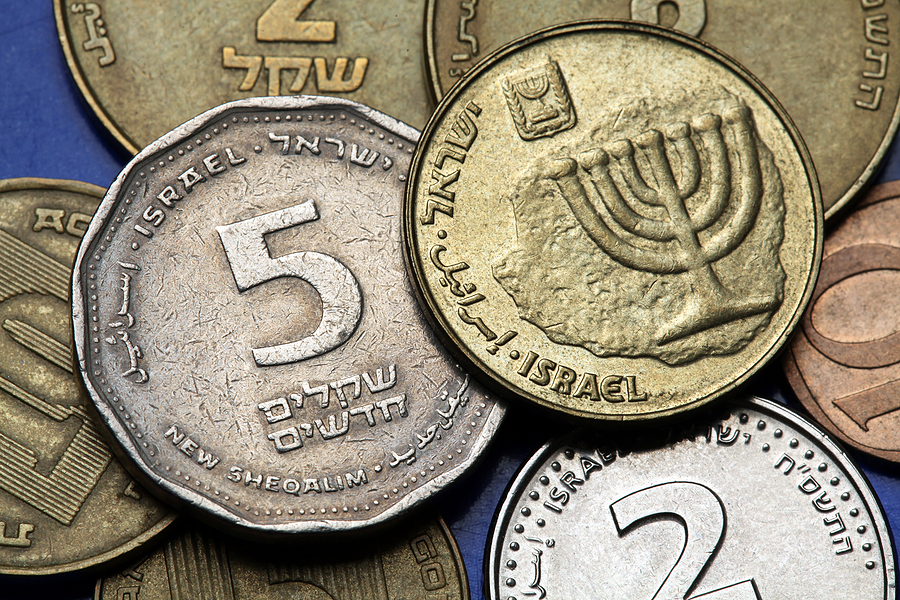
Joseph and Mary would have paid a small sum (five silver shekels in biblical times; today, usually five silver dollars) and performed a brief ritual in the Temple to fulfill the mitzvah. (Numbers 18:15-16)

While the family is at the Temple for the redemption ceremony, two righteous and devout Jews, Simeon, and the prophetess, Anna, recognize Jesus as a sign of God’s salvation. They praised God, for this “light for revelation to the Gentiles and for glory to your people Israel” who would himself redeem Jerusalem. (Luke 2:32, 2:38)

From his earliest days, Jesus is raised in a strong and beautiful Jewish home by devout parents. From circumcision to naming to redemption to offering sacrifices, Mary and Joseph do “everything required by the law of the Lord.”

Not from a sense of empty duty or obligation, I suspect, but a profound connection to God, the Torah, and the love of their child, Jesus.After these mitzvot (plural of mitzvah) are fulfilled, Jesus and his parents “returned to Galilee, to their own town of Nazareth.” At home in Nazareth the mitzvot, blessings, prophesies, and praises take root: “The child grew and became strong, filled with wisdom; and the favor of God was upon him.” (Luke 2:39-40).

That little Jewish child became the leader we follow and emulate. Join me for the Platinum Rule Leadership for Changing Times and learn how, like Jesus, you too can lead with self-awareness, forgiveness, compassion, and understanding.

Copyright © 2021 rebekahsimonpeter.com, All Rights Reserved.
My New Year’s Resolutions 2022

My New Year’s Resolutions 2022

As I look toward 2022, I have mixed feelings of excitement and trepidation. Will the pandemic finally be over, life returning to a semblance of normal? Will we, as a nation and as individuals, take on the big issues of gun violence, homophobia, and racism, and start treating one another more as a beloved community? Will the United Methodist church split? What will my own ministry look like?  Uncertainty aside and focusing on the positive, I sat down to write my New Year’s Resolutions for 2022.

I’ve been in ministry for 27 years. The first 12 years as a pastor, then 15 years as support for pastors and other church leaders. My ministry has been about empowering church leaders to create shifts in their congregations and move towards greater health and vitality, personally and corporately. It’s deeply satisfying work and my life’s passion.

When the pandemic hit, I was busy traveling around the country, leading retreats and workshops, delivering keynote addresses. Much as I loved my work, the pace of travel was hard to keep up.

When the coronavirus slowed travel to a halt, my commute shrunk to the one mile between my home and office. I was relieved. My ministry moved online, though I realized there were others whose lives and work couldn’t simply adapt. Those who worked with and fed the homeless, the immigrants who worked in our fields, the healthcare workers struggling to save lives with little sleep and full hospitals, police, firefighters, nursing home caregivers. So many people risking their lives to help others live.

My team and I stayed active in our various ways, practicing reconciliation by listening to people with views other than our own, donning masks and distancing for Black Lives Matter marches, walking in solidarity with our LGBT brothers and sisters, donating gift cards and clothing, sending funds where we thought they’d be put to the best use. Helping others, outside of my ministry, took more creativity, but we stayed as “active” as possible within our communities.

Through my ministry, we helped lead the wave of adaptation by hosting innovative online retreats, webinars, and classes. We added free workshop options to make the ministry accessible to others, isolated in their homes as we were. And our Creating a Culture of Renewal® participants told us that they fared far better than their colleagues who didn’t have the level of support that our groups offer.

happy people together

All that notwithstanding, I really missed BEING with people. There’s no substitute for the immediacy and energy that happens in a live setting. That kind of energy fuels my creativity and my spirit.

So this year, while recognizing the suffering and lives lost, I also want to embrace all the good that the pandemic has brought our way and the options it’s given me to reach out in faith to an even wider audience. Thus, I share my New Year’s resolutions for my life’s ministry.

Be it resolved that in the service of church leaders everywhere in 2022, in partnership with God I will be creative, daring myself to think outside the box, and taking on things that scare me.

Be it resolved that I will deepen my commitment to authentic Christian community by empowering my ministry team to lead powerfully.

Be it resolved that I will envision and give voice to new futures and not let the fear of failure or rejection hold me back. Like other leaders, I worry about what others think of me. To hell with that. With a high percentage of Protestant senior pastors getting burned out and , this work is more important than ever.

Out of these New Year’s resolutions, my ministry goals include hosting a live event: A Celebration of Renewal; publishing a book: Growing the Post-Pandemic Church (Market Square 2022); doubling the number of visions that come to life through Creating a Culture of Renewal®; laying the foundation for the Creating a Culture of Renewal® Fellowship for Clergy of Color; and creating new offerings.

In a previous blog, How My Faith Has Changed, I reported on a recent risky conversation with my bishop. Rather than being dismissive or uninterested in how my beliefs had changed, she leaned in. She wanted to hear more. I told her that I believe discipleship is the first step in the Christian journey, not the destination. That Jesus calls us to step into the faith and practices of apostleship. That apostleship requires a higher consciousness and a deeper faith. That we need apostleship pathway systems to follow up on discipleship pathway systems. She asked me if I had that sort of system mapped out yet. I told her no. “Let me know when you do,” she said. That is my dream project for 2022.

Will I fulfill all my New Year’s resolutions? Will I hit every goal? If last year and the year before are any indication, probably not. However, life will present unexpected opportunities and new goals will take the place of old ones. This coming year is a fresh opportunity to trust God, partner in faith, and set out on a vigorous course of action. With the guidance of the Holy Spirit, all things are possible. Even the Beloved Community in a nation rife with unrest.

Do you want support to set new resolutions and to envision new goals? To partner in faith with God in an unknown future? Then I invite you to join me in the new year to explore Platinum Rule Leadership for Changing Times.


Copyright © 2021 rebekahsimonpeter.com, All Rights Reserved.

Renew Your Advent Through Time-Honored Prayer

Renew Your Advent Through Time-Honored Prayer

Advent. Waiting. “Come, Lord Jesus, come.” Waiting.

The season of Advent is one of hope, as we, not only wait for the coming of the Christ child, but wait for Jesus’ second coming.

If I’m being honest, I’m tired of waiting. As a nation, as a world, we’ve been waiting since the start of the pandemic. When will it end? When can we visit friends and loved ones again? When can we return to work, restaurants, stores, events, etc.? We were, in essence, forced into a period of waiting.

What were we waiting for? You could sum it up in one word: normal. When can we go back to normal? Thankfully, it seems the veil covering normal has started to fall. Many traveled for the Thanksgiving holiday. Restaurants and businesses are open, just in time for the Christmas transformation of lights, wreaths, Christmas trees, and shopping frenzy.

We’ve arrived at Advent, again called to a time of waiting.

What are we waiting for? We all know Jesus has already come. While he was here, incarnate on earth, he already showed people how to do what he did. How to bring health to illness. How to bring light into darkness. How to bring truth to an empire of crushing power.

Maybe, instead of waiting on Jesus to work through some heavenly redemption, perhaps Jesus is waiting on us to work some earthly miracles.

During Jesus’ life, he was very clear about sharing his power with his disciples and apostles. He wanted them to be able to do the very things he did. To heal the sick. To cast out demons. To feed the hungry. To proclaim the Kingdom. To expand the ranks with new apostles of peace.

We wait with anticipation of the fulfilment of the Kingdom. In our waiting, we turn to prayer, often praying “Come, Lord Jesus, come,” which, truly, only Jesus can do. I wonder, though, are we praying for Jesus to do something he has already taught us how to do? If so, it’s time to shift our focus to one that will allow us to faithfully and actively celebrate this Advent season.

candles burning in darkness

I’d like to suggest the following three prayers this Advent:

Pray the Apostle’s Prayer. “Lord, increase our faith.” (Luke 17:5) When the apostles prayed this, they weren’t asking to have more faith in Jesus, but to have more of the faith of Jesus. Having that sort of faith is what it takes to do the things he did.  And to go beyond it.

Pray the Prayer of St. Francis. I love this prayer because it instructs me in exactly how to be an apostle of peace, a force for good in the world.

Lord, make me an instrument of your peace
Where there is hatred, let me sow love
Where there is injury, pardon
Where there is doubt, faith
Where there is despair, hope
Where there is darkness, light
And where there is sadness, joy

O Divine Master, grant that I may
Not so much seek to be consoled as to console
To be understood, as to understand
To be loved, as to love
For it is in giving that we receive
And it’s in pardoning that we are pardoned
And it’s in dying that we are born to Eternal Life

Amen

Pray “I believe; help Thou my unbelief.” (Mark 9:24) I pray this prayer when I find myself wavering in my ability to be courageous in the face of evil, or hopeful in the face of darkness.

Praying these prayers will align your life, thoughts, actions, and soul with Jesus’ call to us:  to be apostles of peace, healing, comfort, and Kingdom. These prayers can renew your journey through Advent, bringing new life to your time of waiting.

Interested in renewal after Advent? I invite you to join my upcoming workshop, Platinum Rule Leadership for Changing Times. This interactive workshop teaches self-awareness, forgiveness, compassion, understanding, and your ability to lead and love challenging people.

Copyright © 2021 rebekahsimonpeter.com, All Rights Reserved.

Forty Days of Apostleship: Believe Your Prayers Have Power

Forty Days of Apostleship: Believe Your Prayers Have Power

During this 40 Days of Apostleship, we are looking at how to expand our faith from a disciple to the faith of an apostle. That means up-leveling your faith from believing in Jesus to believing like Jesus. My theory is those who believe like Jesus can do the kinds of things Jesus did. Last week we looked at Jesus’ belief in divine partnership. This week, we explore a second of his beliefs: that his prayers had power.

Jesus’ Belief: Prayers Have Power

I have to believe that Jesus believed that his prayers had power. Consider the chutzpah it took for him to call forth a dead Lazarus from the tomb. Yet, Jesus preceded this bold act with a prayer: “Father, I thank you that you have heard me.  I knew that you always hear me.” (John 11:41-42a) Only after he prayed, did Jesus cry out, “Lazarus! Come out!”

Not only did Jesus believe that his prayers had power, he believed that your prayers have power. Listen to this audacious advice from Jesus found in Mark 11:24 and elsewhere, “Whatever you ask in prayer, believe that you have received it, and it will be yours.”

Whatever?! Yep, that’s what the scriptures say.

“I tell you the truth,” Jesus says elsewhere in the Gospels, “if you have faith and do not doubt, not only can you do what was done to the fig tree, but also you can say to this mountain, ‘Go throw yourself into the sea,’ and it will be done. If you believe, you will receive whatever you ask for in prayer.” (Matthew 21:21-22).

Did you catch that? When you believe like Jesus, you can ask for whatever you want in prayer. No matter how outrageous. All it takes is faith and belief. But when doubt enters in, it can derail you. Somehow, you have to suspend disbelief and refocus on faith.

I envision prayers working as a conveyor belt. The answers to your prayers go on the conveyor belt and begin to make their way to you. Share on X

Soul Work: Allow Your Prayers to be Answered

Let me tell you how I visualize prayer working. I envision a constant conveyor belt of blessing and abundance that flows from God to us. You ask God for answers. The moment you ask for something, the answer to your prayer gets plopped on the divine conveyor belt and begins to make its way to you.

But what if, along the way, you second-guess your request? Or worry about your ability to handle the blessing? Let’s say you’re not sure you can integrate the new state of affairs the answered prayer would bring. Then what?

If felt strong enough and long enough, these doubts can slow down, stop, or even reverse the conveyor belt of blessing. In other words, you can unintentionally work at cross purposes with your prayers.

To allow your prayers to be answered, you have to weed out a doubt. Begin to notice and name the doubts that may accompany your prayers. As you name them, send them on a different conveyor belt back to God. Then ask God to strengthen your faith and increase your belief as you refocus on joyfully receiving whatever you have asked for in prayer.

Embrace the Belief: Start Small

Several years ago, I began to experiment with believing like Jesus. When it came to the belief that my prayers had power, I decided to ask God for something small, inconsequential that wouldn’t trip the wires of self-doubt.

I asked God to have someone gift me with a mug. Then, I practiced believing that I had received the mug by visualizing the act of opening my hands and seeing a mug placed in them. I rehearsed the feeling of happiness that would accompany it. I did that for about a week, then I forgot about it.

One afternoon, three or four weeks later, the doorbell rang. I opened the front door and saw a man I didn’t recognize.

“Can I help you?” I asked.

“I’m Willie,” he answered. “This mug is for you,” he said, handing over a slightly misshapen blue ceramic coffee mug. “Well, for your husband. I made it for him after the last construction job we finished. It’s been sitting on the floor of my pick-up truck for months. I just never got around to stopping by. Til today.”

I could hardly believe it. “Why, thank you,” I beamed, holding the mug in my hand. “You wouldn’t believe it, but this is just what I’ve been praying for.”

Apostolic Action: Build Your Faith

Now a coffee mug isn’t that big a deal. But believing like Jesus is. Master the art of believing without a doubt, and you can have a greater impact than you could ever imagine.

As you move from discipleship to apostleship, doubtless, you will want to make a bigger ask of God than a mere mug. There are wrongs to right, loaves, and fishes to multiply, and wounds to bind up. But start small. Build your faith in your ability to ask and receive. Then visualize the conveyor belt delivering all kinds of answered prayers and the delight you’ll feel when the doorbell rings.

Adapted from the forthcoming book, Believe Like Jesus, © copyright 2020 Rebekah Simon-Peter

Beyond Thoughts and Prayers

A flurry of well wishes were unleashed across the United States in the wake of the Dayton and El Paso shootings ten days ago. These well-meaning expressions of sympathy were tweeted, emailed, texted, written, preached, and whispered:  You are in our thoughts and prayers. 


While words of comfort are always appropriate, in and of themselves, they are increasingly inadequate as a ministry response.  Maybe thoughts and prayers were an adequate response after Columbine.  But here we are 20 years later.  What was an isolated incident of horror has become a public health crisis.  So much so that in 2019 there have been more mass shootings than days in the year.  According to Gun Violence Archives, a mass shooting is defined as four or more people killed, not including the shooter.


As a nation we seem to be stuck and paralyzed, unwilling or unable to prevent further mayhem.  Is there anything the church can do when the government can’t or won’t?  Absolutely. As vessels of divine love, who carry light into the world, you are empowered to co-create new realities with God.


How does this spiritual reality translate into visible action? It involves shifting your focus from comfort ministries to challenge ministries. 


Jesus engaged in both kinds of ministries.  He not only healed others who suffered the crippling effects of sin and powerlessness, he created a new kind of community in which those distresses couldn’t take root. Because you are made in the image and likeness of God, you can do the same.


Let’s take a look how.


Up until this point, comfort ministries have been primarily employed in the case of mass shootings.  Thoughts, prayers, impromptu memorial sites, community services, and counseling for the bereaved have pulled together traumatized communities. But they haven’t bound up the brokenhearted families or brought the dead back to life.  Nor have they put a halt to public shootings at the movies, food festivals, concerts, yoga classes, and stores.  They haven’t stopped a gunman from killing people in church, synagogue, school, or at home. Because they haven’t dealt with the why or the how of the violence.


Challenge ministries get at root causes.  What are some of the root causes of these shootings?  One common denominator is domestic violence. Investigations are beginning to reveal that many of these gunmen have a history of domestic violence.  This is compounded by the ready availability of military-grade weapons, coupled with an inadequate system of background checks, and spurred on by a darknet of hate-promoting sites. It all brews in a culture of toxic masculinity and fear of loss of power as the US and world population grows increasingly multicultural.  This fear of the “other” includes a fear of black and brown-skinned people, Jews, Muslims, Christians, Amish, gays, Mexicans, immigrants, and women.  It’s made all the more heinous by a lockdown on treating this as a public health crisis. 


What can you do in the face of this?  Keep reading to discover five ways. But first, let me invite you to join me for a free one-hour webinar to discuss how to respond to mass shootings, Beyond Thoughts and Prayers: Responding to the Unthinkable.  Email us to register and receive a link.


Back to the five steps.  But first, before I tell you what they are, be aware that they will require all the courage the Christian life has to offer.


  1. Remember who you are. You are made in the image and likeness of God.  As a follower of Jesus Christ, you bring love and light into the world.  As a partner with the Holy Spirit, you co-create miracles through willingness and faith.


  1. From this space, forgive the shooters, the factors that led to their violent deeds, and the paralysis of the nation. If you can’t do that, imagine God’s unconditional love and Jesus’ forgiveness for them even in the midst of the evil. If you can’t do that, at least ask God to help you set those feelings aside temporarily.  Why?  If you meet their anger, hostility, loathing and fear with your own, then the atmosphere of us v. them has simply increased. Love and light cannot win in that environment.  And love and light must win.


  1. Next, lift up your thoughts and prayers in a brand-new way. Turn your thoughts to the covenant you have made with the community of faith: “To accept the freedom and power God gives you to resist evil, injustice and oppression.”  Pray on those words.  Gently turn aside the thoughts that say you can’t make a difference.  Go back to praying. Couple that with reading Matthew 17:20 and John 14:13.


  1. After this, redirect your attention from the trauma at hand to an expansive vision of the Kingdom. What would a community look in which the thought of shooting others wouldn’t even occur for people? In which a violent fear of the other couldn’t take root? Envisioning this will take holy imagination, creative conversation, and much prompting of the Holy Spirit.  Allow the Spirit to take you there.


  1. Ask God what action or actions you can take toward that vision. Be aware that this will require more than one person or a few people to accomplish.  And likely more courage than you currently have.  Be brave.  Be faithful. Trust that God trusts you to do this.


Do share this process with others.  Invite them to forgive, to re-direct their thoughts and prayers toward the freedom they have to act, to envision the Kingdom, and to choose an action.