
5 Ways to Practice a Holy Lent

5 Ways to Practice a Holy Lent

Lent is a holy season of reflection and renewal. It begins with ashes and ends with the glorious sunrise of Easter morning’s empty tomb. Traditionally, Lent is a time of sacrifice and self-denial. Giving up little pleasures is one way to practice a Holy Lent. But with so much suffering, sadness and sin in the world already, maybe it’s time to re-envision the kind of practices that prepare one for resurrection. In this article, I will suggest five ways to practice a holy Lent.


#1 Practice Courage

It takes courage to live authentically in today’s world. Yet, to emulate Jesus is to practice courage. At the height of temptation, surely Jesus felt twinges of angst, nevertheless, he refused to give in. At the height of persecution, when Jesus could easily have been afraid, he chose to love unconditionally. In this season of hateful rhetoric and us v. them conflicts, it requires courage to open one’s heart to another. And to listen well. Even in the face of fear.

Churches can guide their members in living courageously. Note the kinds of actions that have produced fear or worry in the past. Then plan to take small but significant steps that move you through fear into faith. 

Courage doesn’t have to be dramatic or grandiose. It can be shown through small acts of compassion, gentleness, or generosity. For instance, showing kindness in the face of criticism or demonstrating humility in the face of outrage.


#2 Take on Something New

To prepare for the new life that resurrection brings, take on something new this Lent. This could be a new spiritual discipline, or even a practice of saying yes to something new each day.

Churches can guide their members in this form of Lenten practice by taking on a church-wide practice together. Examples of this include morning prayer walks or making new cross-generational connections in the congregation. Or looking for ways to practice a random act of kindness each day.


#3 Create More Joy in the World

In the face of violence and suffering, the world needs more joy. One way to create more joy is to become a better version of yourself. This kind of joyful purpose ripples out to others and gives them permission to be more joyful versions of themselves. Imagine the positive impact of people who have more joy to share with others.

Churches can guide their members in this form of Lenten practice by encouraging people to let go of habits and hurts that keep them down. Uplifted spirits are good preparation for resurrection.


#4 Focus on Others

It’s easy to get wrapped up in our own individual journeys of repentance and renewal in Lent. However, it’s important to remember the importance of focusing on others during this time. Can you use this season as an opportunity for self-reflection as well as service? Perhaps you can reach out to someone who needs help or volunteer with an organization in your area—these small acts of self-giving go a long way toward making a difference in others’ lives.

Churches can guide their members by finding unique ways to open their doors, fellowship halls, or church grounds to the community during Lent.  Having a pancake breakfast, an early Spring festival, or a sidewalk chalk art contest for neighborhood children can do wonders toward fostering goodwill between the church and the community


#5 Practice Gratitude

The Lenten season is an ideal opportunity for practicing gratitude. Instead of focusing on the negative aspects of your life or what you have given up, focus instead on all that you have been blessed with—your health, your family and friends, your job or career, your faith, etc. Practicing gratitude each day—even for the hard stuff—will allow you to appreciate all that life has offered you while also developing greater awareness and appreciation for yourself and others.

Churches can guide their members in this form of Lenten practice by formally acknowledging those who do the “little things” that help make everything go smoothly on a Sunday morning.  The usher who stays after everyone has left and checks each pew for extra bulletins or lost mittens.  The janitor who takes extra care to make the sanctuary shine.  That one special person who always takes the time to fix a meal for a sick or shut-in member.

Let your congregation see you, as a church leader, practicing gratitude, not just to church leaders, but to those who are sometimes forgotten.


Forging a New Path

Lent provides us with an opportunity for significant transformation if we approach it in these five new ways. By taking on new initiatives that bring joy into our lives, focusing on others through acts of service, and cultivating gratitude daily, we can genuinely make this period transformational–not only for ourselves but those around us too! So take some time today and intentionally consider how you would like to approach this season.

If you want to know more about deepening your spirituality check out my latest book, Forging a New Path. In it, I provide insights and resources needed to create a significant journey of transformation and spirituality.


Copyright © 2023 rebekahsimonpeter.com.  All Rights Reserved.
The Speed of Change

The Speed of Change

As we know, change is inevitable. Technological change, while giving us access to an abundance of information and tools that a decade ago we wouldn’t have thought possible, is happening faster than ever. While this rapid rate of change can be exciting, in our churches and congregational settings it can feel overwhelming to navigate a constantly shifting landscape.

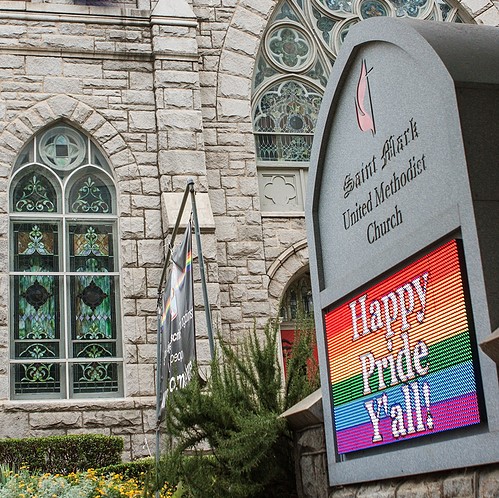
The younger members of our congregations have embraced technology since early childhood.  They grew up with iPads and phones. They read books on Kindles. They use laptops at school. They’re accustomed to navigating more change in a few months than many of us have encountered in our lifetimes! Is it any wonder that they can’t understand how we, as the church, are still debating whether it’s ok to sing songs out of “new” hymnals or to give gay and transgender people positions of leadership?

Quantum physics has shown us that observing changes the things being observed. Yet, we say that Jesus is the same yesterday, today, and forevermore. We tend to interpret this verse as something about the objective, unchanging nature of Jesus and, by extension, the church and morality. But our views of Jesus, the church, and morality will vary greatly depending on our circumstances, and our acceptance of change.

While that would seem to drive us farther apart, quantum physics is where science and spirituality converge. It has affirmed what we have known spiritually: Not only are all particles in the universe interconnected, but so are all humans—indeed, all of creation. More than that, since consciousness is the stuff of the universe, we are all deeply linked to the Source of All Life, our Creator, and the whole creation. And technology can facilitate and increase that spiritual connectedness!

Here’s the trouble. Church culture still functions as if we are living in Newtonian, maybe even biblical times. “If the King James Bible was good enough for Jesus, then it’s good enough for me!” But the world has moved on. Most young people consider themselves to be “spiritual.” But they have little to no experience with “organized religion” nor, often, do they want that experience.

The speed of change has taken on new relevance since the COVID-19 global pandemic. Suddenly, if churches were to continue to serve people, they found they had to quickly move online, including worship, giving, Bible study, pastoral care, and fellowship. With this quick shift, more people could participate in the church’s life. Even as social distancing kept people physically apart, the rapid spread of the virus and the intimacy of connecting almost anywhere online through video have emphasized our interrelatedness. I write about how to build on the changes the pandemic wrought in Forging a New Path: Moving the Church Forward in a Post-Pandemic World.

Back to in person worship means it’s even more important for the church to wake up, smell the coffee, and embrace change! As we look forward with hope and courage into the future, let us remember that we have a unique opportunity to create an even better world than what has come before. We can do this by acknowledging our interconnectedness with one another and with God, by learning to trust the wisdom of our young people, and by creating spiritual communities that are open to change.

Even if that change sometimes moves us outside of the constraints of “organized religion.” Especially when working within our communities.

All of this requires a willingness to let go. We must be willing to let go of our need for control and certainty and, instead, explore the unknown. We must open ourselves to the transformative power of love and grace.

It is time for us to step boldly into the future, trusting that God will be with us – especially if we are willing to embrace a new paradigm of the interconnectedness of all things and let go and adapt to the new normal. This is how we will create a new Christianity that is alive, vibrant, inspiring, and relevant for all ages.

If you want to learn more, check out my latest book Forging a New Path:Moving the Church Forward in a Post-Pandemic World. In it, you will learn practical steps to move the church forward into a new era of unity, understanding, and love.


Copyright © 2023 rebekahsimonpeter.com.  All Rights Reserved.

I Was Wrong About… Love

I Was Wrong About… Love

As a pastor and in the act of preaching, I always thought that it was my job to call people to do something. To take some action to make a difference in the world. And I figured that action was about organizing ourselves to fight against the injustices that are present in the world. But I’ve recently realized that I was wrong. I was wrong about love, and I was wrong about the power of love.

I thought love had no power. Or at least, no real power to change things. I judged that preaching about love, kindness, civility, and prayer was lacking in power.

Yes, I know Jesus said, “Love one another as I have loved you,” and, “Love the Lord your God with all your heart, strength, mind, and soul,” and, “Love your neighbor as yourself.” But somehow, I always translated that love into fighting or into some sort of action against something. I didn’t understand the true power of love to affect change.

Recently, though, I’ve seen it in my life, and especially in my family life. I’ve noticed that when I fought things, what came back was more fight energy. When I fought things, there was resistance, because the only thing that could be available to the other person was defensiveness. Now that I’ve begun to employ the power of love in my family, rather than fighting, or pointing out where I think people are wrong, I’ve been amazed at what’s come back to me.

You know what’s come back? More compassion. More love. More openness. More understanding.

I think about the place that we’re at in the world right now. I think about the gun violence, the assault on democracy, how lies pass as truth. And, I’m not saying just lie down and take it. But I am saying that when we take on injustice, our actions must come from a place of love, rather than hate. Compassion rather than disdain, aligning with “God’s highest energies.”

There’s something about the energies of revenge, hate, and disdain, that call forth more of that in the world. I don’t know how it works exactly, but I trust it, and I know it to be true because I’ve experienced it. I’ve seen how fight leads to fight. But love, somehow, leads to breakthroughs. Not always predictable ones, mind you, but breakthroughs, nonetheless.

Instead of putting others down, tap into the powers of love and compassion by loving God, by loving ourselves, and finally by being able to love our neighbors. Find the scriptures that call us to that highest love and see what happens when people come from love. Then emulate that for yourself.

I admit that I was wrong about the power of love. It turns out it is the most powerful force in the universe, which is why the scriptures reveal to us that God is love.

The Heartmath Institute is one of my favorite organizations. It connects science and spirituality and has demonstrated through scientific studies that when the heart is engaged in feelings of compassion, kindness, appreciation, or love, that it actually has the power to change the hearts of people around it to be on that same electromagnetic frequency. In the same way, if you’re in the space of distress, disdain, anger, revenge, resentment, or hate, you also have the power to turn hearts in that direction. In other words, we have the power to influence those around us. Even furthermore, we can be intentional about creating change around us.

Love is a higher power than hate. Pastors, church leaders, people of faith: take heart that when you tap into the powers of love, you add more love to the world.

This November, I’m offering a 3-session workshop – Platinum Rule Leadership for Changing Times – where you will discover how tapping into the power of love can make a significant difference in your life, your congregation, and your relationships. Built upon the strengths of the Golden Rule, the Platinum Rule expands your emotional intelligence to help you become a better leader. I hope you’ll join me!


Copyright © 2022 rebekahsimonpeter.com, All Rights Reserved.

I Was Wrong About… Aging

I Was Wrong About… Aging

We live in an ageist society that portrays the process of getting older as a failure. Our culture tends to view the older generation as burdensome and less useful than those around them. In fact, these views have been so woven into our society that they can be difficult to recognize. I personally didn’t understand ageism was really a thing until I started reading Breaking the Age Code by Dr. Becca Levy. I got this book for my 61st birthday. As I worked my way through Dr. Levy’s writing, I must admit that what I found was that all along, I was wrong about aging.


The Gift of Aging

As I’ve gotten older and as I’ve watched my parents get older, it’s clear to me that, far from a burden to society, they are a gift. They’re 85 and 86 and, though I’ve watched them age, they are still vibrant. They are alive, inquisitive, and strong. I’m still learning from them. Not just about aging, but about love, life, family, and dealing with illness.

Many of you are pastoring churches with people in their 60s, 70s, 80s, 90s, or even centenarians. For so long, we have bemoaned the aging of the church. But I have a different take on it now. I think that when you’ve got people in the later stages of life, you have wisdom, tenacity, faith, perseverance, graciousness, compassion, and kindness. You’ve got the best of the best!

Of course, there is nothing wrong with youth; we want youth! But there’s nothing wrong with old people, either. And certainly, there is no reason to mourn an aging congregation.


A New Mindset about Aging

In Breaking the Age Code, Dr. Levy writes about how our own beliefs about aging determine how long and well we will live. That’s actually the book’s subtitle: “How Your Beliefs About Aging Determine How Long and Well You Live.”

That’s a very Jesus-like thing to say! Jesus always said, “Your faith has made you well.” There is something about our mindset and our attitude – what we believe and our perspective on the world – that shapes our life experiences.

Dr. Levy has proven that our beliefs are stronger than our DNA, our environment, and our genetic history by demonstrating that what we believe determines how long and well we live.

This is good news! Because we’re all getting older every day. And so are your people and your churches. We do not need to bemoan that or think that aging is a disease of our ministries or churches. It’s not! It’s the beginning. It’s the beginning of a new kind of ministry with people who have wisdom, life experience, and love to share with the world.


Next Steps

You have a tremendous resource in your church. And you are a tremendous resource. Hold your head high and feel good about aging! We have a God who created us all with unique gifts and desires in mind. I, for one, want to grow old.

If you need more help in embracing all of the generations you lead, join me for my upcoming workshop: Platinum Rule Leadership for Changing Times. You’ll learn how to work more effectively with others while increasing your own ability to lead and love. Build on the strengths of the Golden Rule as you discover the secret power of the Platinum Rule. This fun and interactive workshop promotes self-awareness, motivation, empathy, social skill, and self-regulation. 


Copyright © 2022 rebekahsimonpeter.com, All Rights Reserved.

Are You a Church Leader or a Church Manager?

Are You a Church Leader or a Church Manager?

Just because pastors and key laity are called leaders doesn’t mean we are practicing effective leadership. Take me, for example. By the time I graduated from the Iliff School of Theology in 1998, I had an M.Div. and an M.A.R with a healthy cumulative GPA of about 3.75. I had studied Hebrew, Greek, Old Testament, New Testament, theology, church history, preaching, worship, and Christian education. I learned how to read and interpret the scriptures, lead prayer, organize a bible study, serve communion, baptize babies, visit the sick, bury the dead, counsel the distressed, call meetings, administer the life of the church, and under duress, consult the Book of Discipline.

I was prepared to manage the church, but not to truly lead the church.


What’s the Difference Between a Manager and a Leader?

A manager helps an organization survive. A leader innovates so it thrives. A manager dots the i’s and crosses the t’s. A leader generates a brand new vocabulary. A manager makes sure everything is in order. A leader envisions a brand new order. Managers tend to people and processes. Leaders build up new people and craft new processes. If managing is sufficient when things are going well, leadership is crucial when things are not going well.

What I learned in seminary was sufficient for when things are going well. But we all know that things haven’t been going well. While I was honing and expanding my skills, there was a larger dynamic at play: a culture of decline in the church. Not just my church—but the denomination as a whole, mainline Christianity as a whole. Since the early 70’s, we have seen a significant loss of membership, attendance, giving, and influence. At the same time, we’ve seen a rise in the ranks of church alumni, the spiritual but not religious.


5 Things Church Leaders Need to Know

I pastored local churches for more than 12 years. By the time I left, I was frustrated and burned out—even with all the love and good ministry that had transpired. What happened to the grand calling I had? Why was the church in decline even though I put everything I had into it? In the 15 years since, I’ve immersed myself in mastering the principles and practices of effective leadership in the church. Here’s what I’ve discovered, including 5 confessions of my own.


  1. Leaders may be born, but even more than that, they are formed. Some of us naturally possess a personality style that others equate with “leader.” We get things done. We have an air of confidence. We connect with people. As important as those qualities are, though, they are not enough to constitute effective leadership. An effective leader doesn’t do it all themself. They also know how to empower others to get things done. Jesus intentionally authorized and empowered those around him to do what he did. That’s why his movement is still alive, while the things I began in the local church most likely are not. I didn’t fully understand how to turn things over. Church leaders, it doesn’t matter if you’re a born leader or not; we can learn those skills. In fact, we must if we are to fulfill our callings.


  1. Effective leaders have high emotional intelligence. Self-awareness, empathy, motivation, social skill and self-regulation are five commonly accepted attributes of EQ. Jesus had all these qualities in spades. He knew himself. He had empathy for others. He understood what motivated others, and had the skill to move people in the direction he wanted to go. Finally, he knew how to regulate his own actions, motivations, and fears. The Gospel stories of his interactions with friend and foe alike illustrate his EQ.

While I had self-awareness and empathy, I wasn’t always clear on what motivated others, or how to move everyone in the direction I sensed God was calling us to. That means my ability to self-regulate was limited. I did what I knew how to do—persuade, cajole, inspire, push—trying harder and harder. Sometimes it worked, sometimes it didn’t. I didn’t know sometimes people need facts and figures rather than emotion and inspiration. I didn’t know sometimes people need advance notice to figure things out and get on board.

Doing the same thing over and over while expecting different results is one definition of insanity. It’s a prescription for burnout, too.


  1. Church leaders can’t save the church, and shouldn’t try. Decline is bigger than we are. Instead of our sole focus being to boost giving, attendance, and baptisms, we need a focus that is larger than ourselves. That means keeping one eye on our current constituency and another on the needs and possibilities in the communities around us. If we attend to those things well, the church will likely thrive too.

Jesus had his eye on the Kingdom of God which required a complete re-focusing of spiritual and religious energies. Out of this vision emerged not only the creation of a brand-new movement now called Christianity, but a stronger, re-invented Judaism as well.

I took decline personally. I figured the answer was to do more, demand more, spend more time, and take less vacations. That didn’t work. It simply caused burnout. Decline is overcome with a bigger vision and a change in consciousness, not more effort.


  1. Leadership development for leaders is not an oxymoron or a redundancy. Most of us get 3-9 semester hours of leadership development in seminary or course of study. The rest of it comes from intentional continuing education. That’s how I became a leadership developer. Instead of slogging alone through years of nagging self-doubt, disempowerment and victimhood—like I had—I wanted to create a new conversation. So I developed what I learned into a useable, accessible format for others.


  1. The culture of decline cannot produce a culture of renewal. Because we church leaders—locally and nationally—are used to operating in a culture of decline, our thinking is unconsciously limited by that. We’re more used to scarcity than abundance.  It’s easier to tick off reasons why we can’t rather than reasons why we can. Effective leadership development is grounded in a different kind of culture. Creating a Culture of Renewal® requires a focus on Jesus’ own empowerment of us and the structures he employed to cultivate it. That includes high expectations, life-giving accountability, miracle-making, acknowledgement, and celebration.


Next Steps

I confess that I didn’t know any of this when I graduated seminary, or when I pastored three churches. I knew what didn’t work, but I couldn’t quite figure out what would work. That took lots of trial and error. In the 15 years since leaving local church ministry, fellow travelers have joined me on the journey and discovered their own path to effective leadership.

If you would like to learn how to step into greater leadership by becoming an emotionally intelligent, Jesus-empowered, visionary leader who can create a culture of renewal, let’s talk!


Copyright © 2022 rebekahsimonpeter.com, All Rights Reserved.

The Peace that Surpasses all Misunderstanding

The Peace that Surpasses all Misunderstanding

Science has confirmed what scripture points to – there is a peace that surpasses all understanding. This peace, researchers have found, emanates from deep within the human heart. It is both measurable and reproducible.

I suppose that’s not too surprising. The Biblical traditions equate the heart with feelings like love, peace, and joy.

Here’s what is surprising: this peace has the capacity to surpass all misunderstanding, too.


Contagious Emotions

You know how being around angry or nasty people can put you in a bad mood? And how laughter is infectious? Or how a smile can travel from one person to another?

Turns out that’s not just coincidence. It’s the heart’s own emotional intelligence.

Research has shown that emotions emit an energetic wavelength. When our hearts radiate emotions with higher wavelengths – such as appreciation, kindness, compassion, positive regard, joy, delight, and love and peace – we generate more of that into the world. When we radiate emotions with lower wavelengths – judgment, fear, worry, mistrust, suspicion, anger, hate and revenge – we literally create more of that in the world. Makes sense, doesn’t it?

Now here’s the cool part: these electromagnetic waves have the capacity to influence others, and to draw them in.  Just as sunlight is made up of waves of energy which travels through air, turning night to day and warming cold bones – our emotions influence the people around us.

Depending on the feeling we radiate, we can intentionally invite other hearts into either a state of peaceful coherence or a state of jagged non-coherence.

So, what does all this have to do with church?


3 Ways You Can Surpass Misunderstanding

First, as a spiritual leader, it is important to make sure your heart is aligned with the energies of peace. The more spiritually grounded and coherent the leader’s heart is – that is, aligned with the peace that passes all understanding – the greater your capacity to radiate that peace to the people and situations around you. You can make a measurable difference.

Second, as your congregation gathers to pray, remember to expand your corporate focus beyond the immediate prayer concerns of your people. Intentionally radiate peace that passes understanding out into the world. This is important on the days that our world reverberates with misunderstanding – outrage, upset, and random acts of violence. Your congregation’s concentrated focus on heart-based prayer can make a measurable difference on a global scale.

Third, teach your people how to stay grounded in prayerful appreciation of all the good in the world. This appreciative stance increases heart-based coherence at every level of society. Notice what is right with the world. Focus on the divine signs and wonders around you. Highlight miracles.


Next Steps

In this way, you partner with God, Jesus and the Holy Spirit to co-create the highest energies of peace, love, and appreciation in the world. Surprisingly, this is an approach that surpasses all misunderstandings in the world.

If personal peace is hard to come by, consider joining me for my upcoming workshop, Platinum Rule Leadership for Changing Times. Using a personalized Everything DiSC® Workplace profile, we’ll discover how you can bring out the best in people who frustrate you most as well as enhance your leadership skills to defuse tension and misunderstanding. Your registration includes a copy of my new book, Forging a New Path: Moving the Church Forward in a Post-Pandemic World.


Copyright © 2022 rebekahsimonpeter.com, All Rights Reserved.