by Rebekah Simon-Peter | Nov 12, 2019
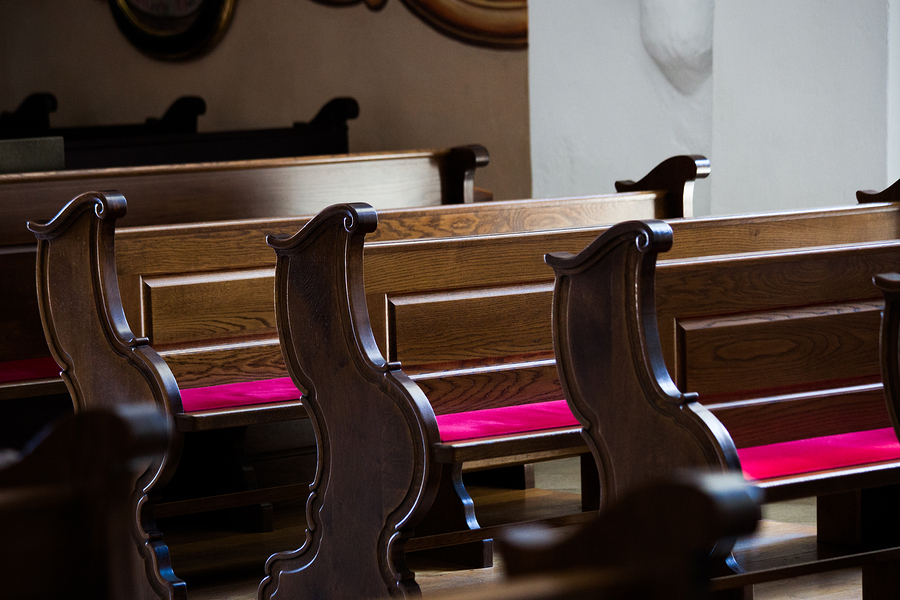
At Shepherd of the Hills Church, it’s been a long time since the cries of children interrupted worship. That’s okay with this aging congregation. Although they miss younger people, they appreciate less commotion. If only they could get some responsible families, they’re sure things would look up. They want the pastor to recruit them. But he’s gotten busy lately, bogged down in church meetings that seem to go nowhere. This congregation has tried to start a “Bring a Friend to Worship” Sunday. But newcomers get scared off by the appeals to give, and the red ink in the bulletin. Meanwhile the pews thin out, and a steady stream of funerals keep the pastor hopping. Worship used to include several unknown faces. Not anymore, but at least now everyone knows each other. Lots of time to pray for each other, and to keep the love flowing.
On the surface, this church sounds pretty normal. But dig down a bit and you’ll find a church with no dream other than to survive. How does a church like this create a shift in its culture?
First, let’s take a look at what happens in churches like this. They develop a bevy of problems like the following eight:
- shrinking numbers
- problem people
- stagnant giving
- listless worship
- gutless prayer
- bait and switch evangelism
- insulated focus
- dead-end decision-making
In my work with congregations through Creating a Culture of Renewal, I have noticed that these eight distinct problems are reliable indicators of a church operating without a vision. I believe there is a strong connection between the two.
Vision is key to creating a shift in the culture. The vision has to be bigger than a church improvement plan, though. Otherwise, you are back to square one. You’ll be managing decline rather than creating a sustainable shift in culture. That requires the courage to Dream like Jesus®.
Here are the four steps a congregation must DARE to undertake:
- Dare to have a God-sized DREAM. Jesus dreamed that earth would be a reflection of heaven.
- Dare to ALIGN others to the dream. Start with the people around you. Jesus did. The fishermen, tax collectors, and other people he got on board didn’t have special credentials. They did however, believe in his big dream.
- Dare to REALIZE the dream. Bringing the dream to fruition takes courage. You’ll encounter some road blocks and obstacles, yes. And, you’ll also encounter people ready to get on board with an energizing dream that makes a true difference. Jesus and his friends made a huge impact through their healings, feedings, proclamations, and conversations.
- Dare to EXPAND out into your community. Your community is eager for you to engage them with love, courage, and creativity. They long for the Kingdom, even if they don’t put that in words.
The time to dream like Jesus is now. In my experience, the longer you wait to address the eight dynamics of decline, the more embedded they’ll become and the harder they’ll be to dislodge. Culture shift will be almost impossible. On the other hand, the sooner you engage a God-size dream, the more hope there is for you and your community! Ready to learn how? Register for the online workshop DARE to Dream Like Jesus® now.
The above blog is excerpted and adapted from Dream Like Jesus: Deepen Your Faith and Bring the Impossible to Life, © 2019, Rebekah Simon-Peter.

by Rebekah Simon-Peter | Nov 5, 2019
What’s the difference between a “disciple” and an “apostle?” The word disciple comes from the Latin discipulus, meaning scholar. A disciple is a student of Jesus’ whose primary focus is on mastering his teachings so that he or she can live out Jesus’ way.
An apostle, however, has a different focus. The word apostle derives from the Greek apostolos meaning envoy. While disciples are students, apostles are proactive agents, who act on behalf of the one who has sent them. In today’s language, we might say that disciples are followers and apostles are leaders. But there’s more to it than that.
The biggest difference between disciples and apostles is that apostles possess a qualitatively different kind of faith than disciples. Disciples have faith in Jesus. Apostles, on the other hand, have the faith of Jesus. Otherwise, there’s no way apostles could do what Jesus did.
When the twelve functioned as disciples, they followed and learned from Jesus, asking him many questions. However, when they functioned as apostles, they walked on water, multiplied loaves and fish, healed the sick, and oversaw the multiplication of the church.
Disciples ask WWJD? Apostles answer this question by stepping up into courageous faith and miracle-making action.
Making the leap from discipleship to apostleship is a key part of Creating a Culture of Renewal. It comes with developing the capacity to dream like Jesus, to steward the Kingdom dream.
In recent years, the United States has experienced a retrogressive wave of hate rallies, fueled by fear of the other and inflamed by divisive rhetoric. Neo-Nazi rallies and Ku Klux Klan gatherings signal that something many of us thought had died had simply been buried. At the same time, public shootings have become increasingly common. Not even churches, synagogues, hospitals, or yoga studios are off-limits. These bursts of hate-mongering and violence are deeply troubling.
Where is the Kingdom dream in the midst of this?
Countless congregations are themselves polarized by politics, hamstrung by conflicting loyalties, and lined up behind political leaders – however glaring their shortcomings – rather than Jesus’ own teachings. Congregations have confused the visions of political leaders and their fight for power with the Kingdom vision of Jesus, their own chief visionary.
This capacity to be easily fractured points to a conspicuous lack of a unifying vision. Both in our country and in our churches.
I’m not suggesting that Christians in America abandon democratic ideals or revert to some sort of authoritarian theocracy. However, I am suggesting that we let Kingdom-based ethics shape our politics rather than the other way around.
The time to dream like Jesus is now. The time for apostleship is now.
Ready to learn how? Register for the online workshop DARE to Dream Like Jesus® now.
The above blog is excerpted and adapted from Dream Like Jesus: Deepen Your Faith and Bring the Impossible to Life, © 2019, Rebekah Simon-Peter.

by Rebekah Simon-Peter | Oct 28, 2019
Discipleship pathway systems are all the rage in the United Methodist Church these days. And with good reason. These systems are supposed to produce disciples, i.e. growth, and thus enable churches to fulfill the Great Commission, as well as the mission of the denomination.
But what about when discipleship isn’t enough? I can’t help but wonder if this approach to discipleship is short-sighted. Perhaps even problematic. The first problem I see is that discipleship as an end game can create passive followers who don’t own their God-given agency. The second problem is that discipleship without apostleship subverts the Gospels’ meta message.
Let’s start with the first problem. Jesus didn’t call The Twelve or The Seventy-Two or any of the others for them to be mere followers. Followership was simply the first stage in their spiritual development. Apostleship was the ultimate goal of their training.
During the three years The Twelve spent with Jesus, they observed how he thought and how he prayed. They watched how he taught and soaked up what he believed. They watched him engage paralyzed, hurting, desperate people and they noted the way he interacted with others. They listened to the way he phrased things. They were privy to his miracles and glimpsed his inner relationship with God.
But they didn’t stop there. Jesus transferred his spiritual authority, agency, and accountability to them. They were to speak, act, and heal on behalf of him, and of the Kingdom. Each of these men and women were to be active agents, stewards, of the Kingdom dream.
What’s striking to me is that Jesus never hoarded his power. He freely taught others how to exercise it. After they mastered the kinds of things Jesus had done, The Twelve, The Seventy-Two and likely countless others, surpassed what Jesus had done. Not only did they heal, preach, and proclaim the Kingdom, they gathered thousands of followers, set up communities in far-flung places, and oversaw the development of structures that allowed the church to grow and expand throughout the known world.
That’s where we get to the second problem with discipleship pathway systems. We’re not going to be any good at making the sort of disciples Jesus made until we are decidedly better at making the kind of apostles Jesus made. After all, it is apostles who make disciples, not other disciples. You can see this shift in the Great Commission. When Jesus commanded the disciples to “Go therefore into all the world,” signaled the ontological change in their status. From this moment on, they were no longer followers. Their sending signaled they now functioned as apostles.
Yet in the church, we do not teach people, even our leaders, how to be apostolic: stewards of the dream, agents of change. We do not teach people that they are co-creators with God. That their words have creative, divine power. That they are more Christ-like than they know. Instead we teach people to give God all the glory. I’m not sure if God wants all the glory. Nor does Jesus. The way I read the New Testament, Jesus expects us to surpass him, to do even greater things than he did. The only way to do that is to own our God-given agency and our authority. Settling for discipleship without apostleship undercuts the ultimate meta message of the Gospels.
So before we get too invested in discipleship pathways, we would do well to build apostleship pathways, too. Interested in knowing more about how to do that?
In my work with Creating a Culture of Renewal, I’ve discovered that apostleship starts with Kingdom-oriented dreams. When church leaders know how to dream like Jesus, align others to the dream, and realize the dream, then the dream can expand and draw others to it. Now there’s a discipleship pathway system.
Adapted from Dream Like Jesus: Deepen Your Faith and Bring the Impossible to Life © 2019 Rebekah Simon-Peter, now available everywhere online.
by Rebekah Simon-Peter | Sep 28, 2019
When a male leader is direct, confident, or decisive, he’s often known by a C-word: Confident. Competent. Charismatic. He’s prized as a strong leader, a natural leader. A woman who shares the same characteristics in a leadership position, however, is often stuck with a less desirable word. With less desirable connotations.
I told my husband about the title of this blog and asked him what he thought the B-word was. He answered tongue in cheek. “Bright? Balanced? Bold?” I laughed. The truth is, we both know she’s more likely to be known as bossy. Or worse, a b#tch.
Strangely enough, it’s not just men that make these pronouncements. Other women do too.
Why would women resist strong female leadership? Is it because women are afraid of their own power? Is it because women fear the backlash that comes when another woman displays such qualities? Or maybe traditional female gender socialization is so ingrained that it’s simply hard to accept this sort of female leadership.
I’m not sure. But I do know this. Women, as well as men, are naturally shaped to be direct, confident, and decisive. As well as tender, compassionate and collaborative. Traditional gender norms tend to skew socially acceptable behaviors, but in studies about personality type, all of the above qualities occur almost equally in both men and women. Moreover, since each one of us—male and female—is made in the image and likeness of God, there are no mistakes about how we turn out.
The church needs strong, decisive leaders who are confident, competent and charismatic. As well as compassionate and collaborative. And the church needs them in both the female and male versions.
So how do we move beyond the negative monikers of bossy and b#itch? I have three suggestions for the women in the pews and pulpits:
-
Remember the power women from your past.
Identify women from your past that shaped their families and communities with their insight, intuition, and ability to get things done. You are part of that history. Women have always been leaders, even if not in the public square.
-
Mentor the next generation of women.
Elizabeth supported Mary when they both carried miracle babies who would change the arc of history. In the same way, mentor younger and older women in developing their own confidence and skill.
-
Own your inner boss.
Get comfortable with your own power. The power to move a conversation forward, to motivate a congregation, to envision new possibilities. A female colleague gave me a prized mug that says: “I’m not bossy. I am the boss.”
There is one more B-word that is under-used when it comes to women. One we should wholeheartedly embrace: Bishop.
In 2006, I attended an international United Methodist celebration of the 50th anniversary of full clergy rights for women. All of the female United Methodist bishops in the church were in attendance. They told their stories, spoke on panels, and cheered each other on. I was amazed not only at their leadership, but at their everydayness. As I navigated airports on the way back home, I thought to myself that if I had seen any of these women without their episcopal robes or name tags, I wouldn’t have known they were bishops. They looked like other women I knew: grandmothers, mothers, sisters and friends.
In the same way, women leaders are all around us. Women who accomplish amazing things in their communities, families, and in the Kin(g)dom of God. We need you. Yes, in some settings, you may be thought of as bossy, or even bitchy. But let’s not forget, you may also be thought of as bishop-material.
Learn more about our work at www.rebekahsimonpeter.com.
by Rebekah Simon-Peter | Jan 26, 2015
 Church, it’s time to go all the way in embracing the Jewish Jesus.
Yes, Jesus is seen as a Jew in many pulpits and pews, but usually as an exception, an anomaly.
In too many sermons, commentaries, and hymnals his teachings on love, inclusion, and forgiveness are set up as a contrast against the Jews and Judaism of his day. What makes him distinctive, we say, is that he’s not like the other Jews. He reached people on the margins. He talked to women. He ate with sinners and tax collectors. But these characterizations of a Jewish Jesus are still distorted. Dr. Amy-Jill Levine explains why:
“Jesus becomes the rebel who, unlike every other Jew, practices social justice. He is the only one to speak with women; he is the only one who teaches nonviolent responses to oppression; he is the only one who cares about the ‘poor and the marginalized’ (that phrase has become a litany in some Christian circles). Judaism becomes in such discourse a negative foil: whatever Jesus stands for, Judaism isn’t it; what Jesus is against, Judaism epitomizes the category.”
Yes, Jesus reached out to all kinds of people. Yes, he counseled mercy and patience. Yes, he healed and set people free. But rather than see Jesus as different from the Jews around him, I suggest it is time to see Jesus’ ministry as a natural evolution of the whole history of Jewish teaching, ethics, morality, practice, and service of God. Otherwise he serves as an archetypal anti-Jew.
I’d like to explain the phenomenon, and then give you 3 criteria to check for to see if your preaching and teaching sets up Jesus as a Jew or as an anti-Jew.
Think about it.
If Jesus was fully Jewish, operating in a Jewish context, living a Jewish life, studying Jewish texts, praying to a Jewish God, clothing himself in the Jewish commandments, where else did it come from?
If we believe that Jesus was one with the God of Israel, then surely, Jesus drew upon the same Source and sources that inspired all the other teachers, miracle-workers, prophets, and kings that preceded and surrounded him.
Quite often the rabbis of his era were arriving at the same conclusions he was, from the Golden Rule, to teachings on Sabbath, the importance of love of God and neighbor. Others were engaged in calling disciples, healing, and miracle-working. Even his interactions with women, children, and Gentiles were not anomalous.
More than that, the Hebrew Bible/Old Testament is marked by theological and behavioral leaps, beginning with Abraham’s innovation that God is one, not many; continuing with Moses’ skilled but previously unknown leadership in leading the Israelites from slavehood to peoplehood; game-changing visions from prophets; and the courageous renewal of Judaism under Nehemiah and Ezra after the return from Babylonian exile.
Jesus is the product of generations of Jewish innovators, completely in line with the spiritual genius that went before him and even those that came after him.
Paul wasn’t kidding when he said about his fellow Israelites, “to them belong the adoption, the glory, the covenants, the giving of the law, the worship, and the promises;�to them belong the patriarchs, and from them, according to the flesh, comes the Messiah, who is over all, God blessed forever. Amen.”
How do you know if you are preaching and teaching about Jesus as a Jew or an anti-Jew? Check out these 3 critiera:
1. You rely heavily on the compare and contrast method of preaching and teaching: Jesus is the “good guy” and his Jewish contemporaries such as Pharisees, Saducees, scribes and lawyers are the “bad guys.” This creates an us v. them dynamic that creates enemies. In other words, in order to stand with Jesus, I have to stand against somebody or something else.
2. You remove Jesus from a Jewish context altogether, substituting “the church” for the actual Jewish people, Torah, land, and institutions he interacted with. Erasing his Jewish context doesn’t help. It’s like claiming being color-blind in a society where white privilege still operates.
3. You portray the Pharisees as uni-dimensional: hypocritical, out to get him, narrow-minded or legalistic. Of all the Jewish groups present in his day, Jesus himself was most closely aligned with the Pharisees. His way of teaching, setting up a fence for the Law, and seeing the world has more in common with them than any other group.
Putting this perspective into practice will take a renewed scholarship among preachers, pray-ers, poets, professors, and Bible study writers and teachers. I realize it’s going to take some work to leave behind comfortable but dishonest dichotomies and ready stereotypes. This won’t be easy for already overworked church leaders. But there are many excellent resources that can help. It’s worth the effort.
We are grand participants in a historic reconciliation, the fruits of which are only beginning to be realized. Understanding that Jesus operated within a rich spiritual and theological context is essential for deconstructing three attitudes: first, lingering anti-Judaism; second, Jesus as anti-Jew; and third, subtle “us versus them” dynamics. While denominations have repented of these attitudes, the fulfillment of that work remains to be done in individual pulpits, in Bible studies, and in human hearts. The more we get our theology and teaching right, the more space it creates for healing between Jesus and his own people.
Excerpted and adapted from “The Jew Named Jesus: Discover the Man and His Message,” (c) 2013 Rebekah Simon-Peter.

