by Rebekah Simon-Peter | Feb 20, 2018
Can churches be involved in the most volatile issues of our day? The Parkland FL school shooting begs the question. Seventeen more  people are dead, most of them children. It’s the 25th fatal school shooting, and the 208th school shooting overall, since Columbine HS in 1999. That’s almost 11 per year. If the church can’t or won’t speak out against this sort of violence, then what hope is there for a voice of conscience in our world?
Here’s the trouble, though. When we try to speak to wrenching issues like school shootings from a political perspective, we get caught in either/or choices. Our two-party political system creates a win-lose situation with no room for nuanced disagreement. Either/or choices are destined to polarize. Churches are reluctant to get involved. I get it. I’d like to offer an alternative that every church can use.
Thankfully, speaking from a political perspective is not the church’s only choice. Churches can and should speak from an ethical perspective. Webster defines ethics as “moral principles that govern a person’s behavior or the conducting of an activity.” For the church, ethics are the living out of our faith in a world in which choices are rarely black and white.
When churches speak from an ethical position, we are able to discern and articulate truths that go deeper than the artificial either/or choices created by our two-party system. Adopting an ethical perspective means we consider how core values of the Gospels and Jesus’ teachings impact public policy. Viewing current events through an ethical lens also empowers us to address how the gifts and potentials of human life impact our responsibility to the common good. Finally, because we believe in a hopeful future for all of God’s good Creation, an ethical perspective enables us to react not just to what is, but to powerfully envision what could be.
Clearly, if we don’t want 11 more school shootings per year, not to mention 6 church shootings per year, we have new choices to make about how we approach the following: access to deadly weapons, gun policy, public health, the safety of our children, and the way boys and men express their rage and disenchantment. (Yes, almost all these shooters have been men.)
In the United Methodist Church, members take a vow to resist evil and injustice in whatever forms they present themselves. That’s as clear a call for an ethical response to current events as I’ve ever heard.
How do you respond ethically? I suggest this 7-step process. It’s not perfect or complete, but it will give you a starting point. United Methodists will recognize elements of the process as it engages the Wesleyan quadrilateral, the four sources by which we live out our faith.
When it comes to thinking ethically, the first and most important step is to get the facts. That means looking beyond Facebook memes and polarizing talking heads. It means digging deeper to find out what’s really going on. “Some moral issues create controversies simply because we do not bother to check the facts,” observe the authors of Thinking Ethically.
Second, turn to the scriptures. Discover the biblical stories or principles that might apply. This means thinking deeply and widely about meta messages of the Bible. Resist the temptation to pluck one or two scriptures out of context that seem to fit the situation. Many of the ethical dilemmas we face today were never mentioned in scripture. Similarly, the scriptures themselves were written over centuries in response to situations that are far from our post-modern context.
Third, look to other commentaries or sources of your faith. United Methodists will want to consult the Book of Discipline, the Social Principles, and the Book of Resolutions, to see how other informed persons of faith have approached these issues.
Fourth, look at the history of the issue. How has it been dealt with in the past? What has worked? What hasn’t? As thinking persons of faith, we engage our faculties of reason.
Fifth, engage in prayer. A word of caution here. I wouldn’t necessarily ask for specific answers to your specific questions; this prayer may lead to confusing our own solutions with God’s divine guidance. Rather, I suggest praying for guidance and wisdom as you discern together.
Sixth, engage in respectful, patient, discussion about the resources at hand. To do so, first decide on ground rules and boundaries, so that your discussions don’t become polarized or violent. At this point, don’t try to come to final solutions or absolute positions. Rather, keep an open mind. Keep prayer present even in the discussion. Over time, discuss possible ethics-based approaches to addressing the problem at hand.
Don’t worry if you don’t all come to the same conclusion. You probably won’t. That’s okay. Here’s what you will have done: you will have thought faithfully and ethically about the issues at hand. This ethics-based process creates trust, the ability to move beyond polarizing politics, and increased skill at diving deep as a community of faith.
Finally, take action. Establish new ministries. Establish new policies. Pray new prayers. Preach new sermons. Encourage new conversations. Draft new policies. Call the powers that be. Write letters. Speak up. Get together with other like-minded folks. March. Cry. Shout. Pray. The actions you take will be dependent on your setting and circumstances. The main thing is to act.
by Rebekah Simon-Peter | Jul 16, 2017
Why do good churches die?
I’m not talking about churches who have an apparent fatal flaw like mean or nasty people, terrible location, clergy sexual misconduct,
uninspiring worship or the like. Churches can and do recover from all of those things.
No, I’m talking about good churches that care about people, hold decently inspiring and cohesive services, are doing their best to reach out and respond to a changing world, are led by a committed leader, and backed up by laity who truly care. Good churches. Why do
they die?
Theories abound, including changing demographics, young people leaving the church or not being raised in church at all, the rise in the spiritual but not religious crowd, the appearance of “nones” and “dones”–those that have no religious affiliation or once did but have now retired from church, and the changing culture around us. Yes, these factors all play a part. But churches can and do transcend these factors too.
There is one hidden reason why churches that seem to be doing it all right still die. I want to share that with you today, plus four hints to discover if this hidden reason is operative in your church, and what to do about it.
The secret reason good churches die is they lack a vision. In fact, I believe 100% of church decline and demise is due to this.
Here’s how you know you lack a vision:
1. Your current vision doesn’t expand assumptions about what is possible. Instead, it describes what you are already doing. For example, let’s say your church’s vision is “Extending the love of Christ to the heart of our community.” Let’s say in the past, against all odds, you started an outreach to the homeless with food, clothing, and prayer. Once upon a time it seemed impossible to do. But now you are doing it on a regular basis. Guess what? It’s no longer a vision. Now it’s a program. Time for a new vision. Because a program, no matter how positive, won’t keep a church alive.
2. Your questions change from Who is God calling us to reach? to How can we avoid losing what we have? The first question is forward-looking, outward-focused and risky. The second question is backward-looking, inward-centered and cautious. It’s a sign that maintaining structure has become more important than doing real ministry. Also, that fear has become more important than the Gospel.
3.
You have not put your own credibility on the line when articulating what’s next. In other words, you are trying to look good, be liked, not rock the boat, save your job, or save the church. Jesus put his own credibility on the line when he cast his vision that the Kingdom of Heaven was at hand. So much so that Rome crucified him for sedition as “King of the Jews.” But his vision worked! Here we are 2000 years later, still organizing around it and implementing it. I’m not saying we will be crucified for having a vision. I am saying that putting our own credibility on the line, for the sake of the vision, is the only way we can be agents of transformation.
4.
You are waiting for someone else to come up with a vision. If you are leading in any capacity–whether you’re in charge of the Rugrats Ministry or you lead a team of 20 denominational executives, it is your responsibility to come up with a vision. That’s what leaders do. Waiting for someone else may be a sign that it’s time to retire or to re-tool your understanding of leadership.
You can tell when you are in the presence of a visionary leader, congregation or denomination. It’s exciting, invigorating and a little bit scary. You sense purposeful movement, forward direction, and perhaps more faith than you yourself currently possess.
I had this experience when I attended the Union of Messianic Jewish Congregations international conference last summer. This is a group that is basically inventing a new branch of Judaism which bridges traditional Judaism and classical Christianity. They’re fully identified as Jews AND as followers of Yeshua/Jesus. Don’t tell them it can’t be done. Because they are doing it!
Theologically, socially, politically and demographically they are all over the board. They include Jews by birth and conversion, and lots of Gentiles too. It’s hardly a uniform group of people. But a single vision unifies them and propels them forward: to restore the Jewish Messiah to the Jewish people.
I didn’t sniff a whiff of decline among them! And I’m trained to detect that.
Here’s the point: if they can do it, you can do it! Good churches don’t need to die. And good leaders don’t need to let them! Envision a future that expands assumptions about what is possible, get back to asking the right questions, take risks, and be the one to get the ball rolling. This has the power to unify even the most disparate group.
Then, new life is not only possible, it’s inevitable!
This article first appeared on January 6, 2015.
by Rebekah Simon-Peter | Jul 5, 2017
Let’s say you have recently arrived at your new pastoral appointment. You’re wondering just what sort of people you are serving. Worship services can give you a strong indication of how people perceive their power in relation to the world. This sense of personal power defines a group so thoroughly that it is often invisible to them. And to us. But get it wrong consistently, and people will begin to react. Get it right and you will master a key element of emotional intelligence.
If a church service focuses only on the sovereignty of God, or the need to wait on the return of Christ, or the overwhelming presence of evil in the world about which only Christ can take action, then independent and innovative risk-takers may feel restless, uninspired, and even depressed. Their attendance may become spotty or they may leave—feeling there is not enough call to action, personal or corporate empowerment, or encouragement.
On the other hand, if a worship service focuses only on the power of human free will, the need and ability of the congregation to act, and the necessity to overcome evil or apathy through personal action, your harmony-seekers, stability-creators and conscientious may wilt, feeling overwhelmed and paralyzed.
Learn how to read the dynamics of a worship service and you will understand much of what makes a church function the way it does. Get savvy about how to adapt worship to address all the behavioral styles, and you will be a miracle-worker! Don’t be surprised when more people say that God spoke to them, they were fed, they were inspired, or they learned/heard something new.
Check out these four examples of worship to see what they communicate about power.
Sts. Peter, Paul and Mary Roman Catholic Church holds a praise Mass. Featuring acoustic guitars, and easy to sing songs, this Mass has been popular for decades. The musicians/worship leaders wear jeans, and the Priest often ministers from down front. Rather than being held on Sunday morning, this Mass takes place on Saturday night. As is true in most Catholic Churches a wide array of generations are present. Children sit with their parents and grandparents and are instructed as they go along. Everyone seems to sing, and enjoy it. Instruments are passed out and people worship joyfully. A relaxed attitude prevails. Worshipers linger after Mass has ended, enjoying coffee and dessert and occasionally the thoughts of a visiting speaker. Two offerings are taken during each Mass; one for the Parish, and the second for a charity that varies month by month.
Lutheran Church of the Ascension is high church from start to finish. The processional features young people carrying in the cross, then the Bible. Next comes the minister and lay
reader. From there, a well-ordered service unfolds that includes traditional liturgy, a creed, four scripture readings, three hymns, and Holy Communion. There is no children’s message. Small activity bags are given out to children who stay in worship but most of them attend Sunday School. From the stately processional to the chanted psalm response to the closing hymn, the powerful pipe organ decisively leads each song and chant, as if carrying it up to the throne of God. Announcements are noted in the bulletin, not spoken. No prayer concerns are solicited from the people, rather a liturgy of prayer is recited, and an optional anointing before worship is offered to individual worshipers. Other than responsive readings, the only people speaking in worship are those of the robed minister and the lay reader. People leave as quietly as they came.
Suburban United Methodist Church conducts a well-rehearsed and imaginative service; four of them in fact. The 10:30 am service generally features four pieces of live vocal music, two of which are usually secular pieces of music. The latter selections are done in a startlingly fresh way. The service begins with a short dramatic piece to set the theme of the day. The call to worship is sometimes sung, sometimes recited, sometimes chanted. While there is an order to the worship, it’s not the type of liturgy that can be predicted. It’s always something different at this church, with a variety of people involved in the worship service itself. The preacher does not robe, but is impeccably dressed in business attire. The sermon is often interactive including Power Point or video shorts. When creeds and responsive readings are used in the service, they are set against images on a screen. A children’s message is delivered each
Sunday. Catered meals, Bible studies, or collections for disaster relief follow services each week.
Rural Church of the Desert has begun a new contemplative Taizé service. The service opens with the lighting of candles and the singing of Taizé chants. A long period of reflective silence ensues before the next Taizé chant. A single passage from the New Testament is read and reflected upon several times. No sermon is preached. However, Holy Communion is served, after which worshipers may light prayer candles or write out prayers. Then, two kinds of offerings are taken. The first is a monetary offering for the upkeep of the church. The second is a prayer offering in which the prayers of the people are lifted up. The worship leader blesses both offerings. The written petitions are then re-distributed through the congregation for prayer during the week. The service ends with the holding of hands, the singing of a Taizé benediction, and a personal blessing for each worshiper. Many people stay for coffee hour.
Which congregations communicate personal power? Corporate power? Which service would you be most comfortable with? How about your people?
Want to discover what your worship service is really communicating? Or to learn the EQ dynamics that contribute to engaging and empowering worship? Send me a copy of your worship service at re*****@***************er.com and let’s set up a brief consultation.
This blog is adapted from the Workbook on Congregational Intelligence, by Rebekah Simon-Peter, from Track 1 of Creating a Culture of Renewal.
by Rebekah Simon-Peter | Apr 11, 2017
This week we celebrate the miracle around which Christian life revolves: the death and resurrection of Jesus. It makes me wonder if we are truly ready to embrace a Jewish Jesus.
Jesus is seen as a Jew in many pulpits and pews, but usually as an exception, an anomaly. In too many sermons, commentaries, and hymnals his teachings on love, inclusion, and forgiveness are set up as a contrast against the Jews and Judaism of his day. What makes him distinctive, we say, is that he’s not like the other Jews. He reached people on the margins. He talked to women. He ate with sinners and tax collectors. But these characterizations of a Jewish Jesus are still distorted. Dr. Amy-Jill Levine explains why:
“Jesus becomes the rebel who, unlike every other Jew, practices social justice. He is the only one to speak with women; he is the only one who teaches nonviolent responses to oppression; he is the only one who cares about the “poor and the marginalized” (that phrase has become a litany in some Christian circles). Judaism becomes in such discourse a negative foil: whatever Jesus stands for, Judaism isn’t it; what Jesus is against, Judaism epitomizes the category.”
Yes, Jesus reached out to all kinds of people. Yes, he counseled mercy and patience. Yes, he healed and set people free. But rather than see Jesus as different from the Jews around him, I suggest it is time to see Jesus’ ministry as a natural evolution of the whole history of Jewish teaching, ethics, morality, practice, and service of God. Otherwise he serves as an archetypal anti-Jew.
Think about it. If Jesus was fully Jewish, operating in a Jewish context, living a Jewish life, studying Jewish texts, praying to a Jewish God, clothing himself in the Jewish commandments, where else did it come from? If we believe that Jesus was one with the God of Israel, then surely, Jesus drew upon the same Source and sources that inspired all the other teachers, miracle-workers, prophets, and kings that preceded and surrounded him. Quite often the rabbis of his era were arriving at the same conclusions he was, from the Golden Rule, to teachings on Sabbath, the importance of love of God and neighbor. Others were engaged in calling disciples, healing, and miracle-working. Even his interactions with women, children, and Gentiles were not anomalous.
More than that, the Hebrew Bible/Old Testament is marked by theological and behavioral leaps, beginning with Abraham’s innovation that God is one, not many; continuing with Moses’ skilled but previously unknown leadership in leading the Israelites from slavehood to peoplehood; game-changing visions from prophets; and the courageous renewal of Judaism under Nehemiah and Ezra after the return from Babylonian exile. Jesus is the product of generations of Jewish innovators, completely in line with the spiritual genius that went before him and even those that came after him.
If we were to truly embrace a fully Jewish Jesus, it would take a renewed scholarship among preachers, prayers, poets, professors, and Bible study writers and teachers. It would take some work to leave behind comfortable but dishonest dichotomies and ready stereotypes. Not easy for already overworked church leaders. But there are many excellent resources that can help, many of which I note in my book The Jew Named Jesus. It’s worth the effort. We are grand participants in a historic reconciliation, the fruits of which are only beginning to be realized.
This historic reconciliation points out an underlying truth: it hasn’t always been good between Christians and Jews. A long history of Christian teaching of “contempt of the Jews” made positive interfaith relations all but impossible for centuries. After hitting a theological bottom in the Holocaust, though, the church has intentionally hammered out new theologies and reached for new understandings that allow for love, acceptance, and embrace of Jews. In response, Jews have done the hard work of forgiving and rapprochement too.
All of this brings us to the point where we can ask the question: Can we truly embrace a fully Jewish Jesus? In good Jewish fashion, I assert that even the question is a good one.
It leads to all kinds of other interesting questions. If Judaism and Christianity could hammer out a new relationship, is the same possible for Christianity and Islam? If we could, should we?
The truth is, the work has begun. And it’s been initiated by Muslims. In 2007, 138 Muslim clerics and scholars representing every branch of Islam sent a beautifully worded and carefully researched letter to Christian leaders. This letter, “A Common Word Between Us and You,” stated that as the two largest world religions, the peace of the world depends on peace between Muslims and Christians.It used as its reference point the Hebrew Bible teachings of love of God and neighbor, saying they were common to both Islam and Christianity.
We have the opportunity to turn a new page. To restore and revamp our understandings of Jesus and Judaism. And to open our hearts to new understandings of our Muslim neighbors. What a great start to the Easter season this would be.
They’re risky moves for sure. Especially in an age of nationalism, terrorism, and blame-game politics. But isn’t that when the resurrection is needed most?
by Rebekah Simon-Peter | Dec 16, 2016
I’m not much for reality TV. But many a Monday night I can be found in front of the TV watching aspiring vocalists sing their way into the hearts of America. Yup, I am hooked on The Voice. The live finals were last week. Like millions of other Americans, I stayed up way too late waiting to see who won.
What I love most about the show are the blind auditions. At an early stage in the game, a dizzying array audition for a spot on a team where they’ll be coached by a pop culture superstar like Adam Levine, Miley Cyrus, Alicia Keyes or Blake Shelton. Unlike American Idol or America’s Got Talent, these coaches initially can’t see the singers. Their backs are turned to them as they audition. They don’t know the singer’s age, height, weight, attractiveness, fashion style, body shape, skin color, or story. They’re simply responding to the singer’s voice.
A lucky few dozen make the cut. Over the course of the season, they adopt fancy clothes and learn stage moves. But it’s always the unique quality of their voice that takes center stage.
There’s an important lesson here for the mainline Christian church. We have a unique and compelling voice. Now more than ever we must claim and develop it.
For too long others have used their voices to speak for all of Christianity. On the one side, we have people who preach fear and hate under the guise of love. And exclusion under the guise of faith. On the other side, we have those who preach abundance without accountability. And grace without growth.
We in the mainline church have been endowed with a unique voice. It’s time for us to sing our own song—loud and proud.
We know who we are. We are the church of the community. If your church is like most mainline Christian churches, you perform funerals no one else will touch. You offer love where others offer judgment. You dole out food and financial assistance and flood buckets like nobody’s business. You welcome in the weird, the worried and the waylaid. Everybody gets a hug.
That’s well and good. But are you using your full range? Are you hitting all the notes you can? Are you drawing upon all the color and depth available to you?
When we’re at our best, you can’t beat our preaching, music, Bible studies, outreach, justice-work and pastoral care. It’s informed by head and heart; personal piety and social justice; Gospel and world. At our best, we’re tops at critical thinking, nuanced theology, and the ability to offer more than stock answers. We even know how to change our minds! And our hearts.
We have a history of ultimately getting on the right side of social issues: from the treatment of debtors to addicts, and the poor to the mentally ill. From slavery to women’s right to vote. From the equal humanity of all ages and races to equal civil rights.
All of this contributes mightily to the richness of our voice. At our best, we’re not knee-jerk people.
This is more important than ever in a season highlighted by Trump. Knee-jerk reactions aren’t going to cut it. If the incoming President means to make good on campaign promises to deport millions, scapegoat immigrants, isolate Muslims, and a host of other indignities, then no voice is more important than ours.
This is our chance to really belt it out! To sing our rich and nuanced song. No more bowing out while others portend to showcase the faith on our behalf. This is our chance to strut our stuff: love and rational thought; mercy and prophesy. No need to lower our voices if ethnic profiling is proffered as good social policy. Or if the almighty dollar seems to trump the common good. Yes, there’s a downside to our primarily white, middle-class, well-educated constituency—at least in North America. We’re a bit stodgy. We’re not terribly diverse. We’re on the older side. We’re not all that hip. We disagree amongst ourselves on human sexuality, interpretation of the Bible and other areas. I take us to task on a lot of this in other posts.
But here’s the upside: We have privilege. We have power. We have connections. We can use all of that for the greater good. If we use our unique and compelling voice.
Mainline church, don’t be afraid to audition. Sing your song—loud and proud. If we give it our all, I’d say we have a really good chance of winning this season.
Not sure how to engage these conversations? Join me at Discipleship Ministries for a webinar on Why Churches Should Discuss Politics: How to Talk Politics in your Church Without Being Unchristian on January 23, 2pm Central Time. Information
by Rebekah Simon-Peter | Jul 5, 2016
I mourned when I heard that Elie Wiesel had died. I grew up with this Holocaust survivor and Nobel Laureate. 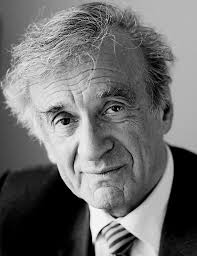 No, not in Auschwitz or Buchenwald, the concentration camps of his childhood experience, but in the darkened room of my 8th grade Jewish Sunday School class. There on Sunday mornings we watched films based on his classic books about the Holocaust. They were dreary, somber films. Even so, watching them made me a better Jew, and a better Christian.
Early on, from these films, I learned the value of wrestling with God, the post-Holocaust stance of much of world Jewry. I also learned the value of wrestling with my place in humanity. Some post-Holocaust Jews asked “How could God allow this?” I asked, “How could fellow humans turn and look the other away?”
Rather than turn me off from God or religion, these movies instilled in me a deep sense of right and wrong, and the need to watch out for each other. From the conversations that followed the movies, I learned the mantra of my parents’ and grandparents’ generations: “Never again.” Never again to genocide, repression, racism. Never again to silence in the face of injustice.
I’m grateful to Elie Wiesel. His work raised important questions, not just for my 8th grade self, but for the world. He stood for worldwide human rights—for Jews in Israel, the Soviet Union and Ethiopia; for the anti-Apartheid movement in South Africa, the Desaparecidos of Argentina, Bosnian victims of genocide in Yugoslavia, the Miskito Indians in Nicaragua and the Kurds.
All of this made me a better Jew because he taught me the value of knowing one’s history. Later, it also made me a better Christian because I understood the danger of the church’s silence in the face of evil.
These days the church is often loathe to venture into “politics,” preferring to be a neutral, conflict-free oasis of spirituality. But when are politics and spirituality ever really separated? Certainly not in Jesus’ day. Nor in our own. Spirituality—especially the spirituality of love—must be lived out in the real world to have real power. Especially in the face of fear, bigotry, and scapegoating.
We live in an age when the words “Never again” seem to have been forgotten. Refugees are once again turned away at crucial borders. Immigrants are eyed with suspicion. The “other” is scapegoated. Violence and power go hand in hand.
What are you teaching in your Sunday School rooms? It can’t be all Veggie Tales, fun and games. There needs to be some substance–where our faith interacts with the injustices of the world. Let’s not be afraid to tell our kids the way it really is. Chances are they already know. And if they don’t, maybe they need to.

