
The Surprising Truth about How to Do More with Less

The Surprising Truth about How to Do More with Less

Two long years. It has been two long years since the World Health Organization officially deemed Covid-19 a pandemic. Who would’ve imagined, way back in March 2020, where we would be today? I think it’s safe to say that everyone thought, or at least hoped, that this deadly virus would be long gone by now. Instead, the virus continues to spread throughout the world, businesses are desperate to recover, and churches are asking how do we do more with less? In this article, I want to share with you the surprising truth about how to do more with less.

My new book, Forging a New Path: Moving the Church Forward in a Post-Pandemic World, coming out in May 2022, deals with the culture shifts that need to take place within the church to withstand any external circumstance that may come along. In my research, I thought, who better to survey than the church leaders and colleagues in my program, Creating a Culture of Renewal®. I asked, “What would you like to see in a book about growing the post-pandemic church?” By far, the most common answer was, “We’d like to know how to do more with less.”


What have you found there is less of?

My follow-up question was this:  “What have you found that there is less of?” Their answers were relatively consistent: less people, less money, and less tech experience than needed. Makes sense. We have all felt the lack of contact with others during the quarantine, the loss of employment and income, the stress of adapting to unfamiliar situations, and the pinch of resources that were once more readily available.


Surprising Truth Revealed

While the tremendous losses can feel overwhelming, you can only see the full picture by looking at the other side of the coin too. So, I asked the same church leaders and pastors, “What have you found that you have had more of throughout the pandemic?” Here is where things really got interesting. Not only were their answers more varied, they offered a surprising truth. Even though people have less overall, they now have more of a sense of hope and togetherness, unexperienced before the pandemic. I heard answers such as “tighter knit congregations,” “more ways to connect,” “more time with God,” and “more ways to create community outside of our building.”

I was blown away. How beautiful and optimistic! While the focus had been on the negativity that surrounds the pandemic and all that has been lost, these leaders were taking ownership and intentionally looking for evidence of the Kingdom of God around them and what they and their churches gained in these long two years. It got me thinking about how we can utilize this time for learning and growing. What are people really yearning for?

The truth may surprise you. What people really want is a deeper sense of togetherness with God. People want to be in relationship with God, feel God’s presence, and know God is always by their side. Good news for us. There should be no better place to fulfill this desire than in the church. This doesn’t, however, happen by having a great worship service and fellowship dinners. We need to take one more step. We need to create the space for a deeper sense of togetherness with God by focusing on our own spirituality.

In my new book, I write about 4 models of spiritual growth. Below is one of the models, The Covenant Group Model, that I encourage you to try with your people.


Covenant Group Model

The focus of the Covenant Group Model is the desire to experience the presence of God. It requires a willingness to be honest, vulnerable, celebratory, and accountable. The covenant group model provides the space to dive beyond one’s everyday life into the realm of the soul. The experience is guided by these four questions:


  1. How is it with your soul?

The starting place of the spiritual journey is the core of your being, the well-spring from which life flows, a direct connection with God. When all of the world’s demands and distractions are moved aside, what is left? Honesty is the foundation of this question.

  1. Where have the challenges been?

As you move to the second question, vulnerability joins honesty in the conversation. Sharing your challenges is the first step to loosening their grip on your life. The difference between a challenge and a blessing is just a shift in perspective.

  1. Where have the joys been?

After honesty and vulnerability comes celebration. God is at work in your life. Give thanks and praise God for God’s never-ending presence. There is no limit to where sparks of joy can be found. Joy may be found in a simple smile at the right time or in a life-changing and unexpected shift to a better life. To see the Kin(g)dom of God around you, simply stop and notice.

  1. What would you like to be held accountable for?

The covenant group model of spiritual growth deepens from honesty, to vulnerability, to celebration and finally to accountability. It’s a way of saying, “Here’s my commitment; please hold me to it. Ask me the hard questions when I fail to follow through and rejoice with me when I succeed.”


Take your next steps

Participating in a covenant group is a powerful way to deepen your spirituality and build the bonds of community. It puts you in the flow of unconditional love, the wellspring of all spirituality. This love is the foundation of growth, discipleship, and the Kin(g)dom of God.

Even though you may feel you have to do more with less than you did before the pandemic, the surprising truth is that spirituality can give you more hope and togetherness than you had before.

Are you ready to try this model with your people? I’d love to hear how it goes! Share with me in the comments what you learned, what worked or didn’t work, or how you tailored it to fit your particular group.

To learn more about the surprising truth about how to do more with less, please join me for my upcoming workshop, How to Do More with Less, through Market Square Publishers.


Adapted and excerpted from Rebekah Simon-Peter’s upcoming book, Forging a New Path: Moving the Church Forward in a Post-Pandemic World (Market Square, 2022).

Copyright © 2022 rebekahsimonpeter.com, All Rights Reserved.

How Your Church Can Partner with Your Community

How Your Church Can Partner with Your Community

“I’m a pastor, not a warehouse manager,” Rev. Leigh Goodrich said to the church trustees when they complained that they had no free space to store things anymore. “I’m not here to deal with your stuff. At least not that stuff.” Leigh’s church had been in the process of making space for a preschool, a new partner gained during the pandemic, when the complaint arose. Leigh remained unruffled. While she encouraged the trustees to continue clearing out the junk they had been storing for years, Leigh kept her focus on the church’s partnership with the community via the preschool. As a result of this partnership, the church came out of debt during the pandemic.

How can your church partner with your community? It may feel challenging, even impossible, especially if your congregation is set in its ways. But it’s worth doing. Forming partnerships with your community opens the door for both your town or city and the church to be blessed beyond expectation.

Through completing research for my new book, Forging a New Path: Moving the Church Forward in a Post-Pandemic World, I talked with church leaders from all over the country. Together, we discovered the four ways that are most effective for not only creating beneficial partnerships, but also creating those that will last.

Before I share the four ways that you can partner with your community, I want to make you aware of one pitfall to avoid. Don’t get caught up in thinking that there is only one way to accomplish this. Partnership can take on many forms. It all depends on your context. Read on to see what can work in your setting.


Partner with Your Community to Support Mental Health

This is the time to rebuild community. Children especially need a sense of community. For most young children, all they know is pandemic life, one separated from their peers, their teachers, and any feeling of stability and structure. This isolation eats away at mental health. The partnership between Leigh’s church and the preschool, for example, has the built-in benefit of helping those who know no difference to begin rebuilding their own sense of community. The mental health benefits positively impact parents, teachers, and the congregation.


Partner with Your Community to Celebrate

Adults, too, are recovering from feelings of isolation and struggling to regain normalcy. One of the best ways to rebuild is through celebration. Look around you. There are people, places, and things to celebrate everywhere! Widen your focus beyond those you go to church with to include all members of your community. Find people to celebrate: young people, doctors, nurses, essential workers, and restaurant servers. It’s time for the church to re-focus her time and energy away from survival to serving the community in which she is planted. Have a celebration in the community for the community. For example, if someone completes probation, jail time, prison time, celebrate them. When someone hits a milestone in recovery, celebrate them. When someone changes their circumstances in some way or renews their vows, celebrate them. Be a physical reminder of God’s partnership with those God loves.

Celebration is also good for the soul. It’s even a key component of healthy emotional intelligence. It draws communities together, builds bonds of happiness, and deepens your faith. It marks progress and invites you to praise God. Celebrations are important markers that anchor a person’s memory and participation. You never know what will happen when the community feels valued, loved, and connected. Celebration is a great place to start!


Partner with Your Community to Create Belonging

“One of the things that I’ve realized,” noted Rev. Leigh Goodrich, “is that Jesus didn’t walk around going, ‘Oh, I’m so poor. I don’t have any money. I gotta live in a deficit budget. What am I going to do?’ No. Jesus walked around looking for opportunities to help other people.” And Jesus used what He had in the moment: dirt from the ground mixed with spit to heal the man born blind; his words and hands to call the man to stand, pick up his mat, and walk; simple water basins to make wine for the wedding celebration. As the body of Christ, you have been blessed in order to bless your community. Your greatest asset may be your building. Use it to create belonging instead of excluding people. When you see the building as a community asset, rather than only a church asset, you pave the way for your building to expand your culture, and provide a place of security and belonging, rather than a place walled off to others.


Partner with Your Community to Balance Your Budget

When the church focuses more on the community than itself, unexpected blessings emerge. As the Trustees at Leigh’s church cleared out years of junk, they found they could welcome even more partners. “Because of two very strong partners that we have—an organization that helps with women’s breast cancer survival and a preschool—we eventually balanced our budget. We were in the hole $35,000 to $45,000 a year, and we balanced that out during the pandemic because we were willing to share sacred space.”

         To build successful partnerships that bless them and you, seek out organizations whose values are aligned with the values of your church. Find groups that could benefit from spiritual guidance, help bring events to your town, host seminars that educate and uplift, or celebrate the goodness of life. Truly see yourselves as partners, and not simply organizations occupying the same building. But, before anyone moves in, make sure to clear out space and get rid of things that are no longer needed.

         You may be thinking, “Yes, I hear what you’re saying, and that all sounds great. But our church is struggling. We can’t help the community when we can’t help ourselves.” That’s fair. Many churches find themselves in places where their desire is strong and the resources are few. I invite you to join me for my next workshop, “How to Do More with Less,” where we’ll explore what we have “less” of and how we can leverage what we do have to do “more” than we ever dreamed.

Excerpted and adapted from Rebekah’s upcoming book, Forging a New Path: Moving the Church Forward in a Post-Pandemic World (Market Square Publishers, 2022).


Copyright © 2022 rebekahsimonpeter.com, All Rights Reserved.

Women in Ministry

Women in Ministry

As is the case in many fields, ministry has long been male dominated. In fact, women in ministry is still relatively modern, and even today, some denominations do not allow women to be ordained or hold leadership positions in the church. When I was called to ministry nearly 30 years ago, this of course crossed my mind. Thankfully, there have been truly remarkable women in the history of the United Methodist Church that helped pave the way for me and my female colleagues, and helped shape the church into what she is today.

After I graduated seminary, I spent 12 years pastoring a series of churches in the Western United States. This was capped off by a small, vibrant church in Rawlins, Wyoming. When I arrived in 1999, I was the first female pastor appointed to this town, population 10,000, including the prison population. The first Sunday I stepped into the pulpit, a hot and dry August day, the pews were filled. This continued for quite a few Sundays thereafter as people came to check out the new “lady” preacher.

Although the United Methodist Church has historically been more accepting towards women in ministry and leadership roles, I was still met with plenty of wariness and resistance. Naturally, I am a direct, decisive, and fast-paced person. During the early days of my ministry in Rawlins, my candor was not what most of the congregation was used to. Some members approved of me, while others did not. At times, I was deemed bossy and dominant, while my male counterparts (who often had the same characteristics) were considered confident. Why? Why was I  stamped with these unfavorable labels while my male colleagues were praised for them?

Through trusting in God, God’s calling on my life, and trusting in myself, I didn’t recoil or lose confidence. Instead, I embraced my leadership qualities and came to see that the church needs both male and female voices, men and women who are competent, collaborative, and compassionate leaders with bold visions.

The United Methodist Church has come a long way in its affirmation of female leaders and women serving in ministry. There is, however, still more work to be done. I offer three suggestions for how we can acknowledge the strong and powerful women around us as a church and as a society.

1. Remember influential women from your past

Undoubtedly, you’ve had a mother, sister, aunt, or grandmother, who helped mold you into who you are today. Appreciate their love, support, and guidance, even when it went unnoticed. Offer thanks for their influence in your life with a thank you card, gift, or other gesture that shares your appreciation for their investment in your life.


2. Mentor the next generation of women

Just as you have been mentored by strong and confident women, mentor those young women around you to embrace their skills and grow in their confidence. Encourage them to speak up because they have something to contribute, live out of their gifts and graces, answer God’s call on their lives, and encourage them to follow God wherever God leads.


3. Celebrate successes

When you see women succeed, celebrate them! If negative voices try to diminish a woman’s success, stand proudly with her, acknowledging her success and encouraging others to do so as well.  Help her not to overlook the miracle that happens when God and a female leader partner in the work of the Kingdom Realize hard work and give accolades where deserved.

If you are reading this, chances are you are a leader, whether in your congregation, community, or family. Thank you for your courageous leadership, as you have helped those around you navigate these trying days of the pandemic. 

For these last few years, we’ve asked the difficult questions, such as how are we going to survive as a church, live to serve another day? How can we positively impact our communities when we aren’t sure we can keep the lights on?

If the pandemic has left you asking how you can powerfully move forward, I invite you to join me for my upcoming workshop, How to Do More with Less. In this 3-session workshop, we’ll discover ways you can be the church, change the world around you, and build God’s kingdom by maximizing the limited resources available. God is in the miracle-making business!

Excerpted and adapted from Rebekah Simon-Peter’s upcoming book, Forging a New Path: Moving the Church Forward in a Post-Pandemic World (Market Square Publishers, 2022).


Copyright © 2022 rebekahsimonpeter.com, All Rights Reserved.
Church and the Great Resignation

Church and the Great Resignation

In the year of the “Great Resignation,” an unprecedented number of Americans quit their jobs, opting for more fulfilling careers. Whether this meant creating a start-up and working for themselves or simply leaving their current position to find a job that offered better pay and benefits, a recent National Public Radio article noted that since the Spring of 2021, about 33 million employees have quit their jobs. The church has been impacted by the Great Resignation.

Since the onset of the pandemic, many pastors have shifted out of ministry. Pastor Melissa Florer-Bixler has written that her pastoral colleagues are leaving due to various reasons, but most notably, “their denominations and powerful congregants have pushed for a false unity that tolerates homophobia, racism, and conspiracy theories… [they] experience unwillingness to try new things or shift church priorities.”

The impact of the Great Resignation on churches hasn’t stopped there. The pandemic-inspired changes in the world of work have now impacted the world of worship for our congregations. As people have not only re-assessed their work commitments, they have also re-assessed their church commitments. Church attendance, which had already been in decline before the pandemic, has plummeted in many areas. It’s like the Work from Home movement and the Great Resignation have now gone to church. Some people are choosing to worship from home, while others have resigned from church altogether.


How Churches Can Respond to the Great Resignation

Just as people are rejoining the world of work on their terms, the opportunity is there for people to realign with church. But first, churches must find a way to be as responsive to these pandemic-era changes as companies have been. Just as the workplace has to provide the kind of positive work environment, compensation, and benefits that entice people to give their all to work, so the experiences of worship, fellowship, and Bible study have to be worth it for people to invest their time, talents, and treasure.

Think about it. If people quit jobs because they don’t feel fulfilled, they can just as easily quit church if they don’t feel spiritually fulfilled there. So, if the experience of church feels rote, uninspired, or disconnected from real life, then people will be less likely to come back. Church has to feel worthwhile.


Spirituality is the Next Normal

I’m a big believer that congregations can embrace spirituality as the next normal, and that church can be a place of spiritual community for people. People are built for relationship with God at a cellular level, and we are hard-wired for spirituality. People will absolutely participate if the experience speaks to them.

Just as work environments now have to address themselves to the whole person, people want the same of church. In my work with Creating a Culture of Renewal®, it’s been my experience that people want more of church—not less. More vision, more love, more miracles. And more connectedness. They want church to feel more like community—a place that is sensitive to and inclusive of the whole person and of their families.

As the church, you have unique opportunity to meet the Great Resignation with greater spirituality. This is the time to try new ideas, shift your priorities, and embrace the spirituality as the next normal.

Need help with this? In March, I’m hosting an online workshop, “How to Do More with Less.” We’ll discover how to do more with less togetherness, less resources, and less experience, and find the surprising ways where less is actually more.


Excerpted and adapted from Rebekah Simon-Peter’s upcoming book (Market Square Publishers, 2022).

Copyright © 2022 rebekahsimonpeter.com, All Rights Reserved.

How the Pandemic Gave the Church a New Sense of Ownership

How the Pandemic Gave the Church a New Sense of Ownership

The United Methodist Church is facing a crisis of identity. Will the United Methodist denomination split into several bodies? Have we already split? What is next and who will we become?

These questions were set to be determined at General Conference 2020, then delayed until General Conference 2022, which may well be rescheduled for General Conference 2024. As the COVID-19 pandemic unfolded in our congregations, countries, and consciousness, denominational plans were put on hold. Instead of navigating the crisis of denominational identity, we navigated the crisis of the pandemic, including: the intense loss of life, the contagion of the virus, and the politicization of masks and vaccines. Now it’s time to assess our learnings from the pandemic so that we don’t let a good crisis go to waste. After all, now that we have fairly successfully navigated one crisis, we can have greater confidence in our ability to navigate a second.


Pandemics Disrupt for Good

While very few people today have been through a pandemic prior to COVID-19, it’s been noted that historically, pandemics disrupt for good. The disruption is so dramatic that people’s ways of living and dying are forever altered. Along with the widespread loss of life, the very structures of society change. Coming through a pandemic is chaotic, painful, and messy. It takes a while for the “next normal” to emerge. We ask how to get our churches back on their feet and wonder about the best way to move forward. Yet, it’s becoming increasingly clear that there is no going back. Pandemics do, however, promote surprising progress in the areas of medicine, economic and social structures, architecture, politics, and religion. The COVID-19 pandemic is no different.


The pandemic created a profound shift in church mindset from “Wait and See” to “Ownership and Agency”.

Before the pandemic, many churches were in wait and see mode, as in: “Let’s wait and see what General Conference decides, then we’ll know what we are supposed to do.” This reactive approach has had a disastrous impact on morale, ministry, and mission. As long as you are waiting for them to tell you what to do, or who you are, you deflect your own agency, your ability to be a force of the work of the Kingdom and, instead, become a stumbling block. The wait and see approach is also used between appointments. “Let’s wait and see what the new pastor, or the new bishop, wants to do here.” But wait and see means God can no longer move through you. Your congregation is effectively off limits for God’s work. Over the years, the wait and see has squandered momentum, delayed dreams, and stalled partnerships. It has meant justice delayed, and justice denied.

Through the pandemic, many congregations shrugged off the wait and see mode as they dared to step into the immediacy of the moment. Whether organizing for racial justice, offering respite to front-line essential workers, or ministering to those orphaned by COVID, churches sprung into action to offer on the spot ministry to those in need. This new sense of ownership meant that church buildings quickly transformed into vaccination sites, overnight homeless shelters, and pop-up food banks.


Bringing Ownership to the Next Crisis

COVID-19 has forever disrupted the notion that churches can’t flex and adapt. Churches have demonstrated increased adaptability, resilience, and creativity. Dire circumstances were no match for the faith-based community as churches rose brilliantly to the occasion, quickly expanding their sense of ownership and agency. In fact, the coronavirus did for congregations what they could not do for themselves.

There’s no reason that United Methodists’ newfound capacities can’t be used well in the crisis before us. As we approach the next General Conference, let’s continue to be resilient to see new ways of coming together across the miles, distinguishing between our identity as Christians and the institutions we have built, and to take ownership of the moment before us. In order to do that well, we’ll have to spend more time listening than posturing, and more energy loving than hating.

If your congregation is struggling with the effects of the pandemic, I invite you to join me for my upcoming workshop, “How to Do More with Less.” We’ll address this ever-pressing question many church leaders are asking and discover ways for you to move your people forward into a realm of endless possibility.

Excerpted and adapted from Rebekah Simon-Peter’s featured chapter of the upcoming,  What’s Next: 21 United Methodist Leaders Discuss the Future of the Church (Market Square Publishers, 2022)


Copyright © 2022 rebekahsimonpeter.com, All Rights Reserved.
How the Black Church Shaped This Jewish-Christian

How the Black Church Shaped This Jewish-Christian

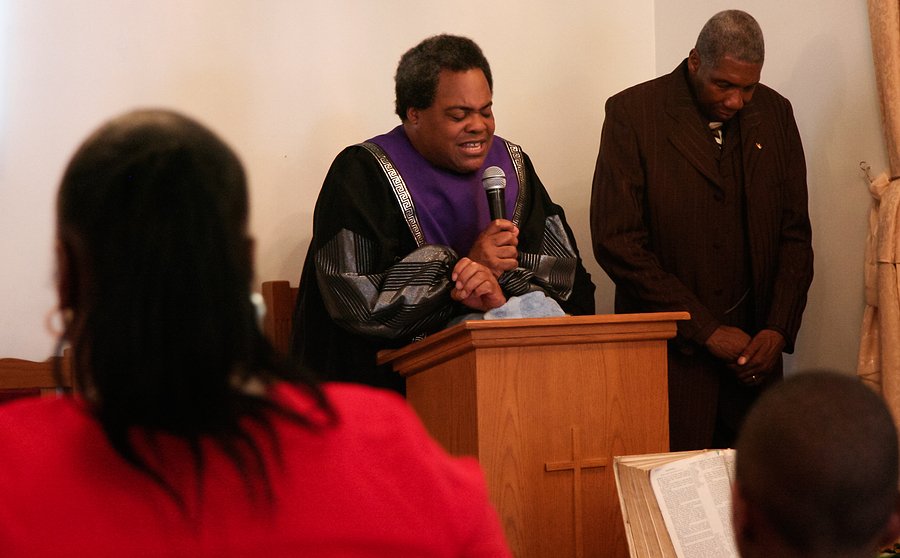
“You should come visit our church some Sunday,” Mary said on her way out the door with the rest of the choir. It was Martin Luther King, Jr. Day, and the choir of Scott United Methodist Church had come to the Iliff School of Theology to host a worship service for the students and staff. I was a thirty-year old student there, and a Jewish-Christian. “Thank you. I believe I will,” I responded, thrilled with the invite. I had always wanted to attend a Black church service, even as a kid. From the outside looking in, it seemed so lively, so interesting, so passionate. Little did I know how the Black church would shape this Jewish-Christian.

I was born and raised Jewish. Before I came to know Jesus at the age of twenty-eight, my grandmother took me on a college graduation trip to Israel. For the first time, at the age of twenty-four, I finally experienced the carefree feeling of being in the majority. Surrounded by other Jews in Israel, fear and guardedness fell away, shrugged off like a coat in warm weather—simply unnecessary. With a sigh of relief, I melted into the multihued, multilingual, diverse society I found there. To be sure, there are distinctions in Israeli society based on one’s degree of religiosity. The size and shape of male head coverings carries a whole calculus of meaning. Round fur hats, small knit yarmulkes, and 1940s style hats each carry a coded message about the kind of Jew who wears it and the norms of their religious observance. I think I was too relieved to notice any of that at the time. I simply drank in the fact that being Jewish was acceptable.

I sensed a similar ease when I first walked into Scott United Methodist Church, a week after Mary’s invitation to me. I joined the well-dressed stream of African Americans who entered the church for Sunday morning worship. Although I wasn’t Black, I got what it was to move from minority to majority status simply by walking into a building. It was a move from “other” to “us,” from being an object of suspicion to being an honored individual, from feeling guarded to breathing easily. Personally, it was an interesting juxtaposition to be in the minority among minorities. Somehow it increased my sense of safety.

After that first Sunday, I trooped off to Scott UMC for the following five Sundays. The people were warm and welcoming. The music was inspiring. The choir was fabulous. The preacher was enthusiastic and kind. The congregation was responsive: “Amen!” and “Preach it!” could be heard throughout the sanctuary. On the sixth Sunday, I joined the church. Six months later, I started my Advanced Field Education placement there, and was invited to be the Associate Pastor.

When I first moved into a leadership position at Scott United Methodist Church, I was the first non-African American pastor in the church’s history. It caused some waves. At first, I thought they were ripples. That was due only to the politeness of the people; they were protecting me from what must have felt like internal storm surges.

One African American seminary professor who also worshiped at Scott UMC called me in to her office at the seminary and asked, “What are you doing at this church, really?” She wanted to make sure I understood the white privilege I carried, even as a Jewish-Christian, and the delicate balances of power it threatened; it had taken African Americans a long time to get to where they were, and they didn’t need me messing with it. Much as I didn’t see myself as white, I understood the privilege she spoke of. Applying it to my own religious experience I could only imagine how the Jewish community would have felt about a Gentile stepping into a leadership role: unsure, ill at ease, suspicious at the very least. But what drew me in to Scott UMC wasn’t a desire to usurp power; it was a desire to share it. At the same time I joined Scott UMC, I was taking seriously the call I heard again and again during my coursework at Iliff: step over the lines that fear has drawn. Be open, in the spirit of Jesus, to radical love of the other.

Jewish-Christian

Some people threatened to leave the church if I stayed, a few actually did. Many more embraced me. The African American pastor who had invited me to be his associate pastor stood toe-to-toe with the concerns being expressed. His courageous stand made a space for all of us to work through our differences. In the beginning, none of us would have said, out loud anyway, that we were prejudiced or racist. Or that we saw ourselves as better or worse than the other. But we all, I suspect, had hidden layers of fear, mistrust, anger, and stereotypes to come to terms with. In the end love prevailed, buoyed by prayer and many a long talk. When I left that church five years later to go to my next appointment, it was as an honored member of the family.

Excitement and engagement brought me to the church. Welcome and gracious hospitality kept me there. During my five years there, we overturned idols together, wrestled through stereotypes, and named fears. In the beginning, none of us knew how it would turn out. It might have led to a church split. Or worse. But when we gave ourselves the space to engage our hidden fears we were instead blessed. I have carried that blessing with me, as a treasure, into the rest of my life and ministry.

Recently an African American friend confessed to me that she had first mistaken me for a “Karen,” an entitled white woman who is passive aggressive toward Blacks, someone not to be trusted. As she got to know me, she came to realize I was cool, not a threat. Our conversation was warm, vulnerable, revelatory. It reminded me that the work of getting to know each other as people, of moving beyond stereotypes, is never done.

In the US, we are born into inherited assumptions about race, color, ethnicity and identity.  It is our work to notice and name the assumptions, then move beyond them, to create something brand new. To find and carry the treasure of blessing that comes from truly breaking through fear into God’s kingdom of love.

If your congregation is stuck in their assumptions, I invite you to join me for my upcoming workshop, Jesus-Sized Dreams for Small-Sized Churches, where you’ll learn how to create and live out your Jesus-sized dreams.


Excerpted and adapted from The Jew Named Jesus: Discover the Man and His Message (Abingdon Press, 2013.)

Copyright © 2022 rebekahsimonpeter.com, All Rights Reserved.