Jesus Before Christmas

Jesus Before Christmas

Christmas wasn’t always part of the Christian experience.  There’s no record that Jesus or his disciples or the early church celebrated Christmas at all, as they did all the Jewish holy days and holidays. In fact, the first Christmas or Christ Mass wasn’t celebrated until the 4th century.  It’s likely Jesus wasn’t even born in the winter. Rather, it’s thought that December 25 was chosen as a day to celebrate his birth because it coincided with a pre-existing pagan festival. That would make it easy for non-Christians to add a new layer of meaning to their old celebrations. That happens in the history of religion.

The interesting thing though is that December 25 wasn’t just the date of a pagan festival. It also coincides, in a way, with a festival that Jesus did actually celebrate.

Like Jews of his time, Jesus celebrated the Feast of Dedication which occurs on the 25th of Kislev, a month in the Jewish calendar that most closely approximates December.  “At that time,” the Gospel according to John relates, “the Feast of Dedication took place in Jerusalem; it was winter. Jesus was walking in the Temple in the portico of Solomon. Tell us,” the Jews said, “if you are the Messiah.”  Their comments were fitting, for the Feast of Dedication marked the last time a deliverer had arisen to save them from oppression.   It was past time for another; the Roman experience was a cruel one indeed.

The Feast of Dedication commemorates the re-dedication of the Temple in Jerusalem after its utter desecration at the brutal hands of Antiochus Epiphanes about 170 years BC. Today, that feast is known by its Hebrew name, Chanukah. Although Chanukah only gets a line or two in the New Testament, it actually plays a huge role in the birth of Jesus.

A Peek into History

To explain, we have to go back in history over three hundred years before the birth of Christ.  Alexander the Great ruled the ancient world around the Eastern Mediterranean. After conquering the Persian Empire, Greek culture, or Hellenism, spread like wildfire. The Jews living in Israel quickly found themselves surrounded by it and then almost swallowed up by it. Hellenism was to the ancient world what Western culture is to the modern world. Just as you can find a McDonald’s in just about every corner of the world, not to mention American pop music, blue jeans, TV re-runs, Western style Christianity, and the English language, so in that day, you could find Greek culture, religion, and language permeating every other culture of the world. Needless to say, it wasn’t all good, especially for those in the minority, like the Jews.  It put their whole distinctive way of life at risk.

After Alexander died, his empire eventually fell into the hands of one Antiochus IV Epiphanes.

Epiphanes means “face of God,” but a more apt description was the moniker the Jews gave him: “Epimanes” or “crazy man.”  He was the Hitler of the intertestamental period.  Like Hitler, he was obsessed with wiping out the Jewish people.  He began with the slaughter of the citizens of Jerusalem and the desecration of the Temple.  Alfred Edersheim explains what happened in his book, The Life and Times of Jesus the Messiah:

“All sacrifices, the service of the Temple, and the observance of the Sabbath and of feast days were prohibited; the Temple at Jerusalem was dedicated to Jupiter Olympus (a Greek god); the Torah was searched for and destroyed; the Jews forced to take part in heathen rites; in short, every insult was heaped on the religion of the Jews, and its every trace was to be swept away.”

Bottom line:  Antiochus was bent on genocide. The final straw was the slaughter of a pig on the sacrificial altar in the Temple. Definitely not kosher. This occurred on the 25th of Kislev, the month that generally corresponds to our December.

A Jewish deliverer rose up whose name was Mattathias. Even though they were outnumbered and overpowered, under his leadership the Jewish people began a campaign of guerilla warfare against Antiochus and his Syrian armies to reclaim the Temple.  Mattathias died fighting, but his five sons carried on, including one whose name you might know: Judah Maccabee. He led the fighting till the Temple could be purified and its services restored.

Christmas without Chanukah

Exactly three years after its desecration, the Temple was rededicated.  This took place on the 25th of Kislev, about 165 years before the nativity of Christ.  If Antiochus had carried out his plan, there would have been no Mary, no Joseph, and no Jesus.  There would have been no Messiah of Israel, no Savior of the World.  Bottom line:  without Chanukah, there would be no Christmas. Jesus owed his life to Chanukah. In a sense, we owe our faith to it.

As you prepare for Advent, let us remember the minor Jewish holiday that celebrates freedom of religion and which makes possible the major Christian one.  Let’s do like Jesus did and re-dedicate ourselves to freedom of religious expression, to the freedom to dedicate ourselves to God, and to truly love one another. 

That being said, I’m hosting a fun and interactive workshop that will help you do just that.  “Platinum Rule Leadership in Changing Times” promotes forgiveness, compassion, understanding, and self-awareness.  I hope you can join me.


Adapted from Christmas through Jewish Eyes, by Rebekah Simon-Peter.

Copyright © 2021 rebekahsimonpeter.com, All Rights Reserved.
Reinventing Religion

I attended two Passover Seders last week.  One I led for a large group of New Mexican church-going Christians.  The other was in the home of my Jewish kid brother and our religiously, ethnically diverse gathering of family and friends.  The first one was designed to highlight the Jewishness of Jesus.  The second one was designed to raise issues of societal injustice.  Both relevant emphases for a Seder.

Even with their different focus and attendees, I was reminded of the meta message of a Seder.  Any religion worth its salt must re-invent itself from time to time.

The Passover Seder as we know it now didn’t exist in Jesus’ day.  Jewish as he was, he wouldn’t have eaten charoses mixed with horseradish sandwiched between 2 pieces of matzah.  He wouldn’t have invited the youngest disciple to chant 4 questions.   He definitely wouldn’t have hidden an afikomen.

Here’s what he would have done:  recited blessings over a paschal lamb.  Blessed matzah and wine.  Sung hymns.  Most of which is noted in the various accounts of the Last Supper or Seder.

Why the difference?  When Jesus was alive, the Temple still stood.  That meant that the Jewish form of worship was sacrifice-centric.  Leviticus 23 gives ancient instructions on how to observe these holy days.

Less than 40 years later after Jesus died and was resurrected, that whole system of sacrifices was gone, destroyed along with the Temple.  Judaism had to reinvent itself—in a hurry.  And it was the Pharisees to whom that task fell.

Of the 4 parties that existed at Jesus’ time—Pharisees, Sadducees, Zealots and Essenes—only the Pharisees survived much beyond the fall of Jerusalem.  Sadducees, whose members were tasked with Temple duties, disappeared—their services no longer needed.  Zealots, with their penchant for stirring up trouble, are credited by historians for hastening the destruction of the holy city.  Their remains were scattered among the charred rubble of Jerusalem. Essenes, who didn’t believe much in reproduction, simply died out.  That left the Pharisees.  It was their creative intellectual, theological and ethical genius from which Rabbinic Judaism sprang. Rabbinic Judaism provided the template from which today’s many Judaisms have flowered.
The Pharisaical emphasis on right action rather than right belief, and their ability to thrive under oppressive circumstances served them well on many accounts.  Especially when it came to their biggest project yet–reinventing Judaism in the face of a world that no longer existed, and a religious system that could no longer function.  Once the sacrificial system was gone, they figured out how Judaism might live on.  They reinvented religion—while holding the core of it in place—one God, and a people dedicated to the service of that God.

Judaism is famous for reinventing itself over the millennia.  But they are not the only ones.

At many critical junctures, Christianity has had to do the same. When Jesus didn’t return right away—Christianity had to take a new path without a living leader. When Constantine converted to Christianity and it became the dominant religion of the Empire–it again reinvented itself.  And once again at the behest of Martin Luther’s demand for transparency and accountability. Each church split has signaled a kind of reinvention.

We’re not done reinventing ourselves, either.  Twisted experiences from the Crusades and frontier America have caused most churches to drop coercive evangelism. We have re-invented the way we read scripture. Most Protestant denominations now welcome divorced people, female leadership and women clergy.  We haven’t worried about wearing mixed fibers for a long time.

Even as our structures and hermeneutics have changed, so have our ecclesiologies. We have already begun moving away from a clergy- and cathedral-centric expression of faith. Trained laity, house churches, experimental missional and other “weird” faith communities are taking root.

While our central tenets remain the same—and people of good faith will disagree about which tenets belong in this list, but here’s mine—God is love; Jesus Christ is God incarnate; The Kingdom of Heaven is at hand; We are Kingdom people—the way we live those out has changed radically. Rather than see these changes as a weakening of the faith or unholy compromises with culture, perhaps its time to see them as part of the natural evolution of a religion that has staying power.

After all, reinventing religion is the very process by which Christianity arose. As I demonstrate in The Jew Named Jesus, Jesus was a Jew through and through. That means the religion of Jesus was Judaism. The religion about Jesus, however, is Christianity. It will be interesting to see how this process of reinvention continues to evolve as we meet the realities of a changing world, expanded knowledge, and unfolding opportunities.

Can We Truly Embrace a Jewish Jesus?

This week we celebrate the miracle around which Christian life revolves: the death and resurrection of Jesus. It makes me wonder if we are truly ready to embrace a Jewish Jesus.

Jesus is seen as a Jew in many pulpits and pews, but usually as an exception, an anomaly. In too many sermons, commentaries, and hymnals his teachings on love, inclusion, and forgiveness are set up as a contrast against the Jews and Judaism of his day. What makes him distinctive, we say, is that he’s not like the other Jews. He reached people on the margins. He talked to women. He ate with sinners and tax collectors. But these characterizations of a Jewish Jesus are still distorted. Dr. Amy-Jill Levine explains why:

“Jesus becomes the rebel who, unlike every other Jew, practices social justice. He is the only one to speak with women; he is the only one who teaches nonviolent responses to oppression; he is the only one who cares about the “poor and the marginalized” (that phrase has become a litany in some Christian circles). Judaism becomes in such discourse a negative foil: whatever Jesus stands for, Judaism isn’t it; what Jesus is against, Judaism epitomizes the category.”

Yes, Jesus reached out to all kinds of people. Yes, he counseled mercy and patience. Yes, he healed and set people free. But rather than see Jesus as different from the Jews around him, I suggest it is time to see Jesus’ ministry as a natural evolution of the whole history of Jewish teaching, ethics, morality, practice, and service of God. Otherwise he serves as an archetypal anti-Jew.
Think about it. If Jesus was fully Jewish, operating in a Jewish context, living a Jewish life, studying Jewish texts, praying to a Jewish God, clothing himself in the Jewish commandments, where else did it come from? If we believe that Jesus was one with the God of Israel, then surely, Jesus drew upon the same Source and sources that inspired all the other teachers, miracle-workers, prophets, and kings that preceded and surrounded him. Quite often the rabbis of his era were arriving at the same conclusions he was, from the Golden Rule, to teachings on Sabbath, the importance of love of God and neighbor. Others were engaged in calling disciples, healing, and miracle-working. Even his interactions with women, children, and Gentiles were not anomalous.
More than that, the Hebrew Bible/Old Testament is marked by theological and behavioral leaps, beginning with Abraham’s innovation that God is one, not many; continuing with Moses’ skilled but previously unknown leadership in leading the Israelites from slavehood to peoplehood; game-changing visions from prophets; and the courageous renewal of Judaism under Nehemiah and Ezra after the return from Babylonian exile. Jesus is the product of generations of Jewish innovators, completely in line with the spiritual genius that went before him and even those that came after him.
If we were to truly embrace a fully Jewish Jesus, it would take a renewed scholarship among preachers, prayers, poets, professors, and Bible study writers and teachers. It would take some work to leave behind comfortable but dishonest dichotomies and ready stereotypes. Not easy for already overworked church leaders. But there are many excellent resources that can help, many of which I note in my book The Jew Named Jesus. It’s worth the effort. We are grand participants in a historic reconciliation, the fruits of which are only beginning to be realized.
This historic reconciliation points out an underlying truth: it hasn’t always been good between Christians and Jews. A long history of Christian teaching of “contempt of the Jews” made positive interfaith relations all but impossible for centuries. After hitting a theological bottom in the Holocaust, though, the church has intentionally hammered out new theologies and reached for new understandings that allow for love, acceptance, and embrace of Jews.   In response, Jews have done the hard work of forgiving and rapprochement too.
All of this brings us to the point where we can ask the question: Can we truly embrace a fully Jewish Jesus? In good Jewish fashion, I assert that even the question is a good one.
It leads to all kinds of other interesting questions. If Judaism and Christianity could hammer out a new relationship, is the same possible for Christianity and Islam? If we could, should we?
The truth is, the work has begun. And it’s been initiated by Muslims. In 2007, 138 Muslim clerics and scholars representing every branch of Islam sent a beautifully worded and carefully researched letter to Christian leaders. This letter, “A Common Word Between Us and You,” stated that as the two largest world religions, the peace of the world depends on peace between Muslims and Christians.It used as its reference point the Hebrew Bible teachings of love of God and neighbor, saying they were common to both Islam and Christianity.
We have the opportunity to turn a new page.   To restore and revamp our understandings of Jesus and Judaism. And to open our hearts to new understandings of our Muslim neighbors. What a great start to the Easter season this would be.
They’re risky moves for sure. Especially in an age of nationalism, terrorism, and blame-game politics. But isn’t that when the resurrection is needed most?

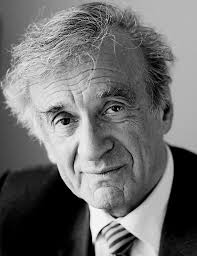
Growing Up with Elie Wiesel

I mourned when I heard that Elie Wiesel had died. I grew up with this Holocaust survivor and Nobel Laureate.  elie wiesel No, not in Auschwitz or Buchenwald, the concentration camps of his childhood experience, but in the darkened room of my 8th grade Jewish Sunday School class. There on Sunday mornings we watched films based on his classic books about the Holocaust. They were dreary, somber films. Even so, watching them made me a better Jew, and a better Christian.
Early on, from these films, I learned the value of wrestling with God, the post-Holocaust stance of much of world Jewry. I also learned the value of wrestling with my place in humanity.   Some post-Holocaust Jews asked “How could God allow this?” I asked, “How could fellow humans turn and look the other away?”
Rather than turn me off from God or religion, these movies instilled in me a deep sense of right and wrong, and the need to watch out for each other. From the conversations that followed the movies, I learned the mantra of my parents’ and grandparents’ generations: “Never again.” Never again to genocide, repression, racism. Never again to silence in the face of injustice.
I’m grateful to Elie Wiesel. His work raised important questions, not just for my 8th grade self, but for the world. He stood for worldwide human rights—for Jews in Israel, the Soviet Union and Ethiopia; for the anti-Apartheid movement in South Africa, the Desaparecidos of Argentina, Bosnian victims of genocide in Yugoslavia, the Miskito Indians in Nicaragua and the Kurds.
All of this made me a better Jew because he taught me the value of knowing one’s history.  Later, it also made me a better Christian because I understood the danger of the church’s silence in the face of evil.
These days the church is often loathe to venture into “politics,” preferring to be a neutral, conflict-free oasis of spirituality. But when are politics and spirituality ever really separated? Certainly not in Jesus’ day. Nor in our own. Spirituality—especially the spirituality of love—must be lived out in the real world to have real power. Especially in the face of fear, bigotry, and scapegoating.
We live in an age when the words “Never again” seem to have been forgotten. Refugees are once again turned away at crucial borders. Immigrants are eyed with suspicion. The “other” is scapegoated. Violence and power go hand in hand.
What are you teaching in your Sunday School rooms? It can’t be all Veggie Tales, fun and games. There needs to be some substance–where our faith interacts with the injustices of the world.  Let’s not be afraid to tell our kids the way it really is. Chances are they already know. And if they don’t, maybe they need to.

Jesus, the Anti-Jew?

Church, it’s time to go all the way in embracing the Jewish Jesus.
Yes, Jesus is seen as a Jew in many pulpits and pews, but usually as an exception, an anomaly.
In too many sermons, commentaries, and hymnals his teachings on love, inclusion, and forgiveness are set up as a contrast against the Jews and Judaism of his day. What makes him distinctive, we say, is that he’s not like the other Jews. He reached people on the margins. He talked to women. He ate with sinners and tax collectors.  But these characterizations of a Jewish Jesus are still distorted.  Dr. Amy-Jill Levine explains why:

“Jesus becomes the rebel who, unlike every other Jew, practices social justice. He is the only one to speak with women; he is the only one who teaches nonviolent responses to oppression; he is the only one who cares about the ‘poor and the marginalized’ (that phrase has become a litany in some Christian circles). Judaism becomes in such discourse a negative foil: whatever Jesus stands for, Judaism isn’t it; what Jesus is against, Judaism epitomizes the category.”

Yes, Jesus reached out to all kinds of people. Yes, he counseled mercy and patience. Yes, he healed and set people free. But rather than see Jesus as different from the Jews around him, I suggest it is time to see Jesus’ ministry as a natural evolution of the whole history of Jewish teaching, ethics, morality, practice, and service of God. Otherwise he serves as an archetypal anti-Jew.
I’d like to explain the phenomenon, and then give you 3 criteria to check for to see if your preaching and teaching sets up Jesus as a Jew or as an anti-Jew.
Think about it.
If Jesus was fully Jewish, operating in a Jewish context, living a Jewish life, studying Jewish texts, praying to a Jewish God, clothing himself in the Jewish commandments, where else did it come from?
If we believe that Jesus was one with the God of Israel, then surely, Jesus drew upon the same Source and sources that inspired all the other teachers, miracle-workers, prophets, and kings that preceded and surrounded him.
Quite often the rabbis of his era were arriving at the same conclusions he was, from the Golden Rule, to teachings on Sabbath, the importance of love of God and neighbor. Others were engaged in calling disciples, healing, and miracle-working. Even his interactions with women, children, and Gentiles were not anomalous.
More than that, the Hebrew Bible/Old Testament is marked by theological and behavioral leaps, beginning with Abraham’s innovation that God is one, not many; continuing with Moses’ skilled but previously unknown leadership in leading the Israelites from slavehood to peoplehood; game-changing visions from prophets; and the courageous renewal of Judaism under Nehemiah and Ezra after the return from Babylonian exile.
Jesus is the product of generations of Jewish innovators, completely in line with the spiritual genius that went before him and even those that came after him.
Paul wasn’t kidding when he said about his fellow Israelites, “to them belong the adoption, the glory, the covenants, the giving of the law, the worship, and the promises;to them belong the patriarchs, and from them, according to the flesh, comes the Messiah, who is over all, God blessed forever. Amen.”
How do you know if you are preaching and teaching about Jesus as a Jew or an anti-Jew?  Check out these 3 critiera:
1.  You rely heavily on the compare and contrast method of preaching and teaching: Jesus is the “good guy” and his Jewish contemporaries such as Pharisees, Saducees, scribes and lawyers are the “bad guys.”  This creates an us v. them dynamic that creates enemies.  In other words, in order to stand with Jesus, I have to stand against somebody or something else.
2.  You remove Jesus from a Jewish context altogether, substituting “the church” for the actual Jewish people, Torah, land, and institutions he interacted with.  Erasing his Jewish context doesn’t help. It’s like claiming being color-blind in a society where white privilege still operates.
3.  You portray the Pharisees as uni-dimensional:  hypocritical, out to get him, narrow-minded or legalistic.  Of all the Jewish groups present in his day, Jesus himself was most closely aligned with the Pharisees. His way of teaching, setting up a fence for the Law, and seeing the world has more in common with them than any other group.
Putting this perspective into practice will take a renewed scholarship among preachers, pray-ers, poets, professors, and Bible study writers and teachers. I realize it’s going to take some work to leave behind comfortable but dishonest dichotomies and ready stereotypes. This won’t be easy for already overworked church leaders. But there are many excellent resources that can help.  It’s worth the effort.
We are grand participants in a historic reconciliation, the fruits of which are only beginning to be realized. Understanding that Jesus operated within a rich spiritual and theological context is essential for deconstructing three attitudes: first, lingering anti-Judaism; second, Jesus as anti-Jew; and third, subtle “us versus them” dynamics. While denominations have repented of these attitudes, the fulfillment of that work remains to be done in individual pulpits, in Bible studies, and in human hearts. The more we get our theology and teaching right, the more space it creates for healing between Jesus and his own people.
Excerpted and adapted from “The Jew Named Jesus:  Discover the Man and His Message,” (c) 2013 Rebekah Simon-Peter.

A Fresh Look at an Ancient Book

True confession:    I didn’t have a very high expectation of Bible studies when I first started going to church as an adult. I was prejudiced against the word “Bible” itself.   I thought the initials BS in the bulletin stood for, well, B.S.  I’m not sure why, but I didn’t expect to learn anything new.  Boy, was I in for a surprise!
Do your people carry the same unconscious prejudice?  The truth is a vibrant study of the Bible can transform a whole congregation.
Here are my top 3 tips to keep Bible study fresh:

  1. Adopt a sense of curiosity.  Especially when reading the parables of Jesus.  They don’t go where his listeners expected them to.  The parable of the Good Samaritan should have had a Priest, a Levite, and an Israelite passing by the wounded man.  Not a Samaritan; not your mortal enemy.  Seriously??
  2. Go slow.  Shoot for quality not quantity.  Be willing to see a new word, notice a twist of phrase, ponder a turn in the story.  I love the story of God calling Samuel.  And the humility of Eli, even in his failings.
  3. Consult a new commentary.  When pastoring an African-American congregation, I got the Original African Heritage Study Bible.  It gave me a whole new perspective on things.  Like how many characters in the Bible are black, how much of the Biblical story is set in Africa, and how completely unbiblical racism is.

Would love to hear how the Bible comes alive for YOU!
Also, if you’re interested in bringing a new depth to your Lent and Advent studies, shoot me an email about teaching Reading the Bible with Jewish Eyes or Christmas through Jewish Eyes at your church.
Here’s to a fresh look at an ancient book!